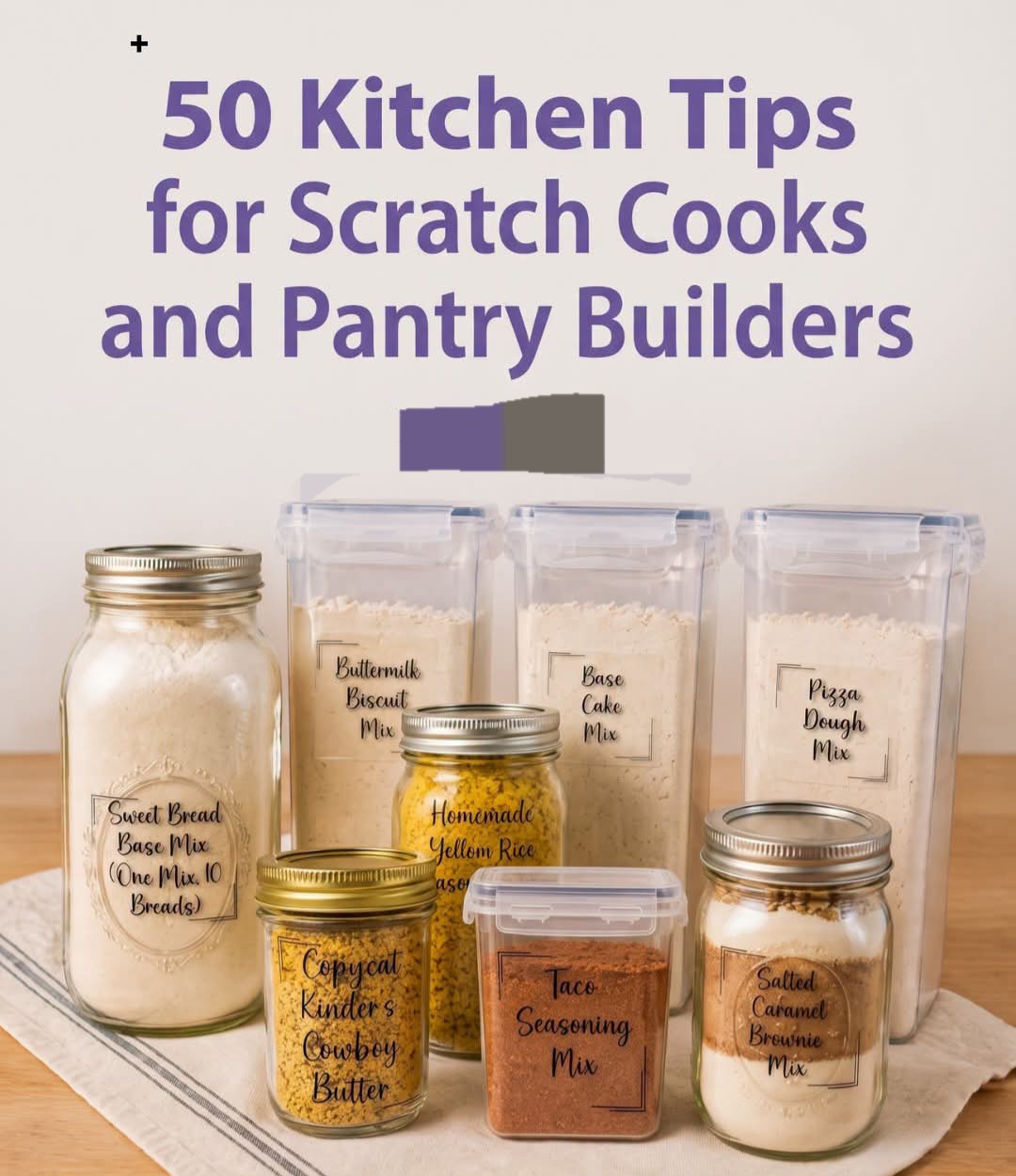
Cooking more from scratch and building a useful pantry doesn’t mean you need an enormous kitchen or shelves packed with expensive ingredients. It starts with learning a few practical habits: buy what you use, store it properly, rotate older items forward, and learn how to turn basic ingredients into everyday meals.
Here are 50 practical tips to help you build a kitchen that works for you.
1. 🛒 Build Your Pantry Around What You Actually Cook
A pantry isn’t successful because it looks like a grocery store shelf. It’s successful when you can open it and find ingredients you actually know how to use.
Start with the meals your family already enjoys.
If you make chili, soups, pasta, bread, rice dishes, or casseroles regularly, build your pantry around those ingredients first.
Don’t buy ten pounds of an ingredient simply because it was on sale if you have no realistic plan for using it.
2. 📋 Keep a Running Pantry List
You don’t need anything fancy.
A notebook, whiteboard, printable checklist, or note on your phone can work.
Keep track of items such as:
- Flour
- Sugar
- Rice
- Pasta
- Beans
- Canned tomatoes
- Broth
- Cooking oil
- Salt
- Spices
When you’re running low, add it to your shopping list.
This can help prevent those frustrating moments when you start cooking and discover you’re out of one important ingredient.
3. 🥫 Practice “First In, First Out”
When you buy a new can of tomatoes or bag of rice, place the newer item behind the older one.
Use the older food first.
This simple rotation habit is one of the easiest ways to prevent forgotten food from sitting in the back of the pantry for years.
4. 🫙 Store Dry Goods Properly
Rice, pasta, cereal, dried beans, and similar dry foods should be protected from moisture and pests. Check packages for holes or damage, and use suitable containers when extra protection is needed. (Ask USDA)
Clear containers can be especially helpful because you can see what you have at a glance.
5. 🌾 Keep More Than One Type of Flour
If you bake often, consider keeping:
- All-purpose flour
- Bread flour, if you make yeast breads
- Whole-wheat flour, if you use it regularly
- Self-rising flour, if you enjoy quick breads and biscuits
But remember: only stock what you will use.
A smaller pantry that gets rotated regularly is often more useful than a huge collection of forgotten ingredients.
6. 🧂 Salt Is One of Your Most Important Ingredients
Salt doesn’t just make food salty.
Used properly, it helps bring out flavor.
Keep enough for everyday cooking, baking, soups, vegetables, pasta water, and seasoning.
A well-stocked scratch-cooking kitchen doesn’t need dozens of expensive seasonings if the cook understands how to use the basics well.
7. 🌶️ Build Your Spice Collection Slowly
You don’t need to buy an entire spice rack in one shopping trip.
Start with spices you use often, such as:
- Black pepper
- Garlic powder
- Paprika
- Cinnamon
- Chili powder
- Cumin
- Italian seasoning
- Oregano
- Red pepper flakes
Then add more as your cooking expands.
8. 🧄 Keep Flavor Builders on Hand
A few simple ingredients can make a basic meal taste much more interesting.
Consider keeping:
- Onions
- Garlic
- Bouillon or broth
- Tomato paste
- Vinegar
- Soy sauce
- Mustard
- Hot sauce
- Lemon juice
These ingredients can turn plain rice, beans, vegetables, soups, and sauces into something much more flavorful.
9. 🍅 Tomato Paste Is a Tiny Pantry Workhorse
An opened can often contains more tomato paste than one recipe needs.
Freeze leftover portions in small amounts so you can grab just what you need later.
It’s useful for soups, chili, sauces, stews, and many other recipes.
10. 🍚 Learn to Cook a Few Basic Grains Well
Rice is only the beginning.
Try learning how to cook:
- White rice
- Brown rice
- Oats
- Barley
- Couscous
- Polenta
- Other grains your family enjoys
Once you know a few basic methods, you can create inexpensive meals with whatever vegetables and proteins you have available.
11. 🫘 Dried Beans Are Worth Learning
Dried beans are inexpensive and versatile.
Start with one variety you enjoy, such as:
- Pinto beans
- Black beans
- Chickpeas
- Navy beans
- Lentils
Cook a large batch and use them in several meals.
Freeze extra portions so you don’t have to start from scratch every time.
12. 🥫 Keep Some Canned Beans Too
Scratch cooking doesn’t mean you must make absolutely everything from the beginning every single day.
Canned beans can save dinner when time is short.
A good pantry can include both dried beans for economical cooking and canned beans for convenience.
13. 🍝 Never Underestimate Pasta
Pasta is one of the easiest pantry ingredients to turn into a meal.
Keep a few shapes your family likes and learn several simple sauces.
For example:
- Tomato sauce
- Garlic and olive oil
- Creamy cheese sauce
- Vegetable pasta
- Bean and pasta soup
One inexpensive box can become many different meals.
14. 🧈 Make a Basic White Sauce
A simple white sauce can become the foundation for:
- Homemade macaroni and cheese
- Creamed vegetables
- Casseroles
- Gravy-style sauces
Learning a few basic techniques often saves more money than buying specialty mixes.
15. 🥣 Learn One Good Homemade Soup Formula
You don’t always need a recipe.
Start with:
Aromatic vegetables + broth or water + vegetables + beans, meat, or another protein + seasoning.
Add rice, pasta, potatoes, or another starch if you want a heartier soup.
Use what needs to be used up.
16. 🥔 Potatoes Deserve a Permanent Place in the Kitchen
Potatoes are incredibly versatile.
They can become:
- Mashed potatoes
- Roasted potatoes
- Soup
- Hash
- Potato pancakes
- Baked potatoes
- Breakfast potatoes
Store them appropriately in a cool, dark location away from conditions that encourage spoilage.
17. 🧅 Keep Onions and Potatoes Separate
They may both prefer cool, dark storage, but storing them together isn’t ideal.
Give each its own container or storage area with good airflow.
18. 🍞 Learn to Bake One Simple Bread
You don’t have to become a professional baker.
Start with one dependable recipe.
Maybe it’s:
- Sandwich bread
- No-knead bread
- Biscuits
- Flatbread
- Dinner rolls
Once you gain confidence, you can experiment.
19. 🥞 Master a Few Pantry Breakfasts
Scratch cooking isn’t just about dinner.
Learn a few easy breakfasts using pantry staples:
- Pancakes
- Oatmeal
- Biscuits
- Homemade muffins
- Eggs with potatoes
- Homemade granola
Breakfast can be one of the easiest places to reduce reliance on expensive convenience foods.
20. 🍳 Learn the Difference Between “Cooking From Scratch” and “Making Life Difficult”
There is no prize for exhausting yourself.
If canned tomatoes save you time, use them.
If frozen vegetables prevent food waste, use them.
If homemade bread is enjoyable but homemade crackers are not worth the effort, buy crackers.
A practical scratch kitchen should work for you.
21. 🥕 Use Your Freezer as Part of Your Pantry
A pantry doesn’t have to mean shelves alone.
Your freezer can store:
- Homemade broth
- Cooked beans
- Chopped vegetables
- Bread
- Leftover tomato paste
- Cooked rice
- Soup
- Fruit
Think of it as another storage space that can help reduce waste.
22. ❄️ Freeze Ingredients Before They Become a Problem
Don’t wait until something is completely spoiled.
If you realize you won’t use it in time, freeze it while it’s still in good condition.
For example:
- Freeze ripe bananas for baking or smoothies.
- Freeze bread before it becomes stale.
- Freeze herbs in suitable portions.
- Freeze cooked beans for quick meals.
23. 🥬 Save Vegetable Scraps—But Be Practical
Clean scraps such as onion ends, celery pieces, and carrot trimmings can sometimes be collected for homemade stock.
However, don’t save everything forever.
If your freezer bag has been sitting there for months and you never use it, it’s time to either make the stock or stop saving scraps.
24. 🍗 Make Broth From What You Already Have
A roasted chicken carcass, vegetable trimmings, or other suitable ingredients can be turned into broth.
Cool and store homemade broth properly, then refrigerate or freeze it for later use.
25. 🍚 Cook Extra Rice on Purpose
If you’re already cooking rice, making an extra portion can save time later.
Use it for:
- Fried rice
- Rice bowls
- Soup
- Burritos
- Stuffed vegetables
Cool and refrigerate leftovers promptly, following safe food-storage practices. USDA recommends keeping refrigerators at 40°F/4.4°C or below. (Ask USDA)
26. 🧊 Label Your Freezer
Mystery containers are not a meal plan. 😂
Label food with:
- What it is
- The date it was prepared
Your future self will thank you.
27. 🥕 Learn to Love “Use-It-Up” Meals
Some of the best meals come from ingredients that need to be used.
Try:
- Soup
- Stir-fry
- Fried rice
- Omelets
- Casseroles
- Pasta
- Frittatas
These meals are perfect for odds and ends.
28. 🍋 Don’t Let Small Amounts Go to Waste
Half a lemon?
A handful of herbs?
One lonely carrot?
A few spoonfuls of beans?
Before throwing them away, ask whether they can become part of tomorrow’s meal.
29. 🥗 Plan Around Ingredients, Not Just Recipes
Instead of buying unique ingredients for five completely unrelated meals, choose meals with overlapping ingredients.
For example:
Buy broccoli and use it in:
- Stir-fry
- Soup
- Pasta
- A side dish
This can help reduce waste.
30. 📅 Give Your Pantry a Quick Check Before Shopping
Before buying more food, look at what you already have.
You may discover enough ingredients for several meals.
31. 🫙 Don’t Assume Every Glass Jar Needs to Become a Storage Jar
Reusing jars can be useful, but save only what you have room for and will realistically use.
Otherwise, jars can become clutter instead of organization.
32. 🏷️ Label Bulk Ingredients
Flour, sugar, rice, and similar ingredients can look surprisingly similar in containers.
A simple label prevents mistakes.
33. 📆 Add Dates to Homemade Foods
Whether you’re freezing soup or storing a homemade dry mix, write the date on it.
Food storage becomes much easier when you know how long something has been there.
34. 🌡️ Keep Pantry Foods Away From Heat and Dampness
Shelf-stable foods generally keep their quality best in a cool, clean, dry location away from temperature extremes. USDA specifically advises against storing canned and shelf-stable foods in places such as above the stove, under the sink, or other hot or damp areas. (Ask USDA)
35. 🥜 Watch Foods That Contain Natural Oils
Nuts, seeds, and whole-grain products can lose quality over time because of their natural oils.
If you buy them in larger amounts and don’t use them quickly, cooler storage or freezing can help protect quality.
36. 🍯 Learn a Few Basic Homemade Condiments
Depending on what your family uses, try making:
- Salad dressing
- Simple syrup
- Flavored butter
- Spice blends
- Barbecue sauce
- Vinaigrette
You don’t have to make every condiment from scratch, but knowing how to make a few gives you more flexibility.
37. 🧂 Make Your Own Seasoning Blends
If you regularly use taco seasoning, Italian seasoning, chili seasoning, or another blend, consider mixing your own.
You can adjust the ingredients to your family’s taste and avoid buying multiple packets.
38. 🧀 Grate Your Own Cheese When It Makes Sense
Buying a block can sometimes give you more flexibility.
Use part now, then shred or portion the rest for future meals.
Just store it properly and use it within an appropriate timeframe.
39. 🍎 Keep a Small “Eat First” Basket
Place foods that need to be used soon in one visible location.
This works especially well for:
- Produce
- Opened packages
- Leftovers
- Items nearing the end of their recommended quality period
40. 🗓️ Create One Weekly “Pantry Dinner”
Choose one night each week to make a meal mostly from ingredients already on hand.
You may be surprised by how much food you already have.
41. 🥫 Learn Safe Food Preservation From Tested Sources
If you’re interested in canning, pickling, drying, or preserving food, use current, research-tested instructions.
The National Center for Home Food Preservation provides research-based recommendations for home canning, freezing, drying, fermenting, pickling, and other preservation methods. (CeNCA Domicile)
42. ⚠️ Don’t Invent Canning Recipes
Home canning is not the place to guess.
Low-acid foods can create a serious botulism risk if they are processed incorrectly. Research-based methods and recommended processing times are essential. (CeNCA Domicile)
43. 🚫 Avoid Unsafe “Dry Canning” Shortcuts
Some social-media methods suggest putting dry or raw vegetables into jars and processing them without following tested procedures.
USDA and the National Center for Home Food Preservation warn that unsafe dry-canning practices can create serious food-safety risks. (Ask USDA)
44. 🫙 Label and Date Home-Canned Food
Home-canned foods should be clearly labeled and dated.
The National Center for Home Food Preservation recommends storing properly processed jars in a clean, cool, dark, dry place and, for best quality, generally using them within about a year unless specific guidance says otherwise. (CeNCA Domicile)
45. 🔍 Check Cans and Jars Before Using Them
Don’t use foods from containers that show signs of serious damage, leakage, swelling, or other spoilage concerns.
When in doubt about food safety, it’s better not to take chances.
46. 🍲 Batch Cook the Parts, Not Always the Entire Meal
Instead of preparing seven identical meals, batch-cook useful components.
For example:
- A pot of beans
- Cooked rice
- Roasted vegetables
- Chopped onions
- Homemade broth
Then combine them differently throughout the week.
47. 📝 Keep a List of “Emergency Pantry Meals”
Write down five to ten meals you can make without a grocery trip.
Examples might include:
- Pasta with tomato sauce
- Bean soup
- Rice and beans
- Pancakes
- Vegetable soup
- Baked potatoes
- Homemade biscuits
- Fried rice
This makes meal planning much easier on busy days.
48. 💰 Stock Up Slowly
You don’t have to build a pantry in one expensive shopping trip.
Buy one or two extra items when your budget allows.
Over time, those small additions can create a useful supply of ingredients.
49. 🔄 Review Your Pantry Every Few Months
Pull things forward.
Check for forgotten items.
Look for damaged packaging.
Make a plan for ingredients that need to be used.
A pantry works best when it’s regularly maintained rather than ignored.
50. ❤️ Build a Pantry That Reflects Your Family
The perfect pantry is different for everyone.
One family may use twenty pounds of flour.
Another may rarely bake but go through rice and beans quickly.
One person may love canning tomatoes.
Another may prefer freezing vegetables.
There is no single perfect pantry.
The best pantry is filled with foods your family enjoys and ingredients you know how to turn into meals.
🏡 Final Thoughts: Start Where You Are
You don’t need a huge farmhouse pantry, rows of matching jars, or a year’s worth of food to become a better scratch cook.
Start with one shelf.
Learn one new skill.
Master one bread recipe.
Cook one pot of beans.
Freeze one batch of soup.
Create one simple meal from ingredients you already have.
Over time, those small skills begin to add up.
A well-stocked kitchen isn’t built overnight. It grows gradually as you learn what your family eats, which ingredients you use most, and which cooking habits make life easier.
The goal isn’t perfection.
The goal is a kitchen where you can look around and think:
“I have enough here to make something good.” ❤️🥖🥫🫘
