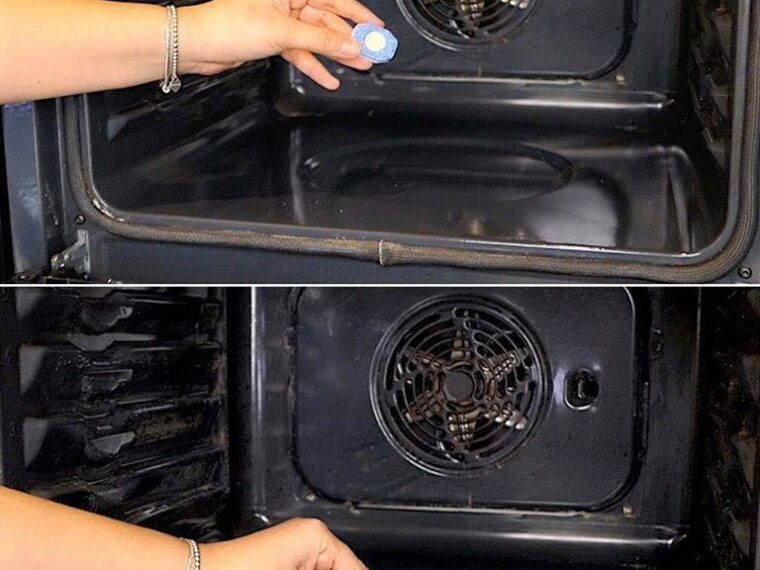
If your oven is covered in baked-on grease, dried-on food, and stubborn brown stains, you may be tempted to reach for a collection of strong cleaning products. But there’s a surprisingly simple trick that has become popular with home cooks: using a dishwasher tablet to help loosen oven grime.
The idea is simple. Dishwasher tablets are designed to tackle tough food residue, grease, and baked-on messes inside a dishwasher. With the right method, that cleaning power can also help soften stubborn oven buildup and make scrubbing much easier.
But there is an important detail: you should never put a dishwasher tablet directly on a hot oven surface or run it through the oven’s heating elements. The safest approach is to use the tablet with hot water and apply the solution only to appropriate surfaces.
Here’s how the method works.
Why Does a Dishwasher Tablet Help Clean an Oven?
Ovens collect layers of grease and food residue over time. Every time you bake or roast, some of that residue can become increasingly difficult to remove.
Dishwasher detergents are formulated to break down food particles and grease. When a dishwasher tablet is dissolved in hot water, it creates a concentrated cleaning solution that can help loosen grime.
The hot water is just as important as the tablet. Heat and moisture help soften hardened residue, making it easier to wipe away.
Think of it as giving the oven grime time to loosen before you start scrubbing.
What You’ll Need
You don’t need a complicated collection of cleaning supplies.
You’ll need:
- 1 dishwasher tablet
- A heat-resistant bowl or container
- Hot water
- Rubber gloves
- A sponge or microfiber cloth
- A non-abrasive scrubber for stubborn areas
- Clean water for rinsing
- Several dry towels
For particularly dirty ovens, you may need more than one round of cleaning.
How to Clean the Oven With a Dishwasher Tablet
Step 1: Make Sure the Oven Is Completely Cool
This is one of the most important steps.
Turn the oven off and allow it to cool completely before cleaning. Never place a dishwasher tablet, detergent solution, or wet cloth directly onto hot heating elements.
Remove the oven racks and set them aside.
Step 2: Dissolve the Tablet
Place one dishwasher tablet into a heat-resistant bowl or container.
Carefully add hot water and allow the tablet to dissolve.
You can stir it gently with a utensil if necessary, but avoid splashing the concentrated solution.
Wear gloves, especially if you have sensitive skin.
Step 3: Apply the Solution to the Dirty Surfaces
Dip a sponge or cloth into the solution and wring it out so it is wet but not dripping.
Wipe the inside surfaces of the oven, concentrating on areas with baked-on grease and food residue.
Don’t soak the oven.
Keep the cleaning solution away from heating elements, electrical components, vents, door seals, and other areas that shouldn’t become wet.
Step 4: Let It Work
This is where patience helps.
Allow the dampened residue to sit for several minutes so the warm detergent solution can soften the buildup.
For particularly stubborn areas, you can place a damp cloth over the spot temporarily to keep it moist.
Don’t leave a large amount of detergent solution sitting inside the oven for an extended period.
Step 5: Start Scrubbing
Once the grime has softened, use a sponge or non-abrasive scrubber to work on the dirty areas.
You may be surprised by how much easier the residue is to remove after it has been softened.
Work in sections rather than trying to clean the entire oven at once.
For very stubborn carbonized spots, several gentle passes are better than aggressively scraping the surface.
Step 6: Rinse Thoroughly
This step is extremely important.
Dishwasher detergent is not something you want lingering inside your oven.
Use a clean, damp cloth to wipe the surfaces repeatedly with fresh water until you have removed the cleaning residue.
You may need several passes.
Step 7: Dry Everything
Use clean towels to dry the interior as much as possible.
Leave the oven door open for a while so the remaining moisture can evaporate.
Before using the oven again, make sure there is no visible detergent residue or pooled water.
Don’t Forget the Oven Racks
The racks can be some of the dirtiest parts of the oven.
Place them in a bathtub, large basin, or another suitable container and cover them with hot water. If your rack manufacturer’s instructions permit it, a dishwasher tablet can be dissolved in the water to help loosen grease and baked-on food.
Let the racks soak, then scrub them with a suitable non-abrasive brush or sponge.
Rinse them very thoroughly and dry them before putting them back in the oven.
Check your oven and rack manufacturer’s cleaning instructions first, since some finishes can be damaged by certain detergents or abrasive cleaning methods.
What About the Oven Door?
The glass door often develops a layer of grease that can make the oven look dirty even after the interior has been cleaned.
A small amount of the diluted dishwasher-tablet solution can be used on suitable glass surfaces, provided the manufacturer permits detergent cleaning.
Apply it with a cloth or sponge rather than pouring the solution onto the door.
Afterward, wipe repeatedly with clean water and dry with a lint-free cloth.
Be particularly careful around the edges, seals, vents, and any areas where liquid could enter the door.
Important Things You Should Never Do
The dishwasher-tablet method can be useful, but it’s not a reason to ignore the manufacturer’s instructions.
Never put a dishwasher tablet directly on a hot oven floor
The tablet isn’t designed to be heated inside an operating oven.
Never turn the oven on with cleaning chemicals inside
Don’t try to “bake” the detergent into the oven to increase its cleaning power.
Don’t put detergent on heating elements
Heating elements and electrical components should remain dry.
Don’t flood the oven
More water does not mean better cleaning. Excess liquid can seep into places where it doesn’t belong.
Don’t use aggressive abrasives
Steel wool and harsh scraping can damage some oven surfaces, finishes, or glass.
Don’t mix cleaning products
Never combine dishwasher detergent with bleach, ammonia, oven cleaner, or other household chemicals. Mixing cleaning products can create dangerous fumes or chemical reactions.
Check Your Oven’s Manual First
Modern ovens aren’t all made the same.
Some have special coatings, self-cleaning functions, catalytic liners, steam-cleaning systems, or surfaces that require specific cleaning products.
If your oven has a self-cleaning or special interior coating, check the manufacturer’s instructions before using a dishwasher tablet or any other detergent.
A cleaning hack that works on one oven may not be appropriate for another.
How Often Should You Do This?
You don’t need to deep-clean your oven every time you cook.
For many households, wiping up fresh spills once the oven has cooled is enough to prevent major buildup.
A deeper cleaning can be done whenever grease and baked-on residue start becoming noticeable.
If you roast frequently, cook greasy foods, or regularly use the oven at high temperatures, you may need to clean it more often.
The Real Secret Is Letting the Grime Soften
The dishwasher tablet isn’t magic.
The biggest advantage of this method is that it combines detergent, hot water, and soaking time.
Instead of attacking hardened grease immediately with a scrubber, you first give the residue a chance to soften.
That can turn a frustrating cleaning job into something much more manageable.
And that’s why this simple trick has become so popular among people looking for an easier way to tackle a dirty oven.
A Cleaner Oven Without the Hard Scrubbing
A dirty oven can make an otherwise clean kitchen feel messy. Fortunately, you don’t always need to spend hours scraping away every stubborn spot.
A dishwasher tablet dissolved in hot water can help loosen grease and baked-on food, allowing you to wipe and scrub the residue away more easily.
Just remember that safe cleaning matters more than speed. Keep the oven completely cool, avoid heating elements and electrical components, don’t flood the interior, rinse away all detergent residue, and always follow the manufacturer’s instructions.
So the next time you open your oven and see months of baked-on grease staring back at you, don’t panic.
Put on your gloves, grab a dishwasher tablet, and give the grime a little time to soften.
Sometimes the easiest cleaning trick is simply letting the cleaner do more of the work. ✨🧽
