? 🧽
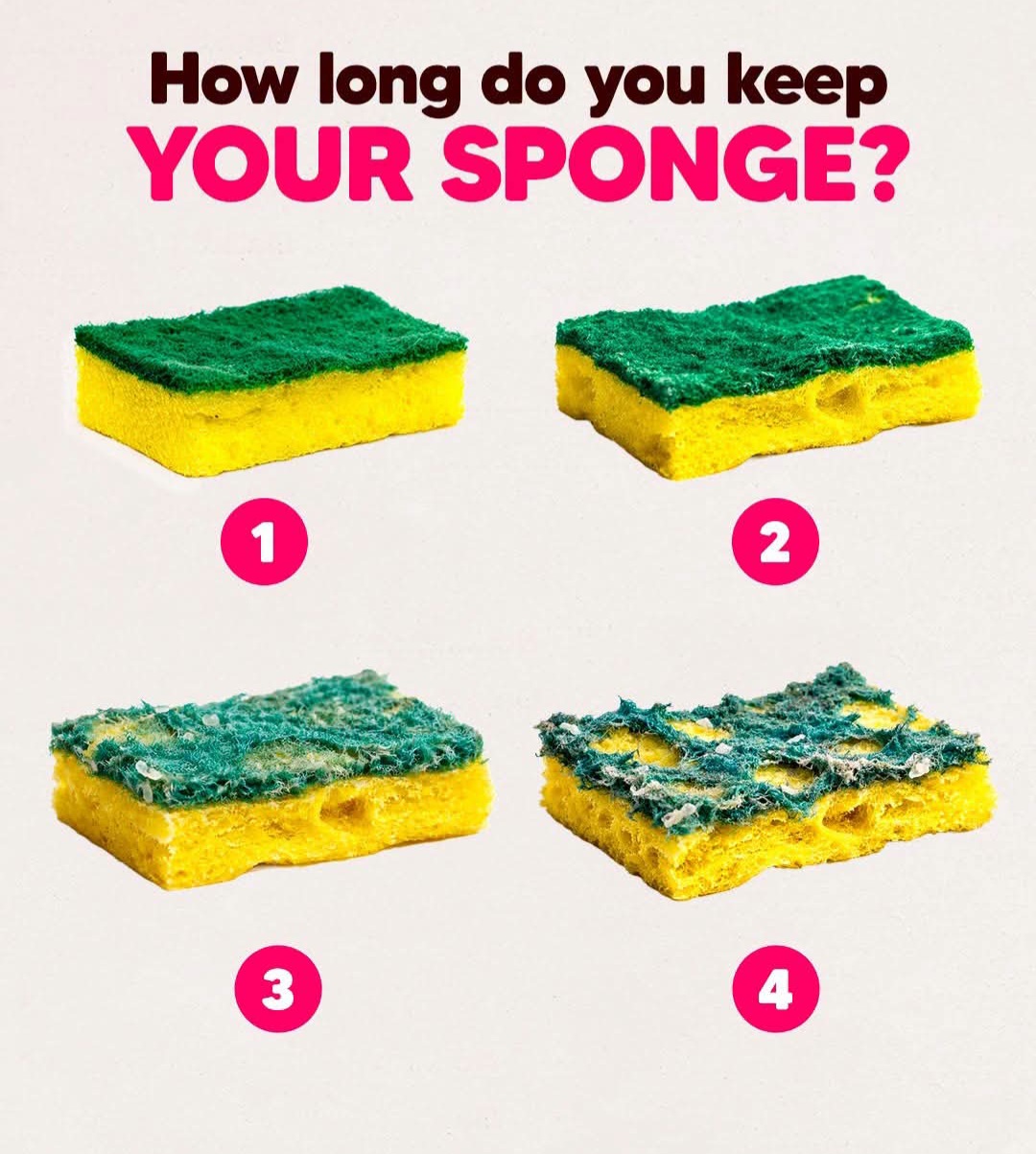
1, 2, 3, or 4?
Take a look at the four sponges in the picture. Which one looks most like the sponge sitting beside your kitchen sink right now?
Most of us don’t think twice about a kitchen sponge. We use it to wash dishes, wipe up little messes, rinse it out, and put it back beside the sink. Then we do it again tomorrow.
And again.
And again.
But your sponge may deserve more attention than you think.
🧽 Your Kitchen Sponge Gets A Lot of Use
A kitchen sponge lives in a warm, wet environment and regularly comes into contact with food particles, grease, milk, sauces, and everything else that ends up on our dishes.
That combination of moisture + food residue + time can make a sponge a good place for microorganisms to grow.
The USDA specifically warns that kitchen sponges can be sources of bacteria and can be difficult to clean completely. (Ask FSIS)
That’s why the question isn’t simply:
“Does my sponge still look usable?”
It’s also:
“How long has this sponge been sitting by my sink?”
1️⃣ Sponge #1 — Fresh and New
This is the sponge most of us would happily use.
It’s clean-looking, firm, intact, and doesn’t have an unpleasant smell.
If you just opened it, you’re starting with a clean slate.
But even a new sponge won’t stay new forever. How quickly it becomes worn depends on how often you use it and what you’re cleaning with it.
2️⃣ Sponge #2 — Used but Still Looks Fine
This is where things get tricky.
The sponge may still look perfectly acceptable, but appearances don’t tell you everything.
A sponge can accumulate microorganisms even before it looks disgusting. That’s one reason food-safety guidance recommends replacing kitchen sponges regularly rather than waiting until they’re falling apart.
The American Cleaning Institute recommends replacing traditional sponges every 1–2 weeks, depending on use, and replacing them sooner if they develop an odor or become damaged or discolored. (Institut du Nettoyage)
3️⃣ Sponge #3 — Getting Pretty Worn Out
Now we’re getting into the “maybe it’s time” category.
The scrubber may be getting fuzzy. The sponge may have changed shape. Food particles may be trapped inside, and perhaps it doesn’t rinse as easily as it once did.
If your sponge looks like this, don’t convince yourself that you have to squeeze another few weeks out of it.
A fresh sponge is inexpensive compared with the potential hassle of spreading contamination around your kitchen.
4️⃣ Sponge #4 — THROW IT OUT! 🗑️
If your sponge is slimy, smelly, visibly moldy, badly discolored, torn, or falling apart, it’s time for a new one.
Don’t wait until the sponge literally disintegrates in your hand.
A persistent unpleasant smell is particularly good reason to replace it. Food-safety guidance recommends discarding sponges when they smell bad rather than trying to keep using them indefinitely. (Institut du Nettoyage)
So, How Often Should You Replace Your Sponge?
There isn’t one universal number that applies to every household.
For a traditional kitchen sponge, a practical rule is:
Replace it about every 1–2 weeks.
If you cook frequently, use the sponge heavily, or use it for messy jobs, you may want to replace it even more often.
And don’t wait for the calendar if your sponge starts smelling, becomes slimy, develops visible mold, or begins falling apart.
Some current cleaning guidance recommends replacing traditional sponges every 1–2 weeks, while also emphasizing regular cleaning and thorough drying between uses. (Institut du Nettoyage)
🧼 Can You Clean a Sponge Instead of Throwing It Away?
You can reduce the microbial load on a sponge through proper sanitizing, but sanitizing doesn’t mean the sponge can be kept forever.
The USDA reports that microwaving and dishwashing with a drying cycle were particularly effective in its testing for reducing bacteria, yeasts, and molds on kitchen sponges. (ARS)
However, microwave sanitizing requires caution.
If you microwave a sponge:
- Make sure it is thoroughly wet.
- Never microwave a sponge containing metal.
- Don’t use the microwave method on a sponge with metallic scrubbers.
- Follow your microwave manufacturer’s safety guidance.
- Allow the sponge to cool before handling it.
A dry sponge can present a fire hazard, which is why simply putting a dry sponge in the microwave is not a safe cleaning method. (Food Network)
If your sponge is damaged, smelly, moldy, or simply past its useful life, replace it instead.
💧 The Simple Habit That Helps
After washing dishes, don’t just toss your sponge into a puddle beside the sink.
Instead:
Rinse it thoroughly.
Squeeze out as much water as possible.
Remove food particles.
Store it somewhere where air can circulate around it.
Keeping a sponge wet for long periods encourages microbial growth. Guidance from the Academy of Nutrition and Dietetics also recommends wringing sponges out and storing them in a dry location rather than leaving them wet on the counter. (Eatright)
🚫 Don’t Use Your Dish Sponge for Everything
One of the biggest mistakes is having one sponge for the entire kitchen.
The sponge you use for dishes shouldn’t become the sponge you use to wipe raw chicken juice off the counter.
Food-safety guidance specifically recommends avoiding sponges for cleaning up raw meat juices because they can spread foodborne pathogens around the kitchen. (Eatright)
It’s also better not to use the same sponge for dishes and dirty countertops.
Use separate cleaning tools for different jobs and wash reusable dishcloths frequently.
🥩 What About Raw Meat?
This is especially important.
If raw chicken, beef, pork, or seafood juices get onto your counter, don’t grab your everyday dish sponge and wipe them around.
Instead, use an appropriate disposable towel or another cleaning method recommended for the surface, then clean and sanitize the surface properly.
The USDA emphasizes that cleaning removes dirt and some bacteria, but cleaning is not the same thing as sanitizing. (FSIS)
🌿 A More Sustainable Option
If throwing away sponges every week or two feels wasteful, you have alternatives.
Consider using:
- Washable dishcloths
- Reusable scrub brushes
- Dishwasher-safe silicone scrubbers
- Separate washable cloths for different kitchen jobs
Reusable cloths can be washed frequently and thoroughly dried between uses.
The goal isn’t necessarily to use a traditional sponge forever. It’s to find a cleaning system that works for your household while keeping your kitchen hygienic.
🧽 So Which Sponge Are You?
Look at the four sponges again.
1 — Fresh and new
2 — Used but still looking okay
3 — Definitely getting old
4 — Way past its prime
If you’re staring at your own sponge right now thinking, “Oh no… mine looks like #4,” that’s probably your sign. 😂
A sponge is one of those little household items we tend to overlook because it’s inexpensive and familiar.
But sometimes the simplest kitchen habit is also one of the easiest to improve:
Keep it clean. Keep it dry. Don’t use it for raw-meat spills. And replace it regularly.
And if your sponge starts smelling funky before its scheduled replacement day?
Don’t negotiate with it. Throw it out. 🧽🗑️
