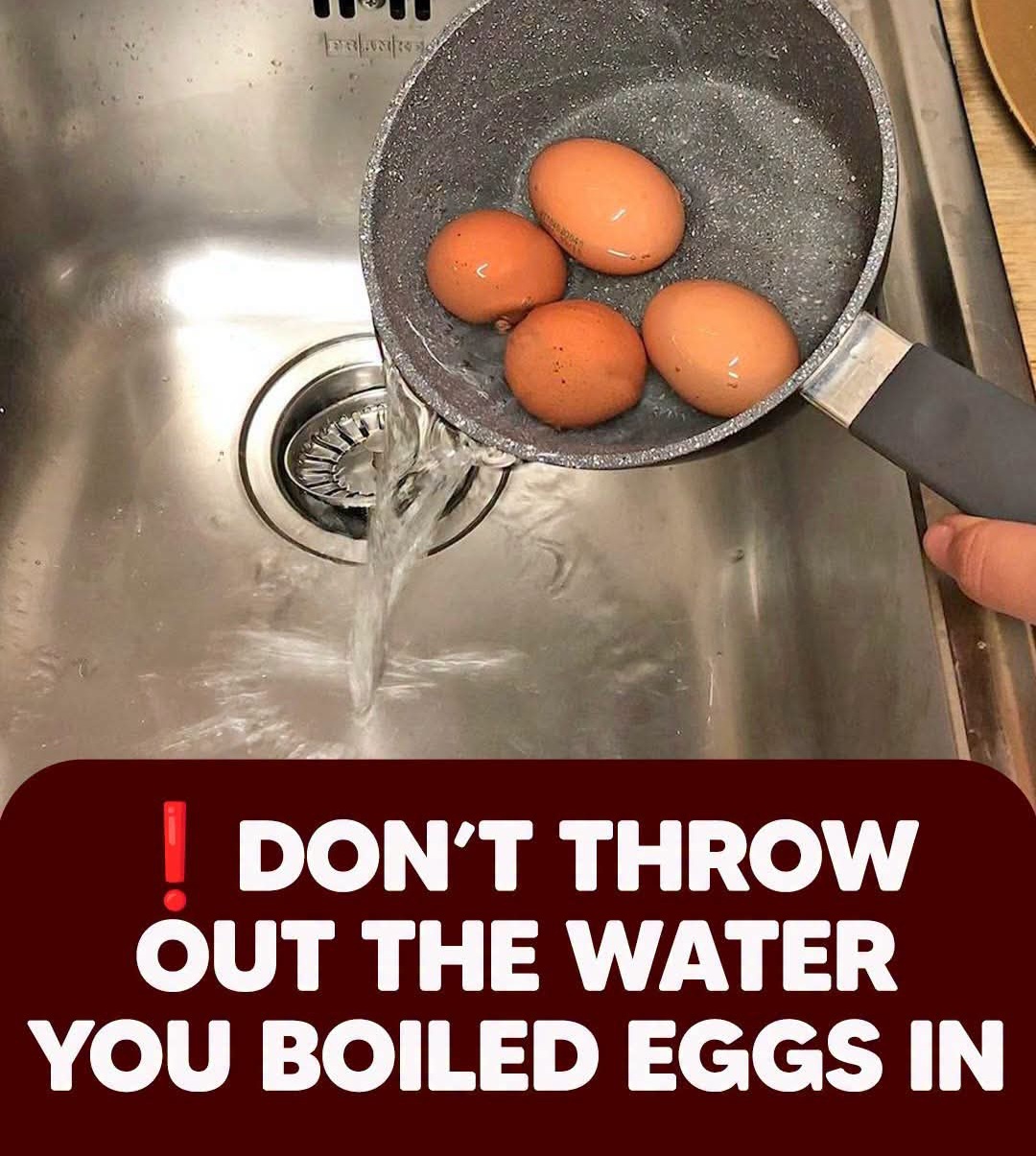
🥚🌱 Stop Throwing Out Hard-Boiled Egg Water! Save It for Your Plants Instead
If you regularly make hard-boiled eggs, you may be pouring something useful straight down the drain without realizing it.
The water left behind after boiling eggs is often shared as a natural gardening trick because some minerals from the eggshell can leach into the water. In particular, eggshells are largely made of calcium carbonate, and calcium is an important plant nutrient. (Illinois Extension)
But there’s an important catch: egg-boiling water isn’t a miracle fertilizer, and the amount of calcium that actually enters the water is relatively small. Research-based Extension guidance considers finely ground eggshells or an appropriate fertilizer a more reliable way to supply calcium when a soil test shows a need. (What’s Happening Around Florida)
Still, if you’re already boiling eggs, reusing the cooled water is an easy way to reduce kitchen waste.
🥚 Why Would Egg Water Help Plants?
Eggshells contain a large amount of calcium carbonate. During boiling, a small amount of that material can move into the cooking water.
Calcium plays several important roles in plants, including supporting cell-wall structure and normal plant development. (Ask Extension)
The key word, however, is small.
You shouldn’t think of leftover egg water as a replacement for fertilizer. It’s better viewed as a simple way to reuse something that would otherwise go down the drain.
🌱 How to Make Eggshell Water for Plants
It’s incredibly easy.
Step 1: Boil your eggs
Prepare your hard-boiled eggs as you normally would.
You don’t need to change your cooking method just to make plant water.
Step 2: Save the water
Once you’ve removed the eggs, allow the leftover water to cool completely.
Never pour hot water directly onto your plants.
Step 3: Let it cool
Bring the water all the way to room temperature.
Step 4: Water your plants
Use the cooled water to water the soil around your plants.
Pour it directly onto the soil rather than treating it as a foliar spray.
A University of Illinois Extension source describes a stronger version of this idea: boiling 10–20 eggshells, allowing them to steep overnight, then straining the water to make a liquid calcium solution. (Ask Extension)
🌿 Which Plants Can You Use It On?
For ordinary garden plants and many houseplants, cooled plain egg-boiling water can be used as an occasional watering liquid.
It may be especially appealing for gardeners growing:
- 🌱 Herbs
- 🍅 Tomatoes
- 🌶️ Peppers
- 🥒 Squash
- 🥬 Leafy vegetables
- 🌼 Flowering garden plants
- 🪴 Many common houseplants
However, don’t assume every plant needs extra calcium. Some plants have different soil and nutrient requirements, and adding nutrients unnecessarily can create imbalances. (Ask Extension)
⚠️ What About Acid-Loving Plants?
Be a little more careful with plants that prefer acidic soil, such as blueberries and azaleas.
Eggshell calcium carbonate can affect soil chemistry, although the amount transferred into ordinary egg-boiling water is limited. If you’re deliberately trying to change soil pH, it’s much better to test the soil first rather than guessing. (Ask Extension)
🍅 Can Egg Water Prevent Blossom-End Rot?
This is where gardening advice on the internet often gets exaggerated.
You may hear that eggshell water or eggshells will prevent blossom-end rot on tomatoes and peppers because they contain calcium.
The reality is more complicated.
Blossom-end rot is associated with calcium availability and transport within the plant, but inconsistent watering and problems with calcium uptake can play a major role. Simply adding eggshells or egg water isn’t a guaranteed solution. (Illinois Extension)
If you suspect a nutrient deficiency, a soil test is a much better starting point than repeatedly adding homemade remedies.
🥚 Egg Water vs. Crushed Eggshells
If your goal is specifically to add calcium to your garden, finely ground eggshells are generally a more effective approach than relying on leftover boiling water.
Why?
Large eggshell pieces break down very slowly. Illinois Extension notes that grinding eggshells into a fine powder greatly increases their availability compared with coarse pieces. (Illinois Extension)
So you can:
For easy recycling:
Save cooled egg-boiling water and use it occasionally for watering.
For adding calcium to soil:
Dry and finely grind eggshells, then add them to compost or soil when appropriate.
For a confirmed nutrient deficiency:
Use a fertilizer based on your soil-test results.
🚫 Don’t Add Salt!
This is especially important if you’re boiling eggs with salt.
If you’ve added a significant amount of salt to the cooking water, don’t use that water on your plants. Excess salts can accumulate in soil and damage plants.
Plain egg-boiling water is the better choice.
💧 Don’t Store It for Weeks
Because this is homemade leftover cooking water, there’s no reason to keep a large container sitting around indefinitely.
Let it cool, use it promptly, and clean the container if you’re storing it briefly.
And remember: plain water is still perfectly fine for plants.
🌿 The Bigger Idea: Waste Less
The best part of this gardening trick isn’t that egg water is some powerful secret fertilizer.
It’s that you’re finding another use for something you were already going to throw away.
Instead of:
Boil eggs → pour water down the drain
you can simply:
Boil eggs → cool the water → use it to water your garden.
That’s an easy little habit that fits nicely into a low-waste kitchen and garden routine.
🥚🌱 Final Thoughts
So, should you save your hard-boiled egg water?
Sure—but keep your expectations realistic.
There is evidence that some calcium from eggshells can be transferred into water during boiling, but the amount is limited. Extension experts caution that boiled egg water provides little nutritional benefit compared with proper fertilizers, and finely ground eggshells are a more effective way to recycle eggshell calcium. (What’s Happening Around Florida)
It’s not a miracle plant food, and it won’t magically revive a struggling plant.
But if you’ve already boiled a batch of eggs, letting that water cool and giving it to your plants instead of pouring it down the drain is a simple, low-cost way to reuse it.
Sometimes the best gardening tricks aren’t about buying something new—they’re about finding a second use for what you already have. 🌱🥚💚
