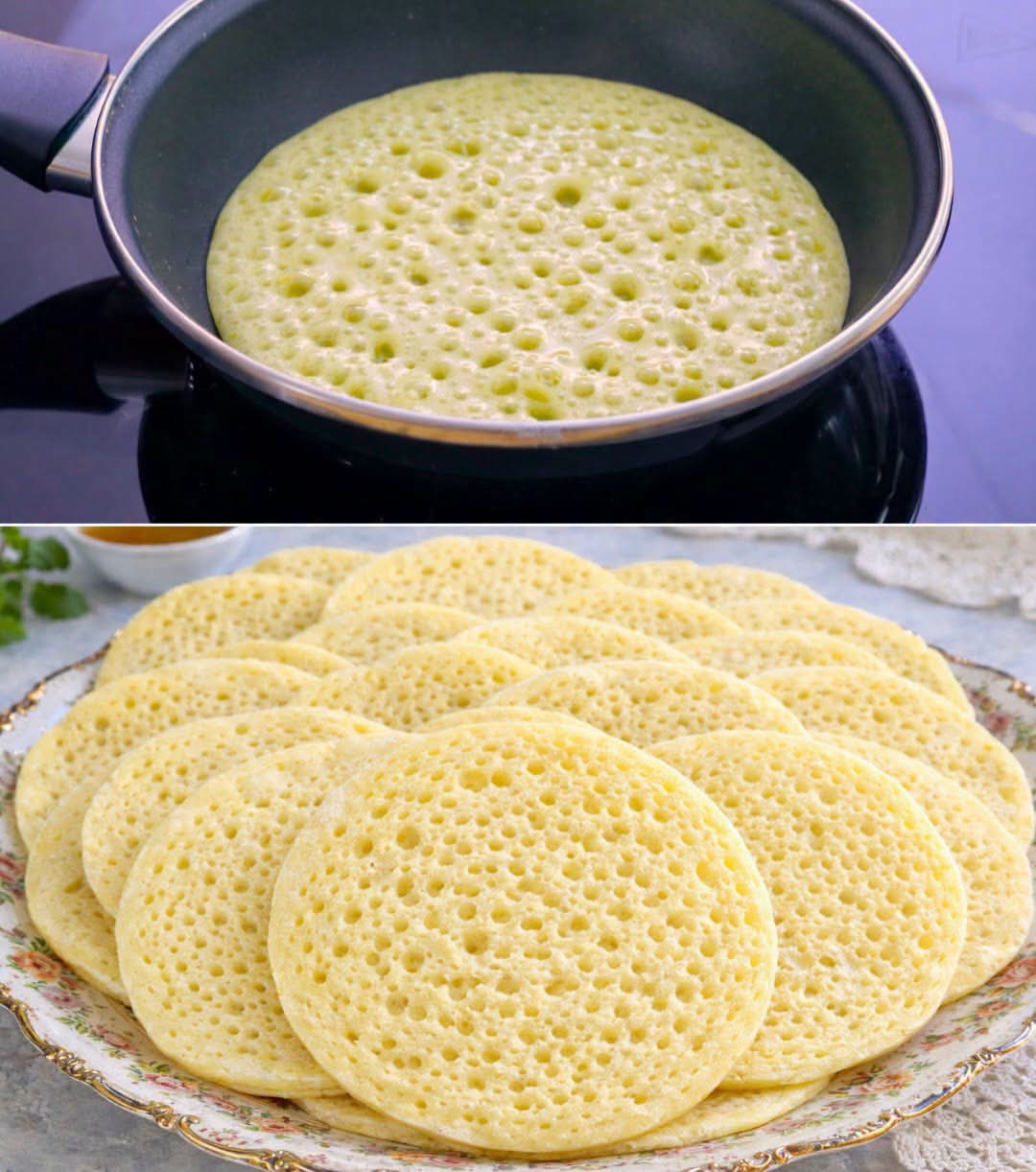
🇲🇦 Baghrir: Moroccan “Thousand-Hole” Pancakes
Soft, light, and wonderfully spongy, Baghrir are traditional Moroccan semolina pancakes famous for the hundreds of tiny holes that appear across the surface as they cook. Those little holes aren’t just beautiful—they’re perfect for soaking up melted butter and honey. (The Mediterranean Dish)
Unlike regular pancakes, Baghrir are cooked on only one side. The yeast and baking powder create bubbles in the batter, while the gentle heat allows those bubbles to rise and burst, creating the signature honeycomb-like surface. (zaffaron.com)
🥞 Moroccan Baghrir Recipe
Prep time: 10 minutes
Resting time: 20–30 minutes
Cooking time: About 20 minutes
Makes: Approximately 14–16 small pancakes
Ingredients
For the Baghrir
- 2 cups (300 g) fine semolina
- ¼ cup (35 g) all-purpose flour
- 2¼ teaspoons (7 g) instant or active dry yeast
- 1 teaspoon baking powder
- ½ teaspoon salt
- 2¾ cups (650 ml) warm water
For Serving
- 4 tablespoons butter
- 4–5 tablespoons honey
- Optional: 1–2 teaspoons orange blossom water
Fine semolina is important because it gives Baghrir their characteristic soft, spongy texture. Coarser semolina can produce a heavier, grainier pancake. (The Mediterranean Dish)
👩🍳 How to Make Baghrir
1. Blend the Batter
Add the fine semolina, flour, yeast, baking powder, salt, and warm water to a blender.
Blend for about 1 minute, until the batter is completely smooth and lightly foamy.
The batter should be thin and pourable—similar to a thin pancake batter or drinkable yogurt. (The Mediterranean Dish)
If using active dry yeast: You can first dissolve it in a little of the warm water and let it sit for about 10 minutes until bubbly before blending it with the remaining ingredients.
2. Let the Batter Rest
Pour the batter into a bowl and cover it loosely.
Let it rest at room temperature for approximately 20–30 minutes.
You should begin to see tiny bubbles forming on the surface. This is a good sign that your batter is ready. (The Mediterranean Dish)
3. Heat the Pan
Place a nonstick skillet or well-seasoned griddle over medium heat.
Once hot, reduce the heat to medium-low.
For traditional Baghrir, the pan should be essentially dry rather than coated with oil. A clean, nonstick surface makes it easier for the batter to develop its beautiful holes.
4. Cook the Baghrir
Give the batter a gentle stir.
Pour a small ladleful of batter into the center of the pan. Let it spread naturally into a round pancake.
Do not flip it.
As the Baghrir cooks, you’ll see tiny bubbles forming all over the surface. The bubbles will burst and leave behind hundreds of little holes. (zaffaron.com)
Cook for about 2–3 minutes, or until:
- The entire surface is covered with holes
- The top looks dry and set
- There is no wet batter remaining
- The bottom is lightly golden
Remove the pancake from the pan.
5. Repeat
Continue with the remaining batter.
Place the cooked Baghrir on a clean kitchen towel or plate. Avoid stacking them immediately if they’re still very hot, as allowing them to cool slightly helps prevent them from sticking together.
🧈 Make the Honey-Butter Topping
Melt the butter in a small saucepan over low heat.
Add the honey and stir until combined and warmed through.
For an especially Moroccan touch, add a little orange blossom water if you enjoy its floral flavor.
🍯 Serve
Place the warm Baghrir on a serving plate and generously drizzle with the warm honey-butter mixture.
The tiny holes act almost like little pockets, allowing the butter and honey to soak into the pancake.
Serve warm with Moroccan mint tea for a wonderful breakfast or afternoon treat.
🌸 Other Ways to Serve Baghrir
Although honey and butter are classic, you can also serve Baghrir with:
- Honey
- Melted butter
- Amlou
- Jam
- Fresh fruit
- Nut butter
- Orange blossom honey
- Powdered sugar
Amlou—a Moroccan spread made with almonds, argan oil, and honey—is another especially delicious pairing. (Gâteau et cuisine Rachida)
🇲🇦 What Makes Baghrir Different From Regular Pancakes?
The biggest difference is the texture.
Regular pancakes are usually flipped and develop a golden surface on both sides. Baghrir are cooked only on one side, leaving the top pale, soft, and covered with tiny holes. (Asif)
That porous texture is exactly what makes them so good with honey and butter.
⭐ Tips for Perfect “Thousand-Hole” Pancakes
Use fine semolina
This is one of the most important details. Fine semolina produces a smoother, more delicate Baghrir. (The Mediterranean Dish)
Don’t make the batter too thick
The batter should flow easily from the ladle. If it’s too thick, the holes may not develop properly.
Let the batter bubble
Don’t rush the resting period. The yeast needs time to work and create the bubbles responsible for the signature texture.
Don’t flip them
This is essential! Baghrir are traditionally cooked on one side only. Flipping them can flatten the delicate holes and change the texture. (zaffaron.com)
Watch your heat
If the pan is too hot, the bottom can brown before the top has a chance to develop all those beautiful holes. Medium-low heat gives the pancake time to cook gently.
Don’t press them down
Once the bubbles start appearing, leave the pancake alone. Let the steam and leavening do their work.
🥞 The Best Part?
When you pour that first ladle of batter into the pan, it may look like an ordinary pancake.
Then the magic starts.
Tiny bubbles appear.
More bubbles.
And more.
Until the entire surface looks like a little honeycomb.
That’s Baghrir—one of Morocco’s most recognizable and delicious pancakes. 🇲🇦❤️
Serve them warm, pour over plenty of honey and melted butter, and let those beautiful little holes soak it all up.
One bite and you’ll understand why these are often called Morocco’s “thousand-hole pancakes.”
