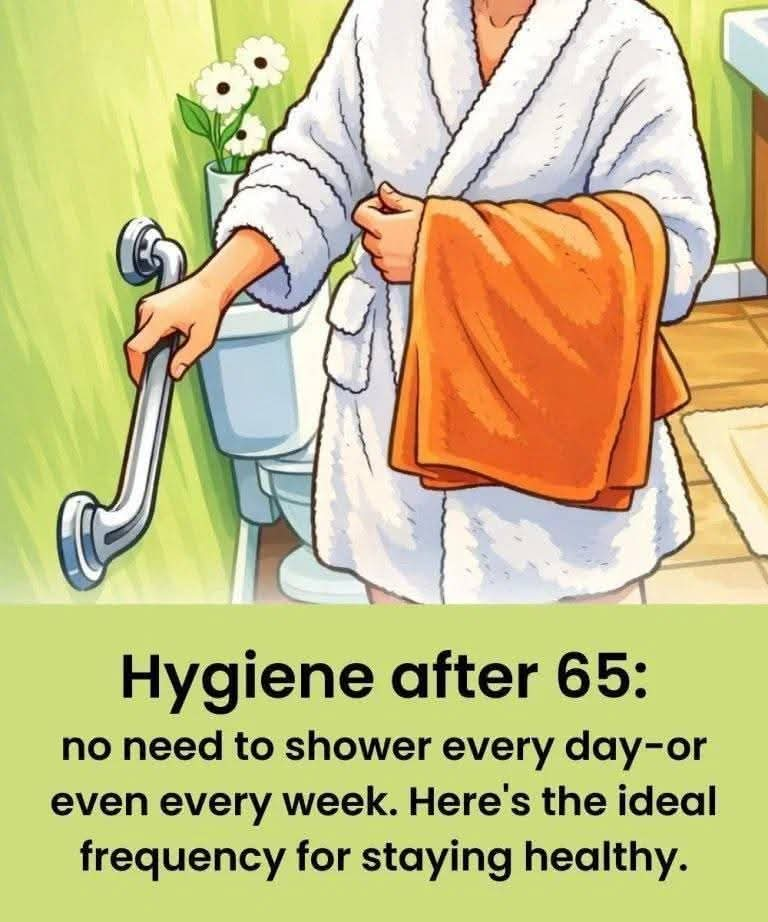
🚿 Why Daily Showers After 65 May Do More Harm Than Good
For most of our lives, taking a shower every day can feel like an ordinary part of getting ready. But as we get older, our skin changes—and the shower routine that worked perfectly well at 30 or 40 may become unnecessarily drying at 65 and beyond.
That doesn’t mean people over 65 should stop bathing or that daily showers are automatically harmful. There is no universal “correct” shower schedule for everyone. However, aging skin generally becomes thinner, produces less oil and sweat, and loses moisture more easily. That can make long, hot showers and harsh soaps especially irritating. (NIA)
So the better question isn’t necessarily “Should you shower every day?”
It’s:
“Does your skin actually need a full shower every day?”
🧴 What Changes About Your Skin After 65?
As we age, the skin becomes thinner and less elastic. Older adults also tend to produce less oil and sweat from the skin’s glands. These changes can contribute to dryness, itching, irritation, and increased skin fragility. (NIA)
The American Academy of Dermatology notes that by around age 60, nearly everyone has some degree of dry skin, although the severity varies from person to person. (Académie Américaine de Dermatologie)
That means a shower routine that once left your skin feeling fresh may eventually leave it feeling:
- Tight
- Dry
- Itchy
- Rough
- Flaky
- Irritated
And the problem may be less about the fact that you’re showering and more about how you shower.
🔥 Hot Water Can Be the Biggest Problem
There’s nothing quite like a long, hot shower.
Unfortunately, hot water can be rough on already-dry mature skin.
The National Institute on Aging specifically recommends warm rather than hot water because hot baths and showers can make dry skin worse. (NIA)
The American Academy of Dermatology also recommends keeping baths and showers short—around 5 to 10 minutes—and using warm water. (Académie Américaine de Dermatologie)
So if your idea of a relaxing shower is standing under steaming-hot water for 20 minutes, your skin may not be enjoying it nearly as much as you are.
🧼 Too Much Soap Can Also Dry Your Skin
Another issue is soap.
You don’t necessarily need to cover your entire body in a thick layer of strongly scented soap every day.
Harsh soaps and excessive cleansing can remove oils from the skin and make dryness worse. (NIA)
Dermatologists recommend choosing a gentle, fragrance-free cleanser for dry or sensitive skin.
The AAD also suggests applying cleanser mainly where it’s needed, such as the armpits and groin, rather than creating a thick lather over every inch of the body. (Académie Américaine de Dermatologie)
🚿 Does That Mean You Should Stop Showering Every Day?
Not necessarily.
This is where many viral articles oversimplify the subject.
Being over 65 doesn’t automatically mean that you should shower only once or twice a week.
Your ideal bathing schedule depends on factors such as:
- How much you sweat
- Your activity level
- Your climate
- Your occupation or daily activities
- Your skin condition
- Incontinence
- Medications
- Medical conditions
- Personal preference
For someone who exercises every day or lives in a hot climate, more frequent bathing may make perfect sense.
For someone who spends most of the day indoors and has extremely dry skin, a less frequent full-body shower may be more comfortable.
The American Academy of Dermatology specifically notes that people in their 60s and 70s may not need to bathe every day and recommends keeping showers short when they do bathe. (Académie Américaine de Dermatologie)
🧴 The Moisturizer Step That Makes a Big Difference
One of the easiest ways to protect mature skin is to moisturize immediately after bathing.
Don’t wait until your skin has completely dried.
Gently pat yourself dry with a towel, leaving a little moisture on the skin, and then apply a fragrance-free cream or ointment.
The AAD recommends applying moisturizer within about three minutes of bathing to help trap moisture in the skin. (Académie Américaine de Dermatologie)
This simple habit can make a noticeable difference for people struggling with dry, itchy skin.
⏰ A Better Shower Routine After 65
If daily showers are leaving your skin dry, try changing the routine rather than abandoning hygiene.
🚿 Keep showers short
Aim for about 5–10 minutes.
🌡️ Turn down the temperature
Use warm water instead of very hot water.
🧼 Choose gentle products
Look for fragrance-free, moisturizing cleansers.
🧽 Skip aggressive scrubbing
A soft washcloth is generally preferable to rough brushes or abrasive scrubbing tools for sensitive skin. (Académie Américaine de Dermatologie)
🧴 Moisturize immediately
Apply a fragrance-free cream or ointment while your skin is still slightly damp.
👕 Put on comfortable clothing
Soft clothing can help prevent additional irritation after bathing.
🧓 What About Days Without a Full Shower?
If your skin is very dry and you don’t need a full shower every day, you can still maintain good hygiene.
On days when a full shower isn’t necessary, a quick wash of areas such as the:
- Face
- Hands
- Underarms
- Groin/private areas
- Feet
may be sufficient for some people.
The National Institute on Aging describes this type of partial washing as an option in certain caregiving situations when a full bath or shower isn’t practical. (NIA)
The important point is that hygiene doesn’t have to mean a long, hot, full-body shower every single day.
⚠️ There’s Another Reason to Be Careful: Falls
For older adults, bathroom safety matters.
Wet floors, slippery surfaces, stepping over tub walls, and standing for long periods can increase the difficulty of bathing safely.
If balance or mobility is an issue, consider:
- Non-slip flooring or a bath mat designed for safety
- Grab bars installed properly
- A shower chair if appropriate
- A handheld showerhead
- Keeping frequently used toiletries within easy reach
- Avoiding slippery bath oils
The National Institute on Aging specifically recommends safety measures such as bath chairs and safety bars for people who need assistance with bathing. (NIA)
If someone is unsteady in the bathroom, bathroom safety may be more important than whether they shower every day.
🌿 When Daily Showers May Be Completely Fine
If you’re over 65 and your skin feels comfortable, isn’t excessively dry or itchy, and your daily shower is short, warm, and gentle, there may be no reason to change your routine simply because of your age.
The issue isn’t that “65 is the magic age when showers become bad.”
It isn’t.
Instead, aging increases the likelihood of dry and sensitive skin, which means your skin may become less tolerant of hot water, long showers, harsh cleansers, and excessive scrubbing. (NIA)
🩺 When Should You Talk to a Doctor?
Don’t automatically blame aging or showering if your skin becomes severely dry or itchy.
Talk with a healthcare professional if you develop:
- Persistent severe itching
- Cracked or bleeding skin
- Sores that don’t heal
- A spreading rash
- Signs of infection
- Sudden changes in your skin
- Severe dryness that doesn’t improve with moisturizers
Dry or itchy skin can sometimes be associated with medications or medical conditions, so persistent symptoms deserve attention. (NIA)
❤️ The Bottom Line
Getting older doesn’t mean you need to give up your daily shower.
It means your skin may need a different approach.
If your daily shower is leaving you dry and itchy, consider shortening it, lowering the temperature, using less cleanser, choosing fragrance-free products, and moisturizing immediately afterward.
And if your skin doesn’t need a full shower every day, there’s nothing wrong with choosing a more flexible bathing schedule.
The goal isn’t to shower as little as possible.
The goal is healthy skin, good hygiene, comfort, and safety. ❤️
So after 65, don’t automatically ask:
“How often should I shower?”
Instead ask:
