🍕🔥
There are few food debates more passionate than this one:
How much char is too much on a pizza? 👀🍕
Some people want a pale, golden crust with just a hint of browning. Others believe those little blackened bubbles are the best part of the entire pizza.
And then there are the people who look at the darkest pizza on the table and say:
“Yep. That’s perfect.” 😂🔥
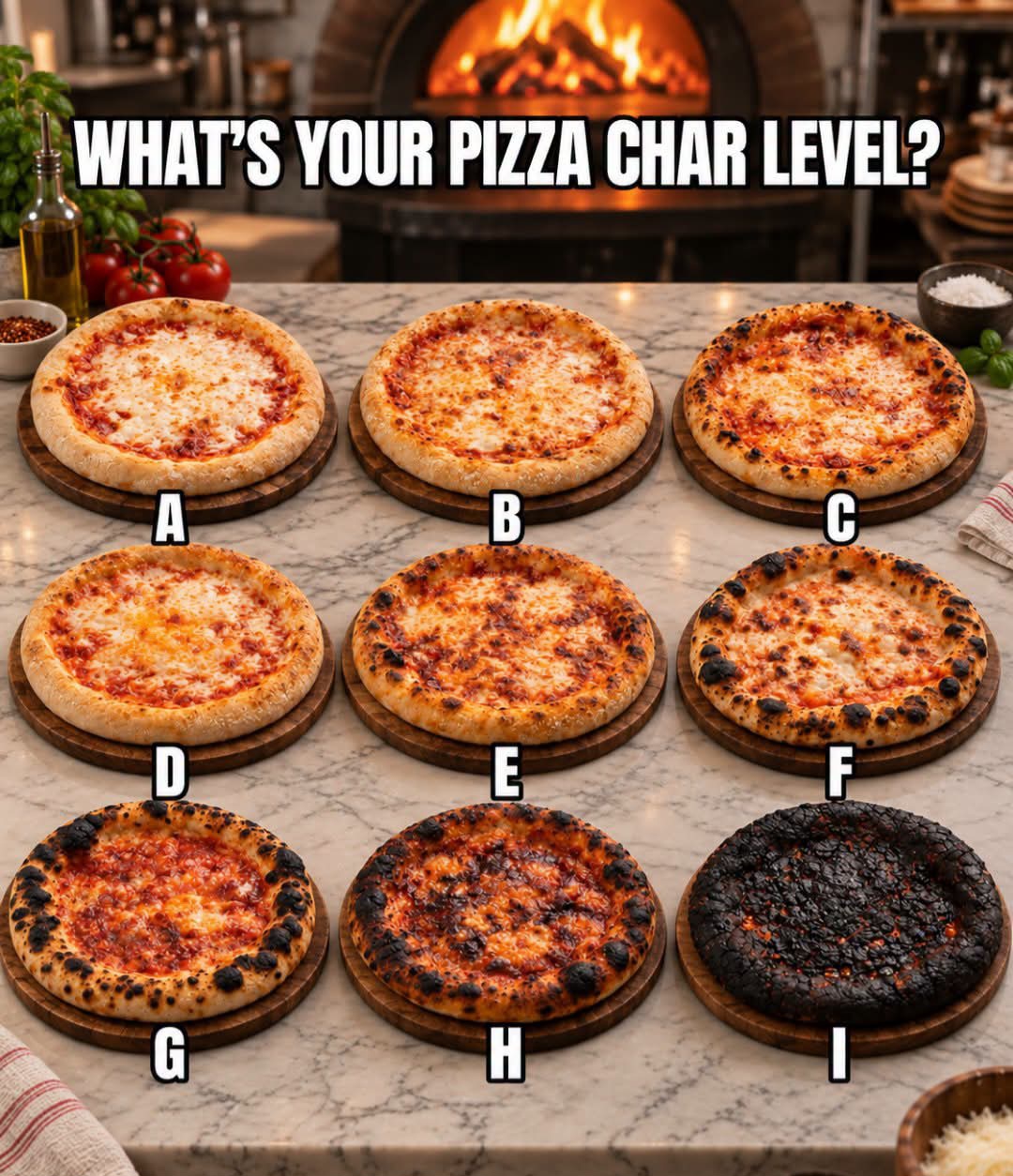
The image above takes us through several levels of pizza char, from lightly browned to seriously blackened. So where would you draw the line?
🍕 What Makes Pizza Char So Appealing?
When pizza dough is exposed to intense heat, the surface browns and develops complex roasted flavors. This is part of the appeal of traditionally high-heat pizza ovens.
That combination of:
- Crisp edges
- Chewy dough
- Toasted flour
- Caramelized toppings
- Smoky aromas
- Little blistered spots
can create an incredibly satisfying crust.
For many pizza lovers, a few dark spots aren’t a flaw at all—they’re a sign of great pizza.
🔥 Let’s Rank the Char Levels
Looking at the pizzas in the image, we can imagine the progression from A through I.
🟡 A — Barely Browned
This is for the pizza lover who prefers a soft, light-colored crust.
There’s very little visible char, and the cheese and crust remain relatively pale.
Perfect for: Anyone who likes a soft, mild, classic pizza.
Would you choose A?
🟡 B — Light Golden Brown
Now we’re getting some color.
The crust has a beautiful golden appearance without much darkening. The cheese is lightly browned, too.
This is a comfortable middle ground for people who want a little roasted flavor without strong char.
A safe choice for traditional pizza lovers.
🟠 C — Noticeably Charred
Here we start seeing those darker spots around the crust.
The pizza still looks beautifully golden overall, but there are little areas where the intense heat has created deeper browning.
This is where many people would say:
“Now THAT looks like pizza!” 🍕🔥
🟠 D — Medium Char
The crust is getting darker and more blistered.
There’s more contrast between the golden dough and the toasted areas, giving the pizza a more rustic, wood-fired appearance.
If you like a little crunch and smoky flavor without going overboard, D might be your sweet spot.
🔥 E — Serious Char
Now we’re entering the territory where the char becomes a major part of the pizza’s appearance.
The crust has several dark spots and blistered areas.
Fans of high-heat pizza might argue that this is exactly what makes the crust exciting.
Crispy edges + chewy center + smoky spots = perfection.
🔥 F — Heavy Char
This pizza isn’t hiding its char!
The crust has numerous dark, blistered areas, while the center remains recognizable as a beautifully baked pizza.
For people who love intense roasted flavors, this could be the winner.
For everyone else?
“You lost me at F.” 😂
🔥 G — Extra Charred
Now the dark spots cover much more of the crust.
This is firmly in the “I want my pizza cooked hard” category.
The important distinction is that properly charred isn’t necessarily the same thing as completely burned. Small areas of intentional blistering can contribute desirable flavor, while extensive blackening can become bitter.
🖤 H — Very Dark
At this stage, the char is impossible to ignore.
The crust has extensive blackened areas, and the pizza looks dramatically different from A or B.
Some pizza enthusiasts love this rustic, heavily blistered appearance.
Others would immediately ask for another pizza.
⚫ I — Burnt or Way Too Far?
And then there’s I. 😳
This one is so heavily blackened that it’s no longer simply a debate about how much char you like.
Extensive blackening can produce unpleasant bitter flavors, and heavily burned food isn’t something you should aim for as a cooking goal.
There’s a difference between beautifully blistered and burned to a crisp.
So if your ideal pizza is somewhere around E or F, you’re already getting plenty of intense crust flavor without needing to take it all the way to I.
🍕 Is Black Char Always Bad?
Not necessarily.
A few blackened spots don’t automatically mean a pizza is ruined. High-temperature pizza baking can produce dark blisters on the crust, particularly around the raised edges.
What matters is how much char there is and how it tastes.
There’s a big difference between:
“Look at those gorgeous little charred bubbles!” 🔥
and
“Is that pizza or a charcoal briquette?” 😂
If an area tastes bitter, acrid, or overwhelmingly burnt, that’s generally a sign that the crust has gone too far.
👨🍳 How to Get the Perfect Amount of Char at Home
If you want a beautifully browned pizza with a few dark spots, temperature and timing are everything.
1. Preheat Properly
A pizza needs a thoroughly heated oven and cooking surface. Starting with a cold or lukewarm oven makes it difficult to develop the crisp crust and browning you’re looking for.
2. Use High Heat Carefully
Pizza generally benefits from high cooking temperatures, but ovens vary considerably. Keep an eye on the crust rather than relying solely on the clock.
3. Don’t Walk Away
Once pizza gets hot enough to brown rapidly, the difference between golden and burned can happen quickly.
Watch those edges!
4. Rotate When Necessary
If one side of your pizza is browning faster than the other, carefully rotating it can help create more even cooking.
5. Watch the Toppings Too
Cheese and toppings can burn before the crust is fully cooked. If the top is becoming too dark while the bottom still needs time, adjusting the cooking setup may help.
🤔 What’s the Perfect Pizza Char?
This is where everyone’s opinion comes in.
Maybe you’re an A or B person who wants a light, golden crust.
Maybe C or D is your perfect balance.
Perhaps you’re firmly in the E or F camp and believe a pizza isn’t finished until the crust has plenty of dark, smoky spots.
Or maybe you look at G and H and think:
“MORE CHAR!” 🔥😂
There isn’t one universal definition of the perfect pizza crust.
The best pizza is ultimately the one that gives you the texture and flavor you enjoy.
🏆 PICK YOUR PIZZA CHAR LEVEL!
If you had to choose one pizza from the image, which one are you grabbing?
🍕 A — Barely browned
🍕 B — Light golden
🍕 C — Lightly charred
🍕 D — Medium char
🍕 E — Nicely charred
🍕 F — Heavily charred
🍕 G — Extra crispy
🍕 H — Very dark
🍕 I — Burnt beyond saving! 😂
👀 Be Honest…
How charred do you like your pizza?
Are you looking for those little blackened bubbles around the crust, or do you want your pizza golden from edge to edge?
Drop your letter in the comments: A, B, C, D, E, F, G, H, or I! 🍕🔥👇
And remember…
A little char can be delicious—but there’s a fine line between “perfectly blistered” and “call the fire department.” 😂🚒
