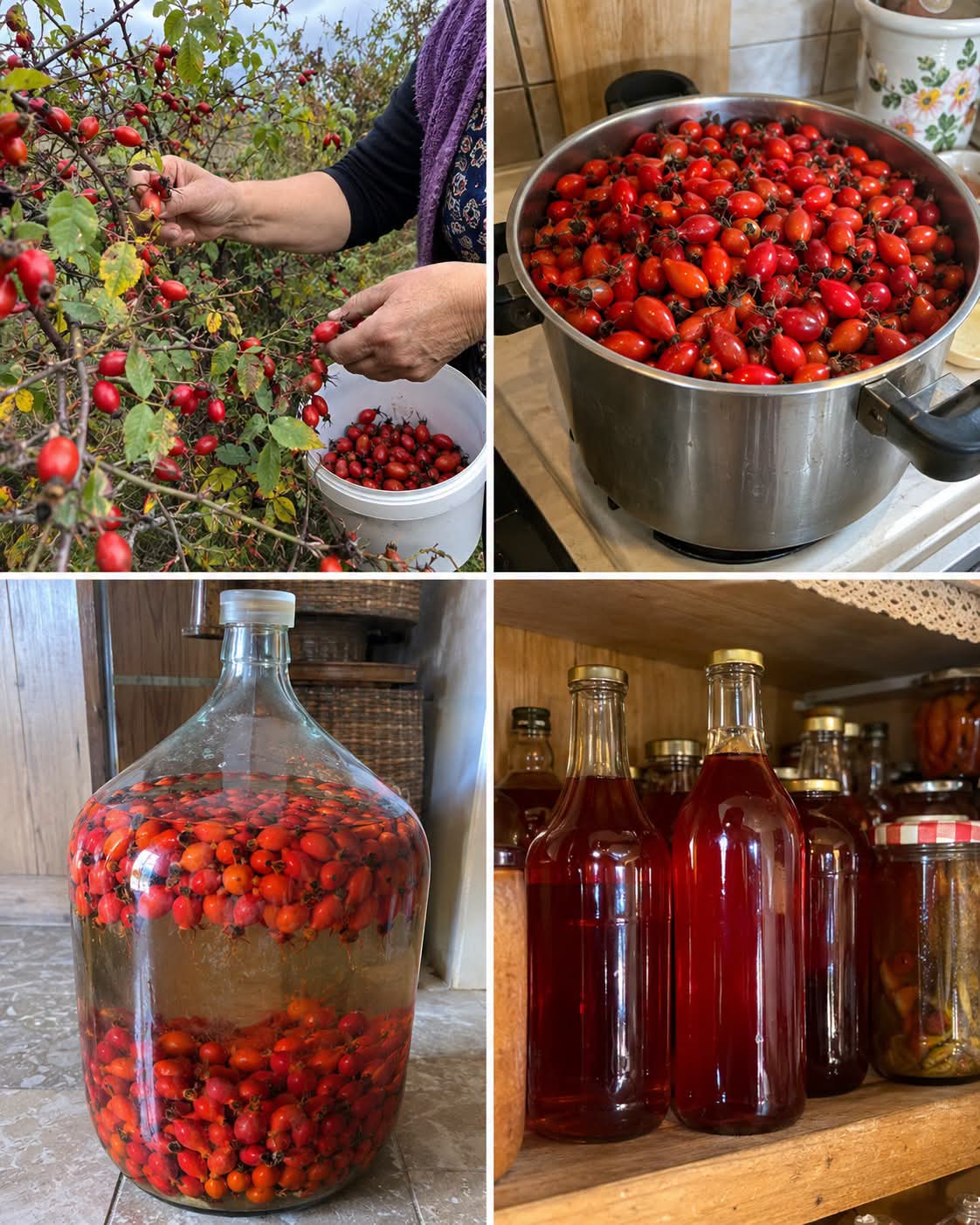
🍷 Homemade Rosehip Wine Recipe 🌹
Rosehip wine is a beautiful homemade fruit wine with a delicate floral aroma, bright color, and pleasantly tart flavor. Made from ripe rosehips, sugar, water, and wine yeast, it takes patience to ferment, but the result is a unique drink that can be enjoyed chilled or served for a special occasion.
Rosehips are naturally rich in vitamin C when fresh, although much of that vitamin can be reduced during fermentation and processing. So this wine is best enjoyed for its flavor rather than treated as a vitamin supplement.
🌹 Ingredients
- 2½–3 pounds ripe rosehips
- 3½ pounds granulated sugar
- 1 gallon water
- 1 packet wine yeast, preferably a yeast suitable for fruit wine
- 1 teaspoon yeast nutrient
- 2 tablespoons fresh lemon juice
- 1 tablespoon fresh orange juice
- ½ teaspoon pectic enzyme, optional
- 1 Campden tablet, optional, if following a sulfite-based winemaking method
Equipment
- Large food-safe fermentation bucket
- Fermentation vessel or glass carboy
- Airlock and stopper
- Fine-mesh straining bag or cheesecloth
- Sanitized siphon
- Hydrometer, optional but recommended
- Sanitized wine bottles
- Wine corks or suitable bottle closures
🍷 Step 1: Prepare the Rosehips
Choose fully ripe, clean rosehips. Remove the stems and blossom ends, then rinse them thoroughly.
Discard any fruit that is moldy, rotten, or damaged.
Crush the rosehips gently with a sanitized masher or spoon. You don’t need to turn them into a puree; breaking the fruit open is enough to help release the flavor.
🍯 Step 2: Prepare the Sugar Mixture
Bring about half of the water to a boil.
Place the sugar in your sanitized fermentation bucket and carefully pour the hot water over it. Stir until the sugar has completely dissolved.
Add the remaining cool water and allow the mixture to cool to room temperature.
Never add wine yeast to very hot liquid because excessive heat can kill the yeast.
🍊 Step 3: Add the Fruit and Other Ingredients
Place the crushed rosehips into a sanitized fermentation bag and put the bag into the fermentation bucket.
Add the lemon juice, orange juice, yeast nutrient, and pectic enzyme if using.
If you’re using a Campden tablet, follow the product’s directions and wait the recommended time before adding the yeast.
🍾 Step 4: Add the Wine Yeast
Once the mixture has cooled to approximately room temperature, add the wine yeast according to the manufacturer’s instructions.
Stir gently using a sanitized utensil.
Cover the fermentation bucket with its lid or a clean cloth according to your fermentation setup.
🫧 Step 5: Primary Fermentation
Allow the rosehip mixture to ferment in a cool, dark location.
For the first several days, gently stir the fruit once a day with a sanitized utensil.
You should begin to notice bubbling, foam, and a pleasant fermented-fruit aroma.
Primary fermentation generally lasts about 5–7 days, although the exact timing depends on temperature, yeast, and sugar concentration.
🍷 Step 6: Transfer to a Carboy
After the vigorous fermentation begins to slow, remove the rosehip fruit.
Strain the liquid carefully through a sanitized straining bag or fine-mesh sieve.
Transfer the liquid into a sanitized glass carboy or other suitable fermentation vessel.
Fit the vessel with an airlock.
The airlock allows carbon dioxide to escape while helping prevent outside air and contaminants from entering.
⏳ Step 7: Secondary Fermentation
Allow the wine to ferment undisturbed in a cool, dark place.
This stage can take several weeks to a few months.
For the clearest and most predictable result, use a hydrometer to monitor fermentation. The wine should be allowed to ferment until the specific gravity is stable on repeated readings rather than relying only on the number of days that have passed.
🍾 Step 8: Rack the Wine
Once fermentation has finished and sediment has collected on the bottom, carefully siphon the clear wine into another sanitized vessel.
Try not to disturb the sediment.
If additional sediment develops, the wine can be racked again after several weeks.
🌹 Step 9: Let It Mature
Rosehip wine benefits from patience.
Allow it to mature for at least 3–6 months. Longer aging can produce a smoother, more rounded flavor.
The wine may initially taste quite tart or sharp, but those flavors often soften with aging.
🍷 Step 10: Bottle
When fermentation is completely finished and the wine is clear, carefully siphon it into sanitized wine bottles.
Do not bottle wine while fermentation is still active. Continued fermentation inside sealed bottles can create dangerous pressure and potentially cause bottles to break.
Seal the bottles with suitable wine closures and store them in a cool, dark place.
🥂 How to Serve Rosehip Wine
Chill the wine before serving.
It can be served on its own in a small wine glass or paired with:
- Soft cheeses
- Roasted poultry
- Light desserts
- Fresh fruit
- Nut-based desserts
- Mild pastries
Its tart, fruity character makes it especially pleasant when served cold.
🌹 Tips for Better Rosehip Wine
Use ripe fruit: Fully ripe rosehips generally provide better flavor and color.
Keep everything sanitized: Clean and sanitize fermentation equipment, containers, utensils, bottles, and anything that comes into contact with the wine.
Don’t rush fermentation: Fermentation times vary. Use stable hydrometer readings rather than a calendar alone to determine when fermentation is finished.
Be patient: Homemade fruit wine often improves considerably with aging.
Don’t seal actively fermenting wine: This is one of the most important safety points. Fermentation produces carbon dioxide, which can build dangerous pressure in sealed containers.
🍷 Important Note About Alcohol
This is a fermented alcoholic beverage. The final alcohol content depends on the amount of fermentable sugar, yeast, fermentation conditions, and whether fermentation finishes completely.
Because homemade wine can continue fermenting if bottled too early, make sure fermentation has completely stopped before bottling.
Drink responsibly and follow the laws that apply where you live regarding homemade alcoholic beverages.
🌹 Frequently Asked Questions
Can I use dried rosehips?
Yes. Dried rosehips can be used, although the flavor and color will differ from wine made with fresh fruit. Make sure they are food-grade and free from preservatives that could interfere with fermentation.
How long does rosehip wine take to make?
Although the active fermentation may take weeks, the entire process is much longer. For the best flavor, plan on several months from preparation to drinking.
Why is my wine cloudy?
Young fruit wine can naturally be cloudy because of yeast, fruit particles, and other suspended material. Time, careful racking, and proper clarification can help it become clearer.
Can I make it sweeter?
Yes, but sweetness should be adjusted only after fermentation is complete. If sugar is added to a wine that still contains active yeast, fermentation can restart. Any sweetening and stabilization method should follow established winemaking practices.
❤️ Final Thoughts
Making rosehip wine is a slow, traditional-style project that rewards patience. The combination of tart rosehips, citrus, and gentle fermentation creates a distinctive homemade drink with a beautiful fruit character.
If you’ve never made fruit wine before, rosehip wine is a fun recipe to add to your homemade beverage collection—just remember that clean equipment, controlled fermentation, and patience are the keys to a successful batch.
