🌽🌿 Most People Have No Idea About Its Traditional Uses 🍵
The next time you peel back the husk from fresh corn, don’t be so quick to throw away those long, silky strands.
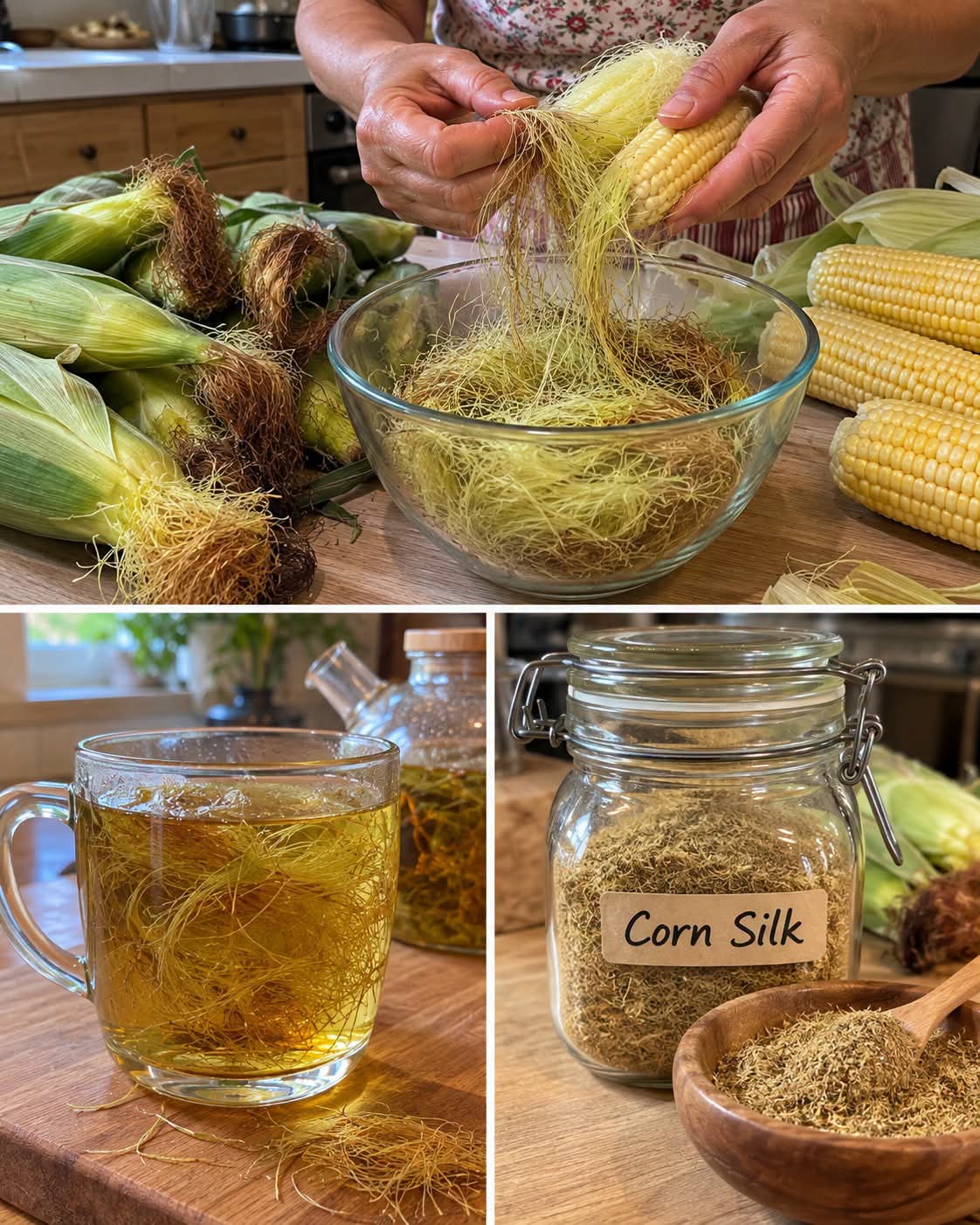
That pale, thread-like material is called corn silk, and for generations it has been used in traditional food and herbal preparations in different parts of the world.
Today, corn silk is often discarded as kitchen waste. But if you have fresh corn available, you can easily turn this overlooked part of the plant into a simple herbal tea.
While corn silk has a long history of traditional use, it’s important to distinguish traditional practices from modern medical claims. Corn silk tea can be enjoyed as a beverage, but it shouldn’t be considered a treatment or cure for a medical condition.
🌽 What Exactly Is Corn Silk?
Corn silk is the collection of soft, thread-like strands that grow underneath the husk of an ear of corn.
Botanically, these strands are connected with the reproductive structures of the corn plant. Each strand is associated with a potential kernel on the cob.
Fresh corn silk is usually pale green, yellow, or light brown and has a soft, almost silky texture—which explains its name.
Once the corn is husked, most people simply toss it into the trash or compost bin.
But traditionally, the silk has been collected and prepared as a tea or infusion.
🍵 How Corn Silk Has Traditionally Been Used
Corn silk has appeared in various traditional herbal practices, particularly as an infusion or tea.
Traditional uses have included drinking corn silk tea as a gentle herbal beverage and using it in preparations associated with urinary and fluid-related wellness.
However, traditional use does not establish that corn silk can diagnose, prevent, or treat a disease.
Research into corn silk and its compounds is ongoing, and evidence from laboratory or animal studies should not automatically be interpreted as proof that drinking corn silk tea produces the same effects in humans.
🌿 How to Make Corn Silk Tea
Making corn silk tea is remarkably simple.
Ingredients
- A small handful of fresh corn silk
- 2 cups water
- Honey or lemon, optional
Instructions
1. Clean the corn silk
Remove the silk from fresh corn and carefully pick out any pieces of husk, dirt, or damaged material.
Rinse it thoroughly under cool running water.
2. Heat the water
Bring 2 cups of water to a gentle boil.
3. Add the corn silk
Place the clean corn silk into the water.
Reduce the heat and allow it to gently simmer for about 5–10 minutes.
4. Steep
Remove from the heat and let it stand for another 5–10 minutes.
5. Strain
Pour the tea through a fine strainer and discard the silk.
6. Serve
Enjoy warm or allow it to cool and serve over ice.
A little lemon or honey can be added for flavor if desired.
🍋 What Does Corn Silk Tea Taste Like?
Corn silk tea has a mild, earthy flavor with a subtle sweetness.
It’s not as strongly flavored as many herbal teas, which makes it easy to customize.
Try adding:
- Fresh lemon
- A small amount of honey
- Fresh mint
- A slice of ginger
- A cinnamon stick
For a refreshing summer drink, allow the tea to cool completely and serve it over ice with lemon and mint.
🌽 Can You Eat Fresh Corn Silk?
Corn silk is not generally eaten like corn kernels, but young, tender silk can be incorporated into some traditional culinary preparations.
If you’re collecting it for tea, however, simply washing it and steeping it is the easiest approach.
Always use corn silk from clean, food-grade corn and avoid material that has been exposed to pesticides or other chemicals unless you know it is suitable for consumption.
🌿 How to Dry Corn Silk for Later
If you have more corn silk than you can use immediately, you can dry it.
Simple air-drying method
- Remove the silk from the corn.
- Inspect it carefully and discard damaged pieces.
- Rinse briefly if necessary.
- Pat it thoroughly dry.
- Spread it in a thin layer on a clean tray or drying rack.
- Place it somewhere clean, dry, and well ventilated.
- Turn it occasionally as it dries.
- Once completely dry and brittle, store it in an airtight container.
Keep dried corn silk away from moisture, heat, and direct sunlight.
If there is any sign of mold or an unusual smell, discard it.
♻️ A Simple Way to Reduce Kitchen Waste
One of the nicest things about corn silk is that using it gives you another opportunity to make use of something that would otherwise become kitchen waste.
The same idea can be applied to many other food scraps and plant parts.
Depending on the ingredient, kitchen leftovers can sometimes become:
- Homemade stock
- Herbal infusions
- Seasonings
- Compost
- Natural dyes
- Garden mulch
Not every food scrap is suitable for eating, of course. But learning which parts can be safely reused can help reduce unnecessary waste.
⚠️ Corn Silk Tea Safety
Corn silk is a food-derived herbal preparation, but “natural” does not automatically mean risk-free.
Corn silk may have diuretic effects, meaning it may increase urination. Because of this, people taking medications that affect fluid balance or blood pressure should be particularly cautious.
It may also interact with medications or supplements that affect blood sugar or blood clotting.
If you’re pregnant or breastfeeding, take prescription medications, have kidney or heart problems, have a condition affecting blood pressure or blood sugar, or are preparing to use corn silk regularly in concentrated amounts, speak with a healthcare professional first.
Also avoid drinking homemade corn silk preparations made from corn that may have been treated with pesticides or other chemicals unless the corn is known to be appropriate for consumption.
Corn silk tea should be viewed as a beverage with traditional uses—not as a substitute for medical treatment.
🌽 Frequently Asked Questions
Can I use corn silk from store-bought corn?
Yes, provided the corn is fresh, clean, and suitable for eating. Wash the silk thoroughly before preparing it.
Can I use dried corn silk?
Yes. Dried corn silk can be stored and used later for tea. Make sure it was dried completely and stored in a clean, dry container.
Does corn silk tea taste like corn?
It has a very mild flavor. Many people describe it as subtly sweet and grassy rather than strongly “corn-like.”
Can I drink corn silk tea every day?
Traditional use does not automatically establish that daily long-term consumption is safe or beneficial. If you want to consume it regularly, especially in larger amounts, it’s sensible to discuss it with a healthcare professional.
Can I add honey?
Absolutely. Honey and lemon pair particularly well with the mild flavor of corn silk tea.
🌿 Final Thoughts
Corn silk may look like something that belongs in the compost bin, but this humble part of the corn plant has a surprisingly long history of traditional use.
The next time you’re preparing fresh corn, consider saving some of those silky strands instead of automatically throwing them away. With a little hot water, you can turn them into a simple, naturally caffeine-free herbal infusion.
Just remember: traditional use is not the same thing as proven medical treatment. Enjoy corn silk tea for its flavor and cultural history, and use extra caution if you take medications or have a health condition.
🌽 Have you ever tried corn silk tea? Would you save the silk from your next batch of fresh corn?
