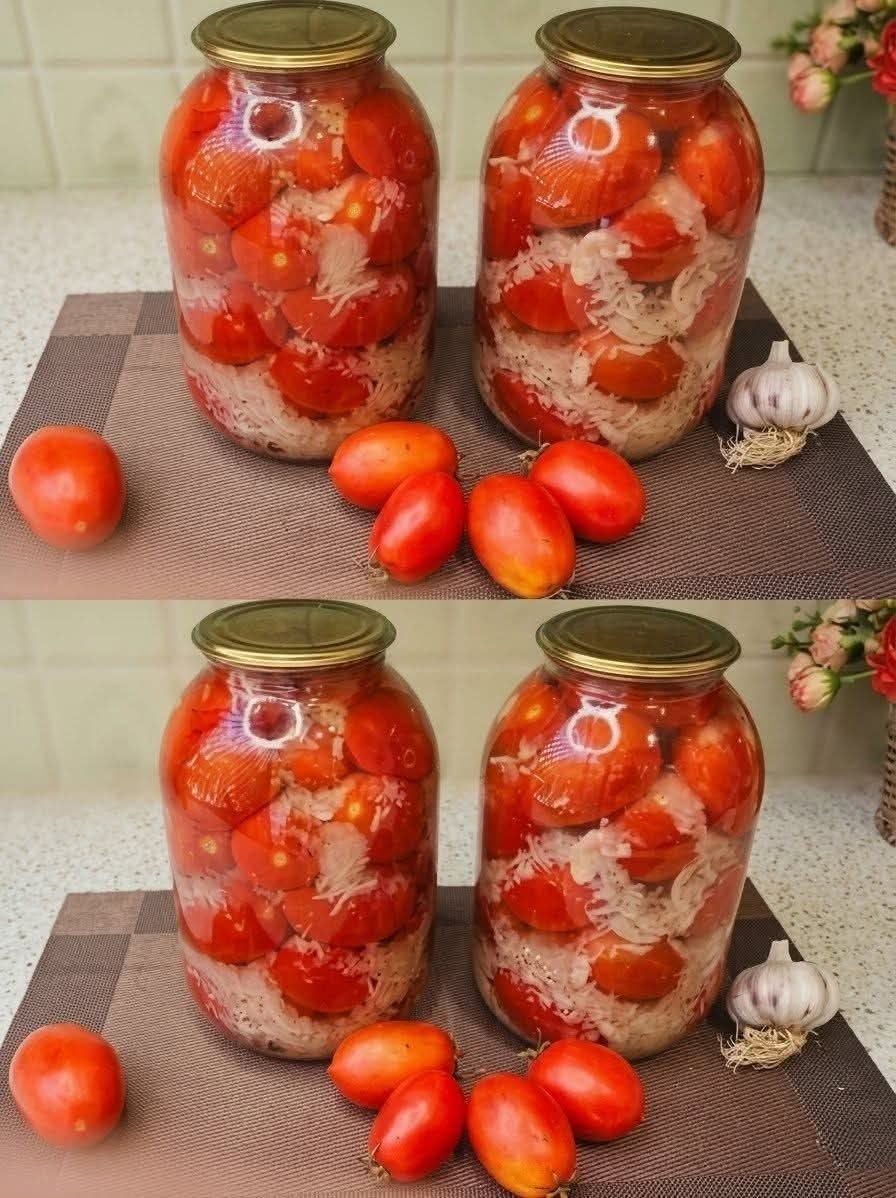
Equipment Needed
- Boiling water bath canner (or large stockpot fitted with an elevated bottom rack)
- 6 to 7 quart mason jars (or 12 to 14 pint jars) with brand-new flat lids and screw bands
- Large stockpot (for boiling water blanch bath)
- Large basin or tub filled with ice water (for ice bath shocking)
- Canning funnel, jar lifter, and plastic headspace / debubbling tool
- Clean kitchen towels
Ingredients & Acidification Ratios
Fresh Tomato Base
- Approx. 21 lbs (9.5 kg) ripe, firm tomatoes for a standard canner load of 7 quarts (approx. 3 lbs per quart)(Plum/paste varieties like Roma, San Marzano, or Amish Paste yield the best meat-to-water ratio; beefsteak and heirloom slicers are juicy and ideal for packing in their own juice)
Mandatory Acidification (Non-Negotiable per Jar)
Add directly into the empty jar before packing:
| Jar Size | Bottled Lemon Juice | OR | Citric Acid Powder |
| Pint Jar (16 oz) | 1 tablespoon (15ml) | OR | ¼ teaspoon (1.25g) |
| Quart Jar (32 oz) | 2 tablespoons (30ml) | OR | ½ teaspoon (2.5g) |
- Note: Always use commercial bottled lemon juice (guaranteed 4.5% standardized acidity) rather than fresh lemons, which fluctuate widely in natural acid content. Citric acid powder produces a cleaner, neutral flavor with zero citrus undertones.
Optional Additions (Flavor Only — Not for Preservation)
- ½ tsp pickling/canning salt per pint (or 1 tsp per quart)
- Boiling water or heated tomato juice (for water/juice pack methods)
Step-by-Step Canning Instructions
1.Score, Blanch, and Shock:Loosens skins in seconds without cooking the tomato flesh.
Wash firm, ripe tomatoes thoroughly under cool running water. Discard any bruised, diseased, or moldy fruit. Using a small paring knife, cut a shallow “X” through the skin at the blossom end of each tomato. Working in small batches, lower the tomatoes into a large pot of boiling water for 30 to 60 seconds until the skins begin to split and curl. Transfer immediately with a slotted spoon into a large basin of ice water to halt cooking.
2.Peel and Core:Removes tough skins and cores for a clean texture.
Slip the loosened skins off with your fingers—they should slide away effortlessly. Cut out the stem core with a paring knife. Leave the tomatoes whole, or slice them into halves or quarters depending on your cooking preference.
3.Sterilize & Acidify Clean Jars:Non-negotiable food safety step: acidify empty jars first.
Keep clean pint or quart mason jars warm in simmering canner water. Remove one jar at a time. Add the required acid directly into the bottom of each jar: 2 tablespoons bottled lemon juice (or ½ tsp citric acid) per quart jar, or 1 tablespoon (or ¼ tsp citric acid) per pint jar. Add canning salt if desired.
4.Pack the Tomatoes:Choose Pack Style: Raw Pack vs. Hot Pack.
- Raw Pack (Packed in Water): Pack raw, peeled tomatoes firmly into warm jars leaving ½-inch headspace. Ladle clean boiling water into the jars, maintaining the ½-inch headspace.
- Raw Pack (Packed in Own Juice): Pack raw tomatoes tightly into jars, pressing down gently with a wooden spoon or ladle so they release their own juices until the liquid covers the fruit, leaving ½-inch headspace.
- Hot Pack (Recommended for Best Flavor/Texture): Place peeled tomatoes in a large pot, cover with boiling water or tomato juice, and gently simmer for 5 minutes. Pack the hot tomatoes into jars and cover with the hot cooking liquid, leaving ½-inch headspace.
5.Debubble, Wipe Rims, and Cap:Eliminates trapped air pockets that degrade seals.
Slide a non-metallic bubble remover or plastic spatula around the inner perimeter of the jar, pressing gently inward to dislodge trapped air bubbles. Recheck headspace and adjust liquid to ensure exactly ½ inch remains. Wipe the glass jar rim with a clean paper towel dampened with white vinegar (cuts through tomato acids and seeds). Center a flat lid on the jar and screw the metal ring down until fingertip-tight (do not over-tighten).
6.Process in the Water Bath:45 minutes for quarts in water; 85 minutes in own juice.
Lower the packed jars onto the rack inside the canner. Ensure the water level covers the jar lids by at least 1 to 2 inches (add hot kettle water if necessary). Cover the canner and bring to a rolling boil. Start your processing timer only when a vigorous, rolling boil is achieved:
- Water Pack: 40 min (pints) / 45 min (quarts)
- Juice/Own-Juice Pack: 85 min (pints & quarts)
- (Adjust for your elevation).
7.Cool and Verify Seals:24-hour undisturbed cooling prevents siphoning.
When the timer completes, turn off the heat, remove the canner lid, and let the jars sit in the hot water for 5 minutes (this acclimates the glass and prevents siphoning). Use a jar lifter to lift jars straight up without tilting and transfer onto a towel-lined counter, leaving 1 inch between jars. Let sit undisturbed for 12 to 24 hours. Check that all center lids have depressed downward with a concave seal. Remove outer rings, wipe jars, label, and store in a cool pantry.
Crucial Canning Safety & Food Science Rules
- Why Oven Canning is Dangerous: Never attempt “dry oven canning” or putting hot sauce into oven-heated jars without water processing. Glass jars are not engineered for dry oven heat and can shatter; more importantly, dry air transfers heat poorly, failing to reach the internal sterilization temperatures required to eliminate bacterial spores.
- Why Acidification is Mandatory: Tomatoes pulled from dead vines, overripe tomatoes, or low-acid yellow/orange varieties can have a pH well above 4.8. Adding bottled lemon juice or citric acid drops the pH reliably below 4.2, creating an environment where botulinum spores cannot germinate or produce toxins.
- Liquid Siphoning: If liquid escapes from the jar during processing, it is usually caused by fluctuating burner heat, failing to debubble, or skipping the 5-minute rest inside the canner before lifting. As long as the lid seals concave and holds, the remaining food is safe, though exposed fruit above the liquid line may darken over time.
Nutritional Breakdown
Estimated nutritional content per 1-cup (240g) serving of home-canned diced/crushed tomatoes.
| Metric | Amount Per Serving | % Daily Value* |
| Calories | 45 kcal | — |
| Total Fat | 0.5 g | 1% |
| – Saturated Fat | 0.1 g | 0% |
| Cholesterol | 0 mg | 0% |
| Sodium | 180 mg (with optional salt) | 8% |
| Total Carbohydrates | 9 g | 3% |
| – Dietary Fiber | 2.5 g | 9% |
| – Net Carbohydrates | 6.5 g | — |
| – Total Sugars | 5.5 g (natural fruit sugars) | — |
| Protein | 2.0 g | 4% |
| Lycopene (Bioavailable Antioxidant) | 9,200 mcg | — |
| Vitamin C | 28 mg | 31% |
| Vitamin A | 1,150 IU | 23% |
| Potassium | 530 mg | 11% |
