🦆 Is This Normal?
If you raise ducks, collect their eggs, and occasionally crack one open only to discover a strange green or olive-colored yolk, you might wonder whether something is wrong!
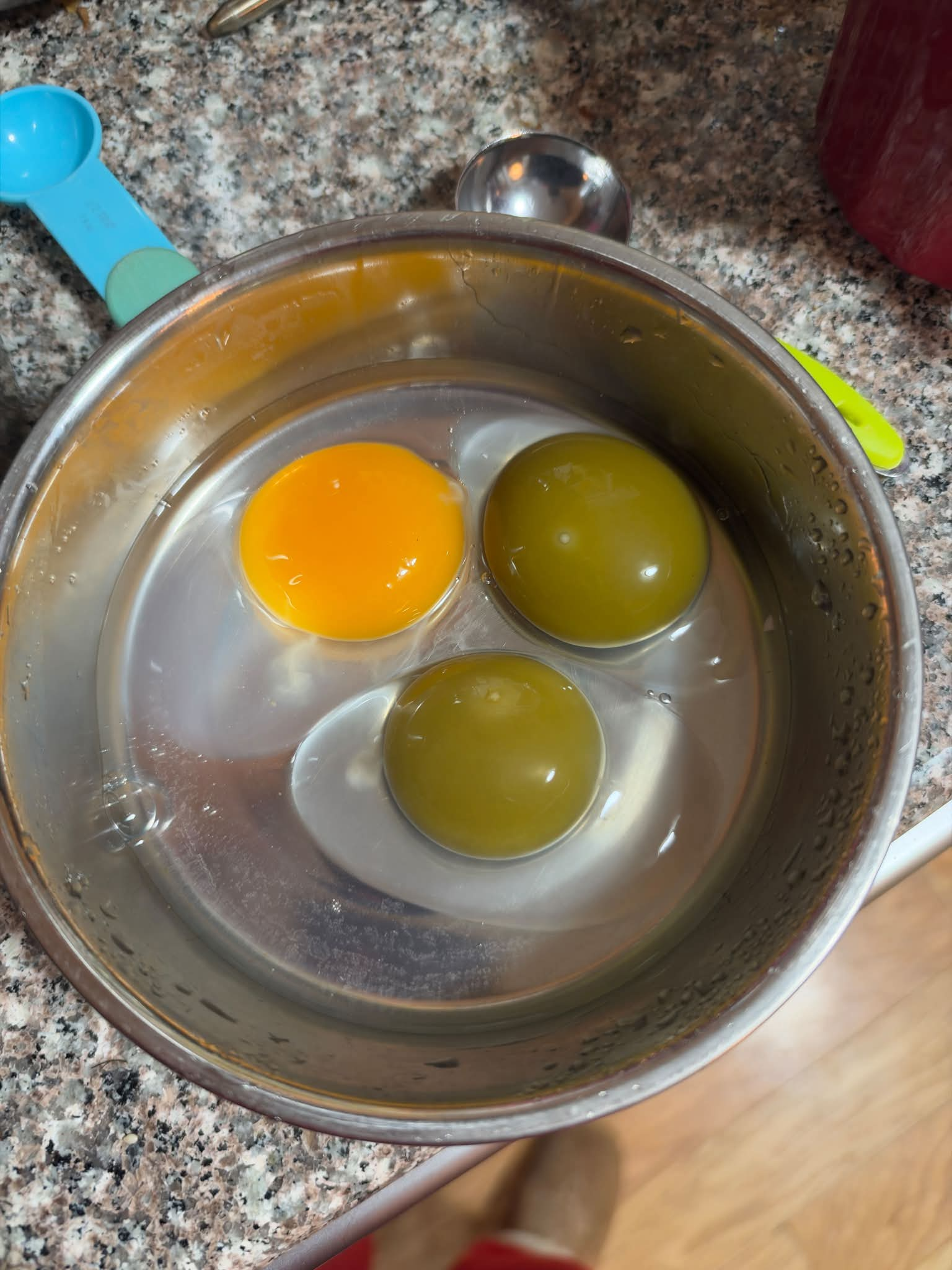
A duck owner in New Hampshire recently shared a picture of eggs with unusually colored yolks and asked an interesting question: “I have a lot of ducks, so I’m not sure who’s laying what. They free-range, live in New Hampshire, and get an all-flock feed. I’ve had quite a few green eggs. Is this normal?”
It’s a great question for backyard duck keepers, especially those who have several breeds living together.
The good news is that greenish egg yolks don’t automatically mean an egg is spoiled. However, an olive-green or unusually dark yolk is different from the blue or green color sometimes seen on the outside of an eggshell. The cause matters, and it’s worth investigating if the change keeps happening.
🥚 What Causes Green or Olive-Colored Duck Egg Yolks?
There are several possible explanations for unusual yolk colors. One of the first things to consider is what the ducks are eating.
1. Free-ranging and natural forage 🌿
Ducks that roam outdoors eat more than the feed provided by their owners. Depending on their environment, they may consume grasses, seeds, plants, insects, and other natural foods.
Diet can influence egg-yolk color. Certain plant compounds, including tannins, have been associated with unusual olive-colored yolks in poultry. However, you shouldn’t assume that green grass alone is responsible for a distinctly green yolk. (Ask Extension)
If you have several ducks sharing the same pasture, it’s difficult to identify which bird laid an unusual egg without observing the nesting area.
2. The all-flock feed
The owner mentioned feeding an all-flock ration. That detail is worth investigating, although it doesn’t automatically mean the feed is responsible.
Check the feed label, ingredients, expiration date, and storage conditions. Make sure the feed hasn’t become damp, moldy, or contaminated.
Certain feed ingredients and plant compounds have been associated with abnormal yolk coloration in poultry. If the green yolks keep appearing, consider asking a poultry veterinarian or poultry extension specialist to review the feed formulation and the ducks’ access to other food sources. (Ask Extension)
Don’t add supplements or drastically change the flock’s diet simply to correct the color without first identifying a likely cause.
3. Could it be a breed difference?
Duck breeds can lay eggs with different shell colors, including white, blue, green, and shades in between.
However, a green eggshell and a green yolk are two different things. Breed-related shell color doesn’t, by itself, explain an olive-green yolk after the egg is cracked open.
4. Could it be a sign of spoilage?
This is the important safety question.
The greenish yolks in the photograph appear to be present in raw eggs, rather than being the familiar green ring that can develop around a hard-boiled yolk.
A green ring around a cooked yolk is usually caused by a harmless chemical reaction involving sulfur and iron. A distinctly green or olive-colored raw yolk is a different situation and shouldn’t automatically be considered harmless. (Ask USDA)
My recommendation is not to eat the unusually green raw yolks shown in the picture. Discard those eggs, especially if the whites are also discolored or the eggs have an unusual odor, abnormal consistency, or other signs of spoilage.
Don’t taste a questionable egg to test whether it’s safe.
🦆 What Should You Do If It Keeps Happening?
If you regularly find green yolks in your duck eggs, here are some practical steps.
Step 1: Keep a record. Note the date, which nesting area the egg came from, and whether the yolk was green throughout or only discolored in certain areas.
Step 2: Inspect the feed. Check its ingredients, storage conditions, and freshness. If the green yolks started appearing after opening a new bag, keep the packaging information for your veterinarian or feed supplier.
Step 3: Check the free-ranging area. Look for unusual plants, access to spilled livestock feed, discarded food, or other potential sources of unusual dietary compounds.
Step 4: Compare eggs carefully. Crack each egg into a separate, clean bowl so that one questionable egg doesn’t contaminate the others. Discard eggs with abnormal green or iridescent whites, unpleasant odors, or other signs of spoilage.
Step 5: Seek expert advice if the problem continues. A poultry veterinarian or your local agricultural extension service can help investigate recurring abnormal yolk coloration.
Because several eggs have shown this color, it’s worth investigating the common factors affecting the flock rather than assuming that the color is normal.
🥚 Does Egg-Yolk Color Affect Nutrition?
Ordinary differences in yellow or orange yolk color are often related to the pigments in a bird’s diet. A darker orange yolk doesn’t automatically mean an egg is healthier or more nutritious than a lighter yellow one. (Illinois Extension)
But a distinctly olive-green raw yolk is not simply another shade of orange. Its cause needs to be considered separately.
❄️ A Few Important Duck-Egg Safety Tips
Duck eggs should be collected regularly and refrigerated promptly if they’re intended for eating.
- Avoid using cracked or heavily soiled eggs.
- Keep eggs refrigerated and handle them with clean hands.
- Avoid cross-contamination between raw eggs and ready-to-eat foods.
- Cook duck eggs thoroughly rather than eating them raw or undercooked.
- When an egg has unusual discoloration that you cannot explain, discard it rather than taking a chance.
These precautions matter because fresh-looking eggs can still carry harmful bacteria.
🌿 Final Thoughts: Is This Normal?
Finding an unusual egg occasionally isn’t necessarily a reason to panic, but repeated olive-green yolks deserve investigation.
Free-ranging and feed ingredients can influence yolk appearance, yet the precise cause cannot be established from the photograph alone.
Since these ducks live in New Hampshire, roam freely, and receive all-flock feed, I’d start by reviewing their feed and foraging environment and consulting a poultry expert if the problem continues.
The most important thing is not to assume that the eggs are safe just because the ducks appear healthy.
💬 Do You Raise Ducks, Too?
Have you ever cracked open a duck egg and discovered an unusual yolk color?
I’d love to hear from other backyard duck keepers!
- 🥚 A. My duck eggs always have bright yellow or orange yolks.
- 🌿 B. I’ve occasionally seen unusually dark yolks.
- 🫒 C. I’ve experienced olive-green yolks like these.
- 🦆 D. I raise ducks but have never seen this before.
Share your experience in the comments! If you’ve encountered green yolks, mention what your ducks eat and whether the color appeared in one egg or several. That information may help other duck owners recognize when something needs closer attention.
(Ask Extension)(Ask Extension)(Ask USDA)(Illinois Extension)
