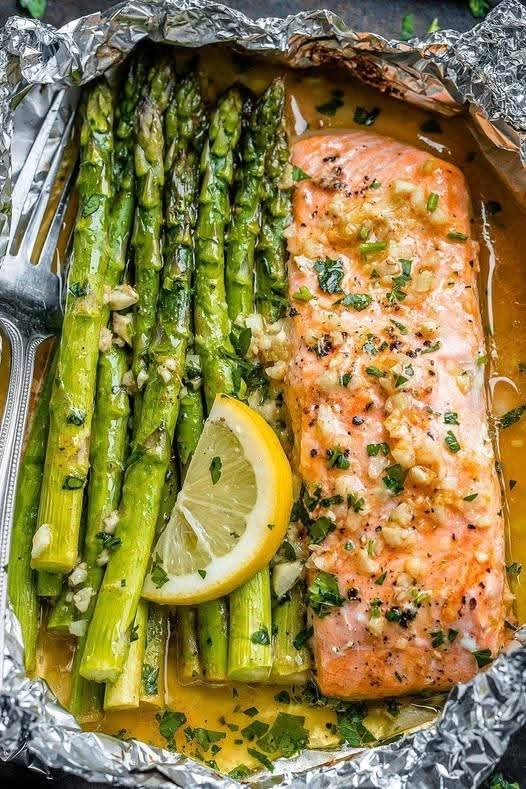
Baked Salmon in Foil with Asparagus and Lemon Garlic Sauce 🍋🐟
An Easy, Flavorful One-Pan Dinner That’s Ready in About 30 Minutes!
Some recipes are so simple and delicious that they become regular favorites in the kitchen. This Baked Salmon in Foil with Asparagus and Lemon Garlic Sauce is one of those meals you can make again and again without getting tired of it.
The salmon turns out tender and flaky, the asparagus becomes perfectly crisp-tender, and the lemon garlic butter sauce brings everything together with a fresh, savory flavor. Best of all, everything cooks together in individual foil packets, making preparation easy and cleanup even easier!
I’ve been making this recipe for so many years that I can hardly remember where I first discovered it. It’s one of those dependable dinners I return to whenever I want something homemade, satisfying, and quick to throw together.
Whether you’re preparing a weeknight dinner for the family or looking for an easy meal that feels a little special, this recipe deserves a place in your collection.
Don’t forget to save this recipe so you can make it whenever you’re craving tender salmon with lemon, garlic, and fresh asparagus!
Why You’ll Love This Baked Salmon Recipe
- Quick and easy: You can prepare everything in about 10 minutes.
- Minimal cleanup: The foil packets keep the salmon, asparagus, and sauce together.
- Full of flavor: Fresh lemon, garlic, butter, and herbs complement the salmon beautifully.
- A complete meal: Salmon and asparagus cook together for a convenient dinner.
- Naturally low in carbohydrates: This recipe fits many lower-carbohydrate eating styles.
- Easy to customize: Add your favorite herbs, spices, or vegetables to make it your own.
The best part? You don’t need complicated cooking techniques or a long list of ingredients to create a delicious meal.
Baked Salmon in Foil with Asparagus and Lemon Garlic Sauce Recipe
Preparation time: 10 minutes
Cooking time: 15–20 minutes
Total time: Approximately 25–30 minutes
Servings: 4
Cooking method: Oven-baked
Difficulty: Easy
Ingredients
For the salmon and asparagus:
- 4 salmon fillets, approximately 5–6 ounces (140–170 g) each
- 1 pound (450 g) fresh asparagus, woody ends trimmed
- 2 tablespoons olive oil
- Salt, to taste
- Freshly ground black pepper, to taste
- 1 teaspoon paprika, optional
- 1 lemon, thinly sliced
For the lemon garlic butter sauce:
- 4 tablespoons unsalted butter, melted
- 4 cloves garlic, finely minced
- 2 tablespoons fresh lemon juice
- 1 teaspoon lemon zest, optional
- 1 tablespoon chopped fresh parsley
- ½ teaspoon dried oregano or Italian seasoning
- A pinch of red pepper flakes, optional
Optional garnish:
- Fresh parsley
- Additional lemon wedges
- A little freshly ground black pepper
Instructions
Step 1: Preheat the Oven
Preheat your oven to 400°F (200°C).
Prepare four large sheets of heavy-duty aluminum foil, each large enough to hold one salmon fillet and a portion of asparagus. If your foil is thin, use a double layer to help prevent tearing.
Lightly brush the center of each sheet with olive oil to help prevent sticking.
Step 2: Prepare the Asparagus
Wash the asparagus thoroughly and pat it dry.
Trim off the tough, woody ends. Arrange the asparagus in four equal portions and place one portion in the center of each foil sheet.
Drizzle the asparagus with a little olive oil and season lightly with salt and black pepper.
If your asparagus stalks are particularly thick, consider slicing them lengthwise or giving them a few extra minutes in the oven so they cook at approximately the same rate as the salmon.
Step 3: Prepare the Lemon Garlic Sauce
In a small bowl, combine the melted butter, minced garlic, fresh lemon juice, lemon zest, chopped parsley, and oregano or Italian seasoning.
Stir until everything is well combined.
The butter adds richness, the lemon provides brightness, and the garlic gives the sauce its wonderful savory flavor.
Taste the sauce and adjust the lemon, herbs, or seasoning according to your preference.
Step 4: Season the Salmon
Pat the salmon fillets dry with paper towels.
Place one fillet on top of each portion of asparagus.
Season the salmon with salt, black pepper, and paprika, if using.
Spoon the lemon garlic butter sauce evenly over each fillet, allowing some of it to run down over the asparagus.
Place one or two thin lemon slices on top of each piece of salmon.
These lemon slices add extra citrus aroma as the fish cooks.
Step 5: Seal the Foil Packets
Bring the long sides of the foil together over the salmon and fold them down to create a loose seal.
Fold the shorter ends upward to close each packet.
Leave a little space inside each packet for steam to circulate. Avoid wrapping the salmon too tightly against the foil.
Make sure the packets are securely closed so the buttery sauce stays inside while the salmon cooks.
Place the packets on a baking sheet to make them easier to handle.
Step 6: Bake the Salmon
Transfer the baking sheet to the preheated oven.
Bake for approximately 15–20 minutes, depending on the thickness of the salmon fillets and the tenderness of the asparagus.
Thinner fillets may cook more quickly, while thicker pieces may need additional time.
For the best results, check the salmon near the 12–15-minute mark rather than relying entirely on the clock.
The salmon should be opaque and separate easily with a fork. For food safety, cook it to an internal temperature of 145°F (63°C) at the thickest part, measured with a food thermometer.
If you prefer a little color on top, carefully open the foil packets during the final 2–3 minutes and broil briefly. Keep a close eye on the fish so it doesn’t dry out.
Be careful when opening the packets: hot steam can escape suddenly.
Step 7: Serve and Enjoy!
Remove the packets from the oven and allow them to rest for a couple of minutes.
Carefully open the foil, keeping your hands and face away from the escaping steam.
Spoon the lemon garlic butter sauce over the salmon and asparagus, then garnish with fresh parsley and an extra squeeze of lemon juice if desired.
Serve immediately while everything is warm and tender.
The result is flaky salmon, flavorful asparagus, and a bright, buttery sauce that makes every bite delicious!
Tips for Perfect Salmon Every Time
1. Choose Salmon Fillets of Similar Thickness
Try to use fillets that are approximately the same size and thickness. This helps them cook more evenly.
If one piece is significantly thinner than the others, check it earlier and remove it when it reaches the safe internal temperature.
2. Don’t Overcook the Fish
Salmon can become dry when cooked for too long.
Start checking the fillets early, especially if they are thin. A food thermometer is the most reliable way to determine when the fish is ready.
3. Use Fresh Lemon and Garlic
Fresh lemon juice and freshly minced garlic provide a bright, aromatic flavor.
Bottled lemon juice and jarred garlic can work in a pinch, but fresh ingredients are especially good in a recipe with so few components.
4. Adjust the Asparagus to Its Thickness
Thin asparagus cooks quickly, while thick stalks take longer.
For thin asparagus, keep an eye on the packets so the vegetables don’t become too soft. For thick asparagus, consider giving it a short head start in the oven before adding the salmon.
5. Don’t Skip the Sauce
The lemon garlic butter is one of the best parts of this recipe.
Make sure to spoon the sauce over the fish before baking, then drizzle any remaining juices over the salmon when serving.
If you want a lighter version, replace some of the butter with olive oil.
6. Be Careful When Opening the Foil
The packets trap hot steam, which helps cook the fish and vegetables. Always open them carefully and away from your face.
Delicious Variations to Try
One of the best things about this recipe is how easy it is to customize.
Make it spicy: Add red pepper flakes or a pinch of cayenne pepper to the lemon garlic sauce.
Add Parmesan: Sprinkle a little grated Parmesan over the asparagus just before serving.
Use fresh dill: Replace the oregano with fresh dill for a classic pairing with salmon.
Make it dairy-free: Replace the butter with olive oil or a suitable dairy-free butter alternative.
Add more vegetables: Thinly sliced zucchini, bell peppers, or cherry tomatoes can work well in the packets. Cut the vegetables into appropriately sized pieces so they cook in roughly the same amount of time as the salmon.
Add a little honey: Stir a small amount of honey into the sauce for a subtle sweet-and-savory flavor.
Use frozen salmon: Frozen salmon can be used, but thawing it in the refrigerator first generally gives you better control over cooking time and texture. Pat the thawed fillets dry before seasoning.
What to Serve with Baked Salmon and Asparagus
Although the salmon and asparagus make a satisfying meal on their own, you can add a side dish if you’d like something more substantial.
Here are some delicious options:
- Garlic mashed potatoes: Creamy potatoes pair beautifully with lemon butter sauce.
- Steamed rice: White or brown rice absorbs the flavorful juices.
- Roasted baby potatoes: Crispy potatoes make a wonderful companion to tender salmon.
- Quinoa: A light, protein-containing grain alternative.
- Fresh green salad: Add lettuce, cucumber, tomatoes, and a simple vinaigrette.
- Crusty bread: Perfect for soaking up any leftover lemon garlic sauce.
- Cauliflower rice: A lower-carbohydrate option that complements the fish without overpowering it.
For a quick weeknight dinner, steamed rice or roasted potatoes are especially convenient choices.
How to Store Leftovers
If you have leftover salmon and asparagus, allow them to cool slightly and transfer them to an airtight container.
Refrigeration: Store leftovers in the refrigerator within two hours of cooking. Eat within 3–4 days.
Reheating: Warm gently in the oven at approximately 300°F (150°C) until heated through, or use a microwave at reduced power. Adding a little water or fresh lemon juice can help prevent the fish from drying out.
Freezing: Cooked salmon can be frozen in a freezer-safe container for best quality for about 2–3 months. The asparagus may become softer after thawing. Thaw leftovers in the refrigerator before reheating.
Avoid repeatedly heating and cooling the same portion.
Frequently Asked Questions
Can I use parchment paper instead of aluminum foil?
Yes. You can make parchment-paper packets designed for oven cooking. Fold and seal them securely, following the parchment manufacturer’s temperature guidance.
Parchment may not seal as tightly as foil, so some juices may escape.
Can I prepare the packets ahead of time?
You can trim the asparagus and prepare the sauce in advance. For the best texture and food safety, assemble the packets shortly before baking, or keep prepared raw fish refrigerated and cook it promptly.
Don’t leave raw salmon sitting at room temperature while preparing other parts of the meal.
How do I know when salmon is cooked?
The salmon should look opaque and flake easily with a fork. For a reliable food-safety check, use a thermometer to confirm that the thickest part reaches 145°F (63°C).
Can I use another type of fish?
Yes. Trout and other similar fish fillets can work well with lemon, garlic, butter, and asparagus. However, cooking time will vary depending on the thickness and type of fish.
Can I make this recipe without butter?
Absolutely. Substitute olive oil for the butter. You’ll still get a flavorful sauce with garlic, lemon, and herbs, although the taste and texture will be slightly different.
Is this recipe suitable for meal preparation?
Yes, especially if you prepare the asparagus and sauce in advance. Cooked salmon also works well in lunch bowls with rice, vegetables, or salad. For the best texture, avoid overcooking the fish when preparing it for later meals.
Final Thoughts: A Simple Dinner Worth Keeping
This Baked Salmon in Foil with Asparagus and Lemon Garlic Sauce is proof that a delicious homemade dinner doesn’t need to be complicated.
With tender salmon, fresh asparagus, garlic, butter, and lemon, you can prepare a flavorful meal using everyday ingredients and very little cleanup.
It’s an excellent recipe to keep on hand for busy evenings, relaxed family dinners, or whenever you’re craving a fresh and satisfying seafood meal.
Once you’ve tried it, you can adjust the seasonings, experiment with different herbs, and make it your own.
🍋 Now It’s Your Turn!
Do you prefer your salmon baked in foil, grilled, or pan-seared?
And which would you choose for this recipe: extra garlic, extra lemon, or a little Parmesan cheese?
Leave a comment and tell us how you make your salmon! If you enjoy easy, flavorful recipes like this one, save this recipe and share it with someone who loves a simple homemade dinner.
