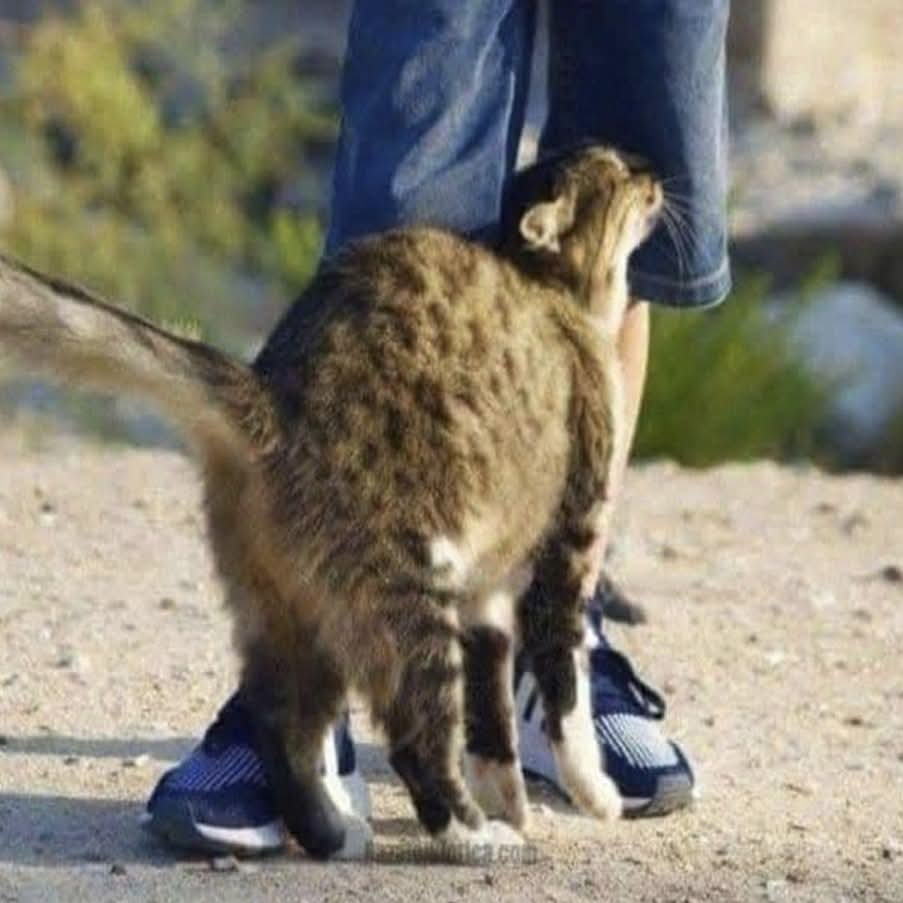
Sometimes, a cat doesn’t even need to meow to get your attention: it simply approaches gently, tail raised, and rubs its cheek against your leg. A simple, almost innocuous gesture… but one that hides much more than we imagine. For behind these adorable touches lies a ritual full of emotions, subtle codes, and messages that our feline friends send us in their own way. But what do they really want to tell us? And why does this behavior seem so instinctive in them?
The discreet yet powerful language of smell
We often forget that cats “read” the world primarily through smells. Where we see a living room, they perceive a veritable olfactory library. To enrich this library, they use the glands located on their cheeks, forehead, and around their mouth. Each rub leaves a scent trail that allows them to feel comfortable in their environment.
When your cat rubs against you, they create a shared scent, a reassuring signature. This isn’t about possession, but about integration: they include you in their circle of trust, the place where they feel calm
A heartwarming gesture of welcome
You know the scene: you come home, put down your keys, and there’s your little ball of fur, fluttering around you, gently rubbing against you, then giving you an expressive look. It’s not just a “hello,” it’s a social ritual for cats.
In their world, rubbing against you is a bit like a kiss on the cheek, a warm greeting that means “I’m glad you’re here.” These gentle movements indicate that they feel relaxed and completely at ease in your presence.
Why does
it rub itself more in certain situations?
When a change occurs in the house—new furniture, a new pet, a rearrangement—the cat may become more insistent with its rubbing. This isn’t a whim; it’s a way of reassuring itself. By leaving its scent, it re-establishes its bearings and regains a sense of stability.
Continued on the next page
