Should Pets Be Allowed in Hospital Rooms to Be With Their Dying Loved Ones?
Imagine spending your final days in a hospital room, surrounded by medical equipment, unfamiliar sounds, and people who are doing everything they can to care for you. Your family visits whenever possible, but there is one very important member of your family who is missing: your beloved pet.
For many people, dogs and cats are much more than animals. They are companions, sources of comfort, loyal friends, and members of the family. They have been there through happy moments, difficult times, lonely evenings, and countless ordinary days.
So when someone is seriously ill or approaching the end of life, should hospitals allow their beloved pets to visit?
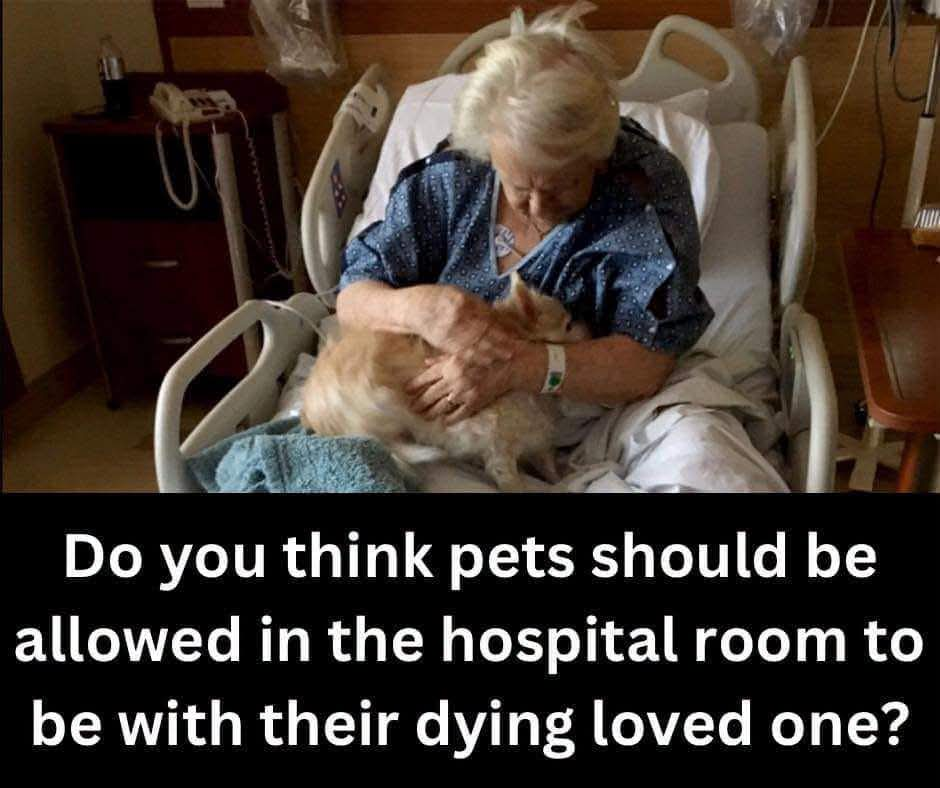
The photograph of an elderly woman holding her little dog in a hospital bed captures a deeply emotional moment. It reminds us that sometimes the comfort a person needs cannot come from words or medicine alone. Sometimes, all they want is to hold the familiar companion who has loved them unconditionally.
The Special Bond Between People and Their Pets
For millions of people, pets are part of the family.
A dog may have spent years waiting by the front door, following its owner from room to room, sleeping beside the bed, or offering comfort after a difficult day.
Cats, too, can form strong attachments to their owners. Their familiar presence, gentle purring, and quiet companionship can become an important part of everyday life.
When someone becomes seriously ill, being separated from a beloved pet can add another layer of sadness to an already difficult experience.
For an older person who lives alone, a pet may be their closest daily companion. For someone facing a terminal illness, seeing that familiar face one more time may be incredibly meaningful.
1. Pets Can Provide Emotional Comfort
A hospital stay can be frightening and isolating, particularly for patients facing a life-threatening illness.
Being able to see a beloved pet may bring comfort, happiness, and a sense of familiarity.
The sight of a dog wagging its tail or a cat settling gently beside its owner can create a welcome moment of normality in an unfamiliar environment.
Animal-assisted interactions have been associated with positive emotional experiences for some patients, although the benefits vary from person to person.
For someone who has spent years caring for an animal, having the opportunity to say goodbye can be especially important.
2. Saying Goodbye Can Bring Peace to Patients and Families
One of the most heartbreaking parts of approaching the end of life is knowing that there may be goodbyes that cannot be postponed.
Families often gather to spend precious time with someone they love. But if that person has shared their life with a pet for many years, the animal may also be an important part of that final farewell.
A carefully arranged visit can give the patient an opportunity to touch, hold, or simply look at their companion.
It may also help family members feel that they have honored an important relationship in the patient’s life.
For some people, the chance to say goodbye to a beloved pet is not a small request. It is an important part of feeling that their life and relationships have been respected.
3. Pets Are Part of the Family
Many people consider their pets to be family members, not possessions.
They celebrate their birthdays, include them in family photographs, take them on trips, and make decisions about their lives with the same affection they show other loved ones.
Yet hospital rules sometimes make it difficult for pets to visit.
This can be particularly painful when a patient is unable to leave the hospital and may never return home.
Allowing a supervised visit can recognize the importance of the relationship and acknowledge that emotional well-being is also part of compassionate care.
4. Why Don’t All Hospitals Allow Pets?
Although the emotional benefits can be meaningful, hospitals must also protect patients, visitors, and staff.
There are several reasons why unrestricted pet visits may not be possible.
Infection control: Animals can carry microorganisms that may pose risks to people with weakened immune systems.
Allergies: Some patients and healthcare workers may have serious allergies to animal dander.
Fear of animals: Not everyone feels comfortable around dogs, cats, or other animals. A visit in a shared room could cause distress to another patient.
Patient safety: Animals may scratch, bite, jump onto medical equipment, or accidentally interfere with treatment.
Hospital environment: Intensive care units, operating areas, and certain specialist departments may have strict restrictions because of the equipment and medical needs involved.
These concerns are important. A compassionate policy must protect everyone in the hospital while recognizing the needs of patients who wish to see their pets.
5. Can Hospitals Make Special Exceptions?
In some hospitals, exceptions may be possible, particularly for patients receiving palliative or end-of-life care.
Policies vary considerably by hospital, country, department, and individual circumstances.
A hospital may consider a supervised visit if:
- The patient specifically requests to see the animal.
- The medical team agrees that a visit is appropriate.
- The animal is healthy, clean, and under control.
- The visit takes place in an approved room or designated area.
- The animal is kept away from medical equipment and other patients.
- Infection-control precautions can be followed.
Some facilities may require vaccination records, a health assessment, a leash or carrier, or other arrangements.
Families should always speak with the nursing team or hospital administration before bringing an animal into the building. Never assume that a pet can enter a hospital room without permission.
6. What If a Visit Is Not Possible?
Unfortunately, not every patient will be able to receive an in-person visit from their pet.
However, families may be able to arrange other meaningful ways to maintain that connection.
Possible alternatives include:
- Showing the patient photographs and videos of their pet.
- Playing recordings of the animal’s familiar sounds.
- Arranging a video call when the patient is able to participate.
- Bringing a favorite toy or blanket, if the hospital permits it.
- Asking whether a visit could take place outside the building or in a designated space.
Even small gestures can help a patient feel connected to the life and relationships they cherish.
7. What About the Pet?
The animal’s comfort and safety matter, too.
Hospitals can be unfamiliar, noisy, and stressful places. Some pets may become frightened by medical equipment, unfamiliar smells, or crowded surroundings.
Before arranging a visit, families should consider whether the animal is comfortable with new environments and whether it can remain calm around medical staff and equipment.
A short, quiet visit may be more appropriate than a long one.
The goal should be to create a peaceful experience for both the patient and the animal, without causing unnecessary stress.
The Importance of Compassionate End-of-Life Care
End-of-life care is about more than managing symptoms and providing medical treatment.
It also involves respecting a person’s wishes, values, relationships, and emotional needs.
For one patient, comfort may mean having family members gathered around the bed. For another, it may mean listening to a favorite song, holding someone’s hand, seeing a beloved pet, or simply having a familiar voice nearby.
Healthcare professionals, families, and hospitals can work together to make these moments possible when it is safe and appropriate.
A pet cannot understand everything that is happening, but its familiar presence may mean a great deal to the person who loves it.
Sometimes, a quiet moment with a loyal companion can become one of the most treasured memories a family carries forward.
Frequently Asked Questions
Should hospitals allow dogs to visit dying patients?
When medically appropriate and permitted by hospital policy, a supervised visit can be a compassionate option. The patient’s wishes, infection-control requirements, and safety of everyone involved should guide the decision.
Can cats visit patients in hospital rooms?
Some hospitals may allow cats under specific conditions, while others restrict animal visits. Families should contact the hospital before arranging anything.
Do pets help people who are seriously ill?
For some patients, familiar animals can provide emotional comfort and reduce feelings of loneliness. However, the experience is individual, and pets are not a replacement for medical or psychological care.
Can a hospital refuse a pet visit?
Yes. Hospitals may refuse visits because of infection risks, allergies, patient safety, department restrictions, or other medical concerns. Families can ask whether an alternative arrangement is possible.
What if a dying patient wants to see a pet one last time?
The family should communicate the request to the patient’s nurse, doctor, or palliative care team as soon as possible. The hospital may be able to arrange an exception or suggest another way for the patient to connect with the animal.
Final Thoughts: Sometimes Love Has Four Paws
The woman in the photograph reminds us of something simple but powerful: the relationships that matter most in life do not always involve other human beings.
For some people, a dog or cat has been a constant companion through years of happiness, loneliness, change, and uncertainty.
When someone is approaching the end of life, allowing them to spend a final moment with that companion can be a beautiful act of kindness.
Of course, hospitals must consider safety, hygiene, allergies, and the needs of other patients. But where a safe arrangement is possible, a little flexibility can make an enormous difference to a family.
Because sometimes, the most meaningful goodbye isn’t spoken in words. It’s a gentle touch, a familiar face, and a loyal friend who has never stopped loving you.
What Do You Think?
Should hospitals make special arrangements so dying patients can spend time with their beloved pets?
Do you believe a final visit from a dog or cat should be considered an important part of compassionate end-of-life care, provided it can be done safely?
Share your thoughts in the comments.
Some people believe pets should always be allowed to visit when a patient is nearing the end of life. Others feel that hospital safety rules must come first.
There is room for an important conversation on both sides.
