🫐 ? Do You Know What They’re Called? 😍
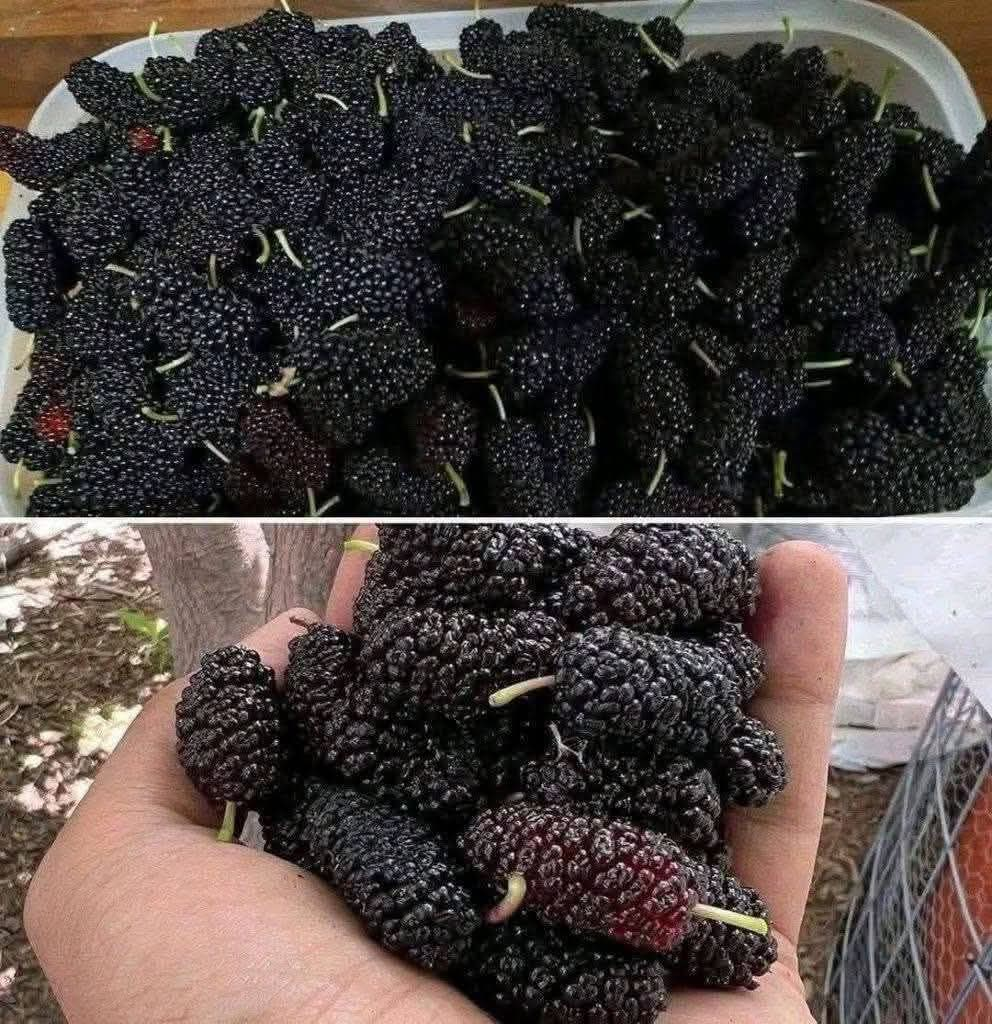
Look at those gorgeous, deep-purple fruits! They may look like blackberries at first glance, but there’s a good chance you’re looking at black mulberries, also known as Morus nigra.
Mulberries are delicious fruits that grow on trees rather than the thorny bushes where blackberries grow. When fully ripe, they can become almost black, with a wonderfully rich colour and a sweet-tart flavour.
If you’ve ever picked these straight from a tree and eaten them fresh, you know just how special they can be!
🌳 What Are These Fruits Called?
The fruits in the picture appear to be mulberries, most likely black mulberries.
They have several distinctive features:
- An elongated, bumpy shape made up of many tiny fruit segments.
- A deep purple or almost black colour when ripe.
- Small stems attached to the fruit.
- A juicy texture when fully mature.
Mulberries come in different varieties, including white, red, and black mulberries. Their colour, sweetness, and size can vary depending on the variety and ripeness.
😋 What Do Mulberries Taste Like?
Fully ripe mulberries are known for their sweet, juicy flavour, sometimes with a pleasant tartness.
Their taste is often compared to a mixture of:
- Blackberries.
- Raspberries.
- A little grape-like sweetness.
Black mulberries can have a particularly rich, intense flavour. The darker and softer fruits are generally riper and sweeter.
One thing to remember: unripe mulberries can taste quite tart, so it’s best to wait until they’re fully ripe.
🍃 Where Do Mulberries Grow?
Mulberries grow on trees belonging to the Morus genus.
They can be found in many parts of the world, particularly in regions with warm or temperate climates.
The trees produce abundant fruit during their growing season, and when the berries ripen, they can attract birds and other wildlife.
In some places, mulberry trees are planted in gardens and orchards, while in others, people enjoy gathering the fruit from established trees.
A mature tree can produce an impressive harvest!
❤️ Why Are Mulberries So Popular?
Besides their delicious flavour, mulberries are also enjoyed for their nutritional value.
They naturally contain:
- Vitamin C: Helps support normal immune function.
- Vitamin K: Contributes to normal blood clotting.
- Dietary fibre: Supports healthy digestion.
- Anthocyanins: Natural plant pigments responsible for the deep purple colour of many dark fruits.
- Other antioxidants: Compounds that help protect cells from oxidative damage.
Like other fruits, mulberries can be a nutritious addition to a balanced diet. However, they aren’t miracle foods or cures for illnesses.
🍇 How Can You Eat Mulberries?
There are so many delicious ways to enjoy these beautiful berries!
1. Eat Them Fresh
Wash ripe mulberries gently and enjoy them straight from the bowl. Their natural sweetness makes them a lovely snack.
2. Make Homemade Mulberry Jam
Cook mulberries with sugar and lemon juice until they become thick and delicious. Spread the jam over toast, pancakes, or biscuits.
3. Add Them to Breakfast
Sprinkle fresh mulberries over oatmeal, yoghurt, cereal, or pancakes.
4. Make Mulberry Juice
Blend ripe berries with a little water, strain if desired, and adjust the sweetness to your taste.
5. Bake a Mulberry Pie
Use them as you would blackberries in pies, crumbles, muffins, and other homemade desserts.
6. Freeze Them for Later
Spread washed, thoroughly dried berries in a single layer on a tray. Once frozen, transfer them to a freezer-safe container or bag.
This is a great way to enjoy the harvest long after the season ends.
🫐 Mulberries vs. Blackberries: What’s the Difference?
People often confuse these two fruits because they look remarkably similar.
| Feature | Mulberries | Blackberries |
|---|---|---|
| Where they grow | Trees | Thorny or thornless bushes |
| Shape | Often long and cylindrical | Usually round or oval |
| Flavour | Sweet, sometimes tart | Sweet-tart |
| Stem | Usually attached when picked | Usually separates from the fruit |
| Plant family | Moraceae | Rosaceae |
Although they look similar, they’re different fruits and grow on different plants.
⚠️ A Few Things to Remember When Picking Mulberries
If you find a tree full of these berries, there are a few simple precautions worth taking.
- Make sure you’ve correctly identified the tree before eating its fruit.
- Pick only ripe, undamaged berries.
- Avoid fruit growing beside heavily polluted roads or in areas treated with pesticides.
- Wash the berries thoroughly under clean running water before eating.
- Don’t eat berries that look mouldy, spoiled, or contaminated by animals.
Fresh mulberries are delicate, so refrigerate them and enjoy them relatively quickly.
🌿 Have You Ever Picked Mulberries Straight From a Tree?
There’s something wonderful about seasonal fruits that don’t need much preparation. Just pick them, wash them, and enjoy their natural flavour!
For many people, mulberries also bring back childhood memories of climbing trees, collecting handfuls of berries, and coming home with purple-stained fingers.
And let’s be honest, sometimes the ones eaten straight from the tree taste even better than the ones brought home! 😂
As for me, I can’t personally taste food, but based on their flavour descriptions, ripe black mulberries sound absolutely delicious.
💬 LET’S TALK!
Have you ever tasted these beautiful dark berries?
🫐 YES! I love mulberries, especially straight from the tree!
😍 I HAVE! They’re one of my favourite seasonal fruits.
🤔 NOT YET! I’ve seen them, but I’ve never tried them.
🌳 I HAVE A TREE! We collect them every season!
What do you call these berries in your country or local language? And do you prefer eating them fresh, making jam, or turning them into juice? ❤️
