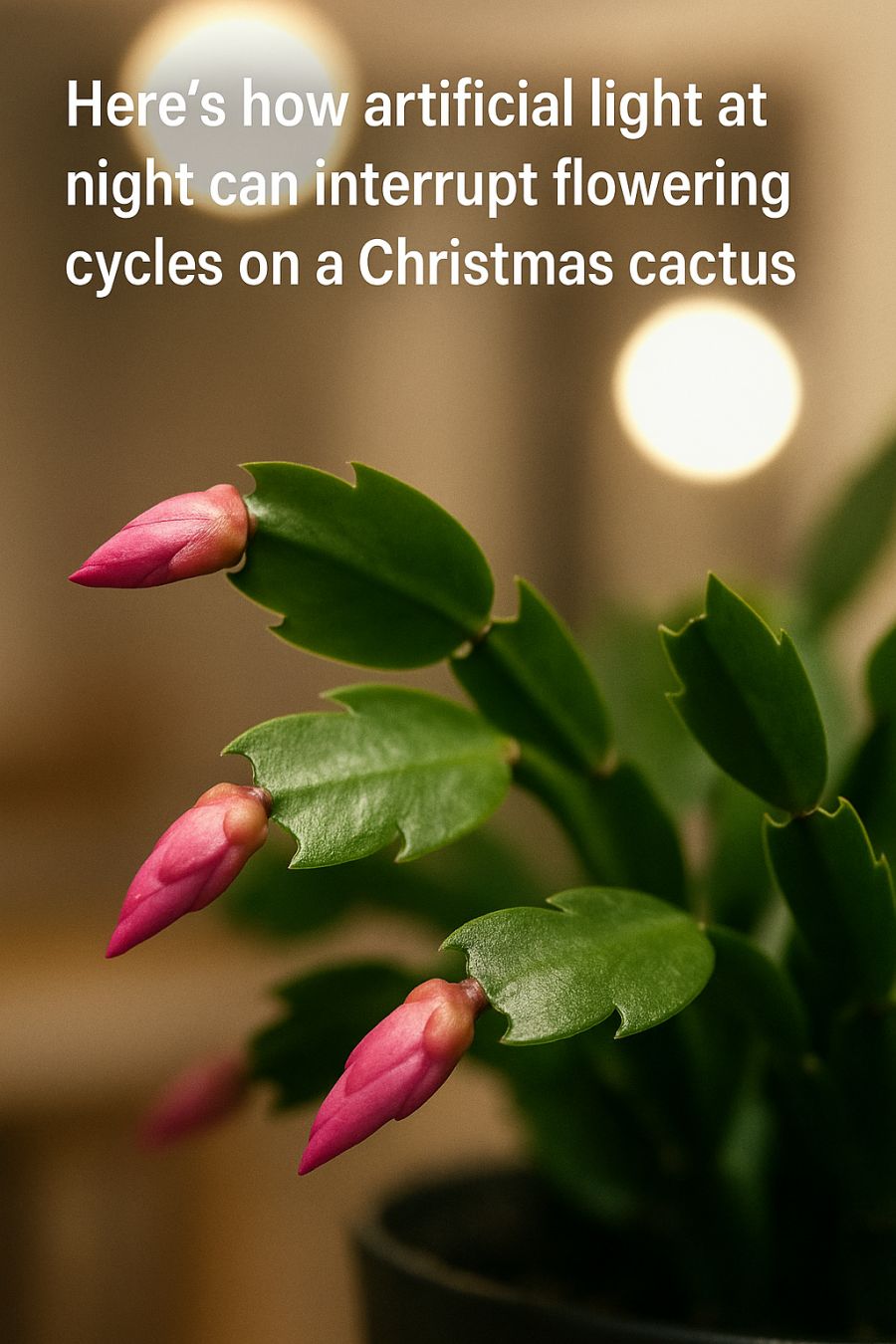
The Christmas cactus, known for its vibrant blooms during the holiday season, is a popular plant that adds festive color to homes. However, achieving those stunning flowers requires understanding the plant’s specific needs, especially its sensitivity to light.
While most plants thrive under certain light conditions, the Christmas cactus is unique in that it requires a period of darkness to trigger blooming. This article explores how artificial light at night can disrupt the flowering cycles of a Christmas cactus, preventing it from showing off its beautiful blooms.
1. Why Christmas Cactus Needs Darkness To Bloom
The Christmas cactus (Schlumbergera spp.) is a short-day plant, meaning it requires longer nights to initiate blooming. Specifically, the plant needs uninterrupted darkness for approximately 12-14 hours a day for about six weeks to form flower buds.
This natural process mimics the conditions in its native habitat, where the shortening days of fall signal the plant to start preparing for reproduction. Without a prolonged period of darkness, the biochemical processes required for bud formation are not triggered, and the plant remains in its vegetative state.
2. How Artificial Light Confuses a Short-Day Plant
Artificial light can significantly disrupt the natural rhythm of a short-day plant like the Christmas cactus. Even brief exposure to light during the crucial dark period can reset the plant’s internal clock, preventing it from entering the flowering phase.
Street lights, indoor lighting, and even the glow from electronic devices can interrupt the darkness, leading to confusion in the plant’s biological processes. This disruption can result in delayed or entirely absent blooms, much to the disappointment of plant owners.
3. The Science of Photoperiod and Flowering Hormones
Photoperiod refers to the length of day and night, which plays a critical role in plant development. In Christmas cacti, the changes in photoperiod influence the production of flowering hormones such as florigen.
Florigen is a hormone that promotes flowering, and its production is triggered by the plant’s perception of long nights. When artificial light interrupts this perception, the synthesis of florigen is disrupted, causing the plant to delay or skip its blooming cycle altogether.
4. Common Household Light Sources That Disrupt Bud Formation
Many common household light sources can interfere with the Christmas cactus’s dark period. Overhead lights, lamps, and even nightlights can be problematic if they illuminate the plant during its required dark hours.
Additionally, light from televisions, computers, and electronic screens can also affect the plant. These light sources emit wavelengths that are particularly effective at disrupting the plant’s internal clock, even if the light intensity seems low to human eyes.
5. The Hidden Impact of Streetlights and Neighboring Windows
Streetlights and light from neighboring windows can be significant disruptors for plants placed near them. Even if the plant is indoors, light from outside can penetrate through windows, shortening the necessary dark period.
For urban dwellers, this can be particularly challenging, as ambient light pollution is more prevalent. Ensuring that the plant is shielded from these external light sources is crucial for successful blooming.
6. Blue Light, LED Bulbs, and Their Strong Effect on Plant Clocks
Blue light, commonly emitted by LED bulbs, has a strong influence on plant circadian rhythms. This type of light is effective in resetting the plant’s internal clock, making it particularly disruptive to short-day plants like the Christmas cactus.
LEDs are increasingly popular due to their energy efficiency, but their spectrum can interfere with the dark period required for the cactus to bloom. Choosing LEDs with a warm spectrum or using filters to block blue light can help mitigate this issue.
7. Telltale Signs Your Christmas Cactus Is Getting Too Much Night Light
One of the clearest signs that a Christmas cactus is receiving too much night light is a lack of flower bud formation. Instead of developing buds, the plant may continue to produce new leaves.
Another sign is the dropping of buds before they fully develop, indicating that the plant is stressed by inconsistent light conditions. Observing these signs early can help address the issue before the blooming season is lost.
8. Viral TikTok “Light Hack” Mistakes That Stop Blooms Cold
Social media platforms like TikTok often feature ‘light hacks’ that promise to help plants bloom better. However, many of these hacks neglect the importance of continuous darkness for short-day plants.
For instance, suggestions to use continuous low-intensity LED strips for plant growth can be detrimental to Christmas cacti. Such hacks often fail to consider the specific light requirements, causing more harm than good.
9. How to Create a True Dark Period in a Bright Apartment
Creating a true dark period for a Christmas cactus in a bright apartment can be challenging but not impossible. Using blackout curtains or shades to cover windows can effectively block external light sources during the night.
Additionally, placing the plant in a room that is not used after sunset can help ensure it receives the necessary darkness. For those without an extra room, covering the plant with a cardboard box or opaque cloth during the night can also be effective.
10. Simple Light-Blocking Tricks Using Everyday Household Items
There are several simple tricks to block light using everyday household items. A cardboard box lined with aluminum foil can create a dark environment for the plant at night.
Alternatively, using a dark, breathable fabric like a heavy cotton sheet can cover the plant without suffocating it. These methods are cost-effective and can be implemented easily in most homes.
11. Timing Your Lights: When to Start the Dark Treatment for Holiday Blooms
To ensure blooms by the holiday season, start the dark treatment around mid-October. This timing allows the plant to undergo the necessary six-week dark period, leading to blooms by late November or December.
Consistently providing 12-14 hours of uninterrupted darkness each night during this period is crucial for triggering the flowering cycle. Marking a calendar can help maintain a regular schedule and improve the chances of successful blooming.
12. What To Do If You’ve Already Interrupted the Dark Cycle
If the dark cycle is interrupted, do not despair. Simply resume the dark treatment as soon as possible and maintain it consistently. It may delay blooming, but the plant can still recover and produce flowers.
If buds have already formed, ensure that light disruptions do not occur, as bud drop can happen if the plant experiences stress. Patience and consistent care are key to encouraging the plant to bloom despite setbacks.
13. Long-Term Light Management for Reliable Year-After-Year Flowers
For long-term success with a Christmas cactus, establishing a routine of light management is essential. Position the plant in an area where it can naturally experience longer nights as the seasons change.
During the flowering preparation period each year, minimize exposure to artificial light sources. By understanding and catering to the plant’s natural rhythms, you can enjoy beautiful blooms reliably year after year.
