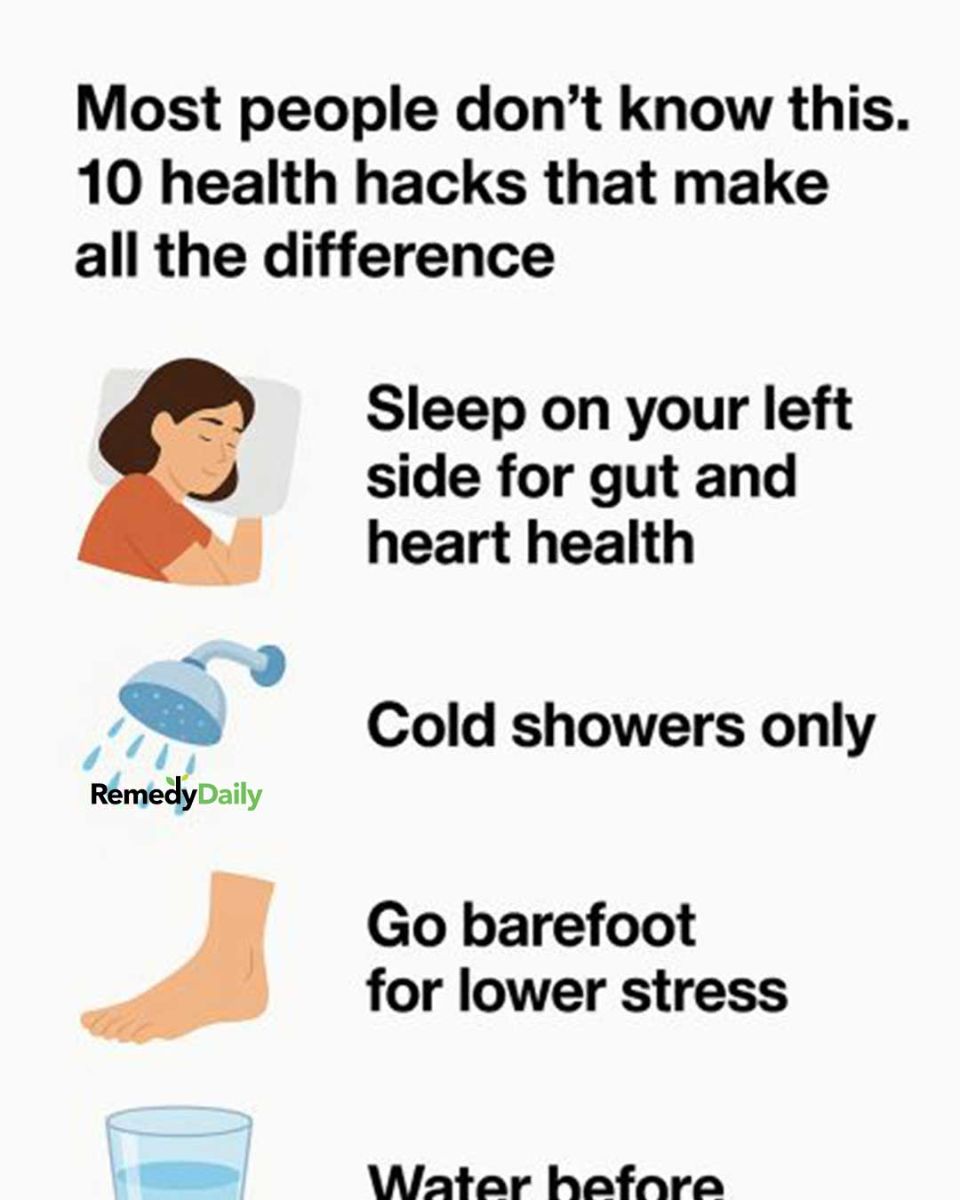
In today’s fast-paced world, maintaining good health often feels like a daunting task. However, there are simple yet effective health hacks that people often overlook, which can make a significant difference in one’s well-being. By integrating these small changes into your daily routine, you can improve your health without the need for drastic lifestyle modifications.
From improving your sleep quality to enhancing your mental clarity, these health hacks are backed by science and can be easily adapted to fit any lifestyle. Whether it’s a matter of adjusting your sleeping position or making time for short walks, these tips can help you achieve a healthier and more balanced life.
1. Sleep on Your Left Side for Gut and Heart Health
Sleeping on your left side can have surprising benefits for your health. This position is beneficial for digestion as it allows gravity to help the stomach and its gastric juices reach the intestines more effectively, reducing acid reflux and heartburn. Additionally, sleeping on the left side can improve heart health by promoting better blood circulation and reducing pressure on the heart.
Research suggests that the left side is also the best sleeping position for pregnant women, as it can improve circulation to the fetus and prevent the liver from exerting pressure on the uterus. While it might take some time to adjust to this position if you’re not already accustomed to it, the benefits make it worth the effort.
2. Cold Showers for Immunity and Alertness
Cold showers may not be everyone’s idea of a pleasant experience, but they can be invigorating and offer numerous health benefits. Exposure to cold water can stimulate the production of norepinephrine, a hormone that increases alertness and focus. Cold showers can also boost the immune system by increasing the production of white blood cells, which help fight infections.
Taking a cold shower can also improve circulation and promote faster muscle recovery after exercise. Start by gradually decreasing the temperature of your showers over time to acclimate your body to the cold, aiming for a duration of 30 seconds to 2 minutes under cold water.
3. Go Barefoot to Reduce Stress and Improve Posture
Walking barefoot, also known as ‘earthing’ or ‘grounding,’ can have a positive impact on your stress levels and posture. When you walk barefoot on natural surfaces like grass or sand, the body absorbs free electrons from the earth, which can act as antioxidants and reduce inflammation and stress.
Additionally, going barefoot helps improve posture by engaging the muscles in your feet and legs, leading to better alignment and balance. Make it a habit to spend at least 15-30 minutes a day walking barefoot, whether it’s in your backyard or at a local park, to reap these benefits.
4. Drink Water Before Coffee to Boost Hydration
Many people start their day with a cup of coffee, but drinking water first thing in the morning can significantly enhance hydration. After a night of sleep, the body is naturally dehydrated, and coffee, being a diuretic, can exacerbate this condition.
By drinking a glass of water (about 250-500 ml) before your morning coffee, you can kickstart your metabolism and improve digestion. This simple habit can help maintain your energy levels throughout the day and ensure that your body is adequately hydrated.
5. Practice Intermittent Fasting for Metabolic Health
Intermittent fasting (IF) has gained popularity for its potential health benefits, which include improved metabolic health and weight management. By cycling between periods of eating and fasting, typically in a 16:8 or 18:6 ratio, IF can help regulate blood sugar levels and improve insulin sensitivity.
Research suggests that intermittent fasting can also promote cellular repair processes and reduce inflammation. While it may not be suitable for everyone, those who can incorporate it into their routine often find it helps with weight loss and enhances overall health.
6. Use a Standing Desk for Better Posture and Energy
Sitting for prolonged periods is detrimental to your posture and energy levels. A standing desk can help mitigate these issues by encouraging more movement throughout the day. Standing while working engages core muscles, promotes better posture, and can increase energy expenditure by about 50 calories per hour compared to sitting.
Alternating between sitting and standing every 30 to 60 minutes can help reduce the risk of back pain and improve concentration, making it a beneficial addition to any workspace.
7. Engage in Deep Breathing to Reduce Anxiety
Deep breathing exercises are a simple yet effective way to reduce anxiety and promote relaxation. By practicing techniques such as diaphragmatic breathing or the 4-7-8 method, you can stimulate the parasympathetic nervous system, which helps calm the mind and body.
Spending just 5 to 10 minutes a day focusing on deep, slow breaths can lower cortisol levels and improve your overall sense of well-being. It’s a versatile technique that can be practiced anytime, anywhere, making it a valuable tool for stress management.
8. Take Short Walks to Boost Creativity and Mood
Short walks, even as brief as 10 to 15 minutes, can have a significant impact on creativity and mood. Walking increases blood flow to the brain, which can enhance cognitive function and improve problem-solving abilities.
Moreover, spending time outdoors and getting a change of scenery can lift your spirits and reduce feelings of stress and anxiety. Incorporate short walks into your daily routine, whether it’s during a lunch break or after dinner, to experience these mental health benefits.
9. Incorporate More Fiber for Digestive Health
A diet rich in fiber is essential for maintaining good digestive health. Fiber aids in regular bowel movements and can prevent constipation. It also feeds the beneficial bacteria in the gut, promoting a healthy microbiome.
Aim for a daily intake of 25-30 grams of fiber from sources such as fruits, vegetables, whole grains, and legumes. Gradually increasing fiber intake can also help control blood sugar levels and reduce the risk of chronic diseases like heart disease and type 2 diabetes.
10. Use Blue Light Glasses to Improve Sleep Quality
Exposure to blue light from screens can disrupt the body’s natural sleep-wake cycle by suppressing the production of melatonin, the sleep hormone. Blue light glasses can filter out this harmful light, making it easier to fall asleep and improve sleep quality.
Wearing blue light glasses in the evening, especially if you spend a lot of time on electronic devices, can help maintain a healthy circadian rhythm. This simple change can lead to better sleep and increased alertness during the day.
11. Practice Mindful Eating for Better Digestion
Mindful eating involves paying full attention to the experience of eating, savoring each bite, and listening to your body’s hunger and satiety cues. By eating slowly and without distractions, you can improve digestion and reduce overeating.
Mindful eating encourages healthier food choices and a greater appreciation for your meals. Taking the time to chew your food thoroughly and enjoy the flavors can lead to better nutrient absorption and more satisfying dining experiences.
