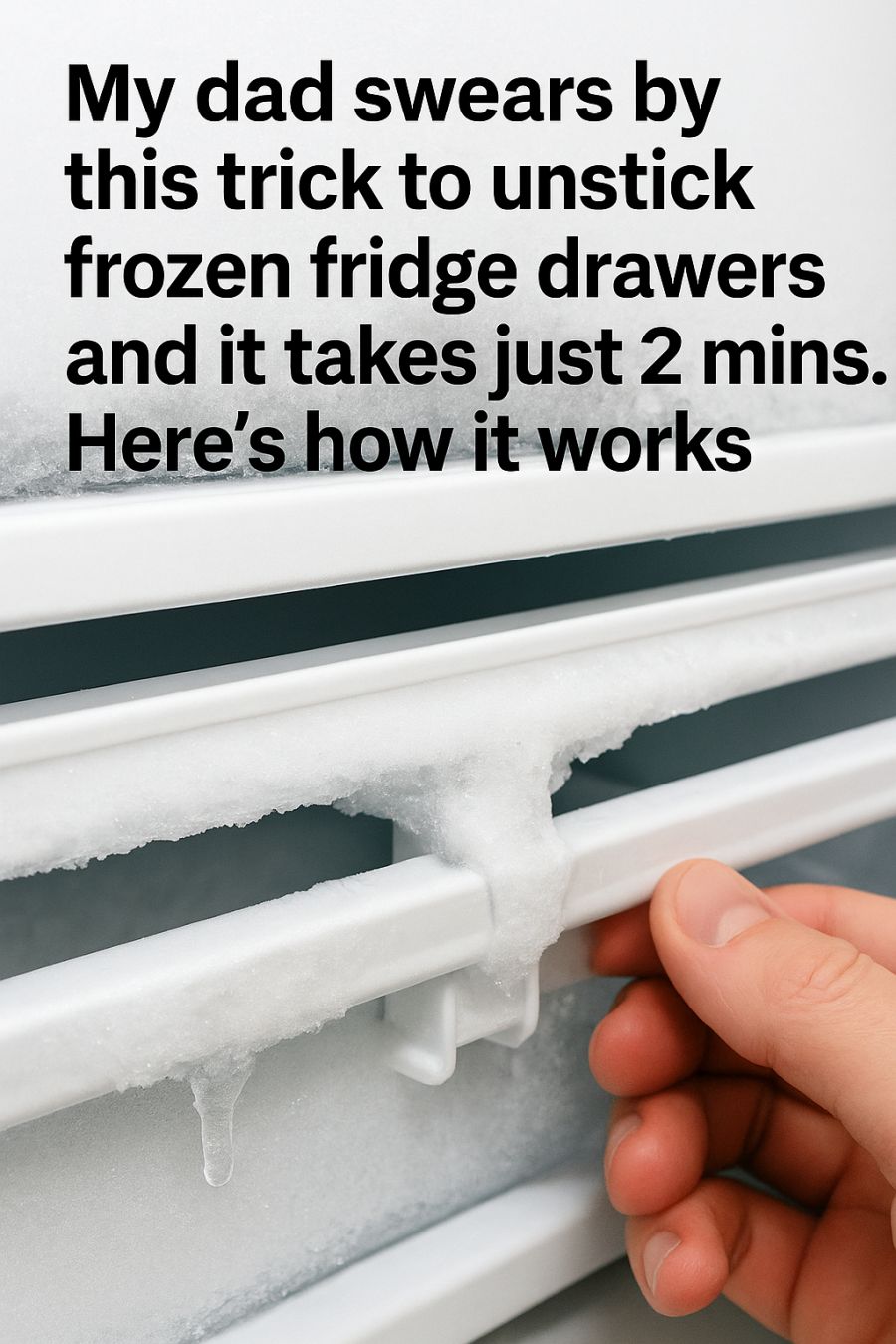
My Dad Swears by This Trick to Unstick Frozen Fridge Drawers and It Takes Just 2 Mins. Here’s How It Works.
Introduction
We’ve all been there. You open your fridge, and the drawer won’t budge. In frustration, you pull harder, only to hear a cracking sound that makes your heart skip a beat. Frozen fridge drawers are a common household nuisance, but luckily, there’s a quick solution that can save you time and prevent damage.
My dad, always the ingenious fixer, swears by a simple trick that never fails to unstick those stubborn drawers. It takes just two minutes and doesn’t require any fancy tools. In this article, I’ll share his method, so you can say goodbye to the frustration of frozen fridge drawers.
Why Fridge Drawers Freeze Shut in the First Place
Fridge drawers can freeze shut due to several reasons, primarily related to temperature and humidity. When the temperature inside the fridge is set too low, or if the door is left open for too long, moisture can accumulate and freeze around the edges of the drawers, acting like glue.
Another common cause is overpacking the fridge. When airflow is restricted, cold air gets trapped and forms ice around the drawers. This can be exacerbated by items with high water content, which release moisture that later freezes. Ideally, the fridge temperature should be set between 37 to 40 degrees Fahrenheit (about 3 to 4 degrees Celsius) to prevent such issues.
The 2-Minute Trick My Dad Swears By
The trick is surprisingly simple and uses items you likely already have at home. It involves a warm cloth and a bit of patience. The warmth helps to melt the ice sealing the drawer shut, allowing it to slide open effortlessly. This method is quick, effective, and doesn’t risk damaging the fridge.
Step 1: Quickly Assess What’s Causing the Stuck Drawer
Before you start, it’s important to understand what’s causing the drawer to stick. Check if there’s visible ice around the edges or if the drawer is simply jammed due to overpacking. This will help you decide how much effort and warmth you’ll need to apply.
Step 2: Use a Warm Cloth to Gently Loosen the Seal
Take a cloth and soak it in warm water, ensuring it’s not too hot to touch. Wring out excess water so it doesn’t drip inside the fridge. Apply the warm cloth around the edges of the drawer, focusing on areas where you notice ice buildup. Hold it there for about 30 seconds to a minute.
Step 3: The Simple Sliding Motion That Frees the Drawer
Once the ice begins to melt, gently wiggle the drawer back and forth. Start with small movements, gradually increasing as the drawer loosens. Avoid pulling too hard, which can damage the drawer or the tracks.
When to Add a Hairdryer for Extra Stubborn Ice
If the drawer remains stuck after using the warm cloth, a hairdryer can provide extra warmth to melt stubborn ice. Use the hairdryer on a low heat setting, keeping it at least 6 inches away from the drawer to prevent any damage. Always move it continuously to distribute heat evenly.
How to Avoid Damaging the Drawer While You Unstick It
While applying heat, whether with a cloth or a hairdryer, ensure you don’t overheat the plastic components, which can warp or crack. Be gentle with your movements to avoid breaking the drawer or its tracks. Patience is key.
The Viral Kitchen Hacks This Trick Is Similar To
This method is akin to other popular kitchen hacks, such as using a hairdryer to remove stickers or using vinegar to unclog a sink. They all share the principle of using common household items to solve everyday problems efficiently.
A Faster Prep: Setting Up the Trick Before You Need It
To make the process even quicker, keep a designated cloth for this purpose near your fridge. This way, you’ll be ready to tackle a stuck drawer as soon as it happens, without rummaging through your kitchen for supplies.
How to Keep Your Fridge Drawers From Refreezing
Prevent refreezing by adjusting your fridge’s temperature settings and ensuring the door seals properly. Regularly clean the seals and avoid overpacking the fridge to maintain proper airflow. Consider using moisture absorbers to reduce humidity inside the fridge.
When This Trick Won’t Work and What to Try Instead
If the drawer remains immovable, the cause might be mechanical rather than ice-related. In such cases, remove the drawer entirely (if possible) and check the tracks and rollers for debris or damage. Sometimes, lubricating the tracks with a food-safe lubricant can solve the issue.
