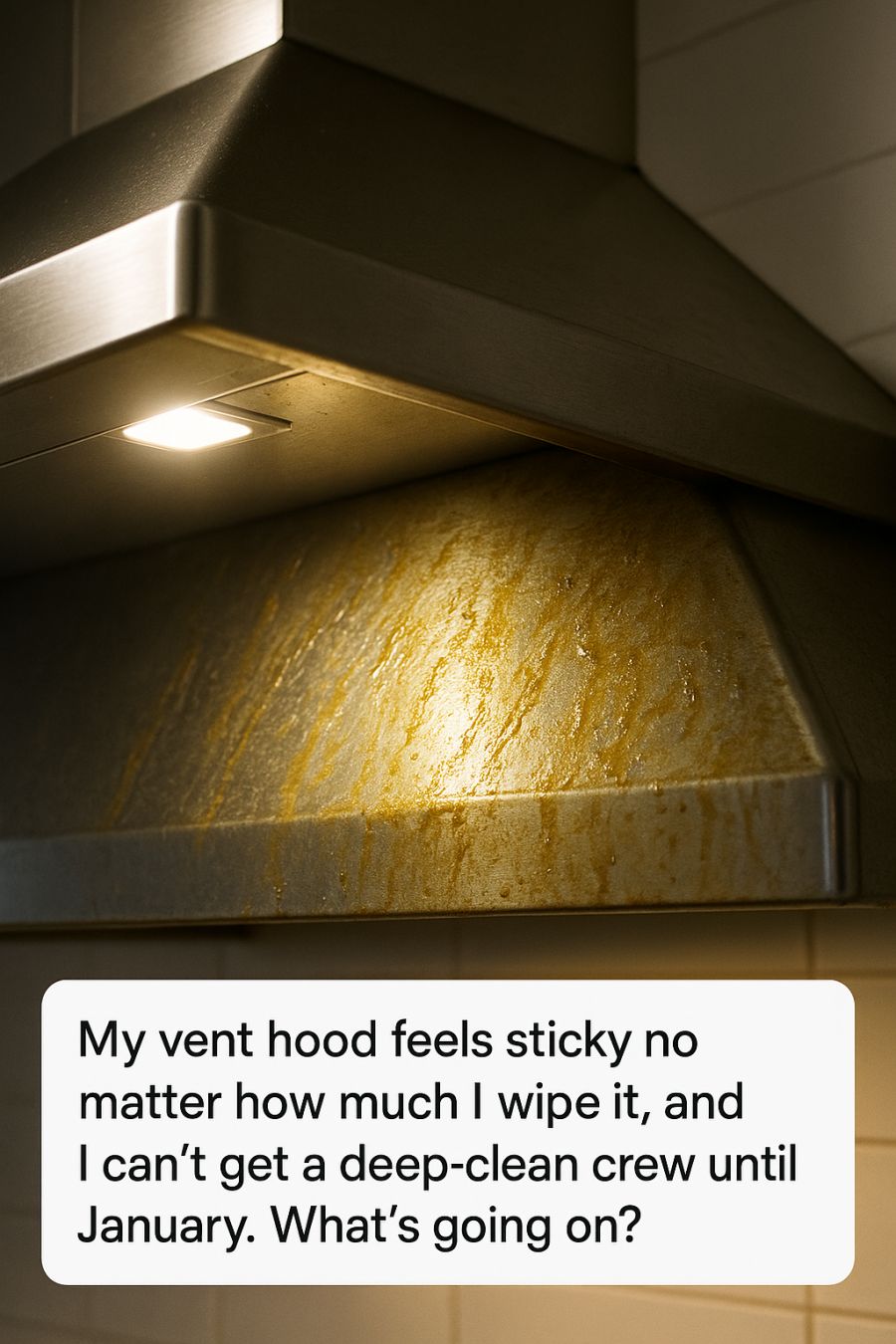
We all know that a clean kitchen is essential for both hygiene and comfort, but sometimes certain areas, like the vent hood, seem to defy our best cleaning efforts. You might find yourself wiping it down regularly, only to discover a sticky residue that never seems to fully disappear. This persistent tackiness can be frustrating, especially when you have to wait for professional cleaning help.
Understanding what’s causing this sticky situation can help you tackle it more effectively. In this article, we’ll explore the reasons behind the perpetual stickiness of your vent hood, the factors that contribute to it, and what you can do to manage it until professional cleaning services are available.
1. Why Your Vent Hood Feels Sticky Even Right After You Clean It
The sticky residue on your vent hood is primarily due to a combination of grease, dust, and other airborne particles that accumulate over time. When you cook, grease particles are released into the air and settle on surfaces, including your vent hood. Even after cleaning, some grease may remain or quickly redeposit, leading to that persistent sticky feeling.
Additionally, if your cleaning methods aren’t fully removing the grease or if you’re using cleaning products that leave a film, this can also contribute to the stickiness. A thorough clean requires breaking down the grease molecules, which regular soap and water may not effectively accomplish.
2. The Invisible Grease Mist Your Stove Sends Into the Air
Whenever you cook, especially when frying or sautéing, tiny grease droplets are released into the air. This ‘grease mist’ can travel up to 5 feet from your stove, settling on nearby surfaces, including your vent hood. The vent hood is designed to capture these particles, but over time, the buildup can become significant.
In a typical kitchen, it’s estimated that cooking can release hundreds of milligrams of grease into the air each month. Without regular deep cleaning, these particles accumulate and form a sticky layer that’s difficult to remove.
3. How Old Grease Film Turns Into a Permanent-Tacky Coating
Over time, grease that is not properly cleaned can oxidize and harden, turning into a tough, sticky film. This film can trap dust and other debris, which makes it even more difficult to clean. The older the grease, the more stubborn and tacky it becomes.
This transformation is exacerbated by heat, which can cause the grease to polymerize, forming a nearly permanent coating. This is why even after wiping, the surface can still feel sticky, as the underlying layer is not fully removed.
4. The Role of Steam, Humidity, and Holiday Cooking Marathons
Steam and humidity from cooking can exacerbate the stickiness of your vent hood. When moisture combines with grease, it can create a more adhesive surface, making it harder to clean. During the holidays, when cooking is more frequent and elaborate, this effect is magnified.
High humidity levels in the kitchen also prevent grease from drying out, so it remains tacky. This is why vent hoods often feel stickier after cooking sessions that produce a lot of steam, such as boiling or simmering.
5. When Soap and Water Aren’t Enough: Why Regular Wiping Fails
While soap and water are effective for many cleaning tasks, they often fall short when dealing with grease. Grease is hydrophobic, meaning it repels water, so simply wiping with a soapy cloth may not break down the grease molecules effectively.
For a more effective clean, you need a degreaser that can emulsify the grease, breaking it down so it can be wiped away. Without this, soap and water might only spread the grease around rather than remove it.
6. The Grease–Dust Combo That Makes Everything Feel Gummy
Dust is a natural part of any household environment, and when it combines with grease on your vent hood, it creates a gummy texture. This combination is particularly stubborn because the dust provides a structure for the grease to cling to, making it more difficult to remove.
As new layers of grease and dust accumulate, the problem compounds, and each cleaning becomes less effective unless you use a method specifically designed to break down both components.
7. Common Cleaning Mistakes That Actually Spread the Grease
One common mistake is using a cloth that’s too wet, which can dilute your cleaning product and spread grease around instead of removing it. Similarly, using the same cloth for multiple areas without rinsing can transfer grease from one surface to another.
Another mistake is not allowing your cleaning solution enough time to work. Many degreasers need a few minutes to break down the grease effectively, so wiping too soon can leave behind a residue.
8. Viral Degreasing Hacks: What Actually Works on Sticky Hoods
Several viral cleaning hacks claim to cut through grease effectively, but not all are created equal. One popular method is using a paste of baking soda and water, which can be abrasive enough to scrub away grease but gentle enough not to damage surfaces.
Another effective hack involves using vinegar and dish soap, which can help emulsify the grease for easier removal. However, caution should be used with vinegar on certain materials, as it can be corrosive.
9. Safe Use of Heavy-Duty Degreasers While You Wait for the Pros
If you’re dealing with a particularly stubborn sticky residue, heavy-duty degreasers might be necessary. These products contain stronger chemicals designed to break down tough grease deposits. However, they should be used with caution to avoid damage to surfaces or harm to yourself.
Always follow the manufacturer’s instructions and use protective gear, such as gloves and masks, to avoid skin contact and inhalation of fumes. Ventilate your kitchen well while using these products.
10. Hidden Trouble Spots: Filters, Undersides, and Control Panels
While the exterior of your vent hood may be the most visible, areas like filters, undersides, and control panels can also harbor grease. Filters, in particular, can become clogged with grease, reducing their efficiency and contributing to overall stickiness.
Regularly remove and clean filters according to your vent hood’s manual, and don’t forget to wipe down less visible areas like control panels, which can also accumulate grease over time.
11. How to Keep the Stickiness From Coming Back Before January
To prevent stickiness from returning, establish a regular cleaning routine that includes using a degreaser at least once a week. This will help manage the buildup before it becomes too severe.
Additionally, consider using your vent hood’s fan every time you cook, as this can help capture grease particles before they settle on surfaces. Regularly check and clean your filters to ensure they are functioning properly.
12. When Persistent Stickiness Signals a Bigger Ventilation Problem
If your vent hood remains persistently sticky despite regular cleaning, it might indicate a ventilation issue. A clogged or inefficient vent system can fail to capture grease particles effectively, allowing them to settle on surfaces.
Inspect your ventilation system for any blockages or malfunctions. If you’re unsure, consulting a professional could help diagnose and resolve any underlying issues, ensuring your kitchen remains clean and comfortable.
