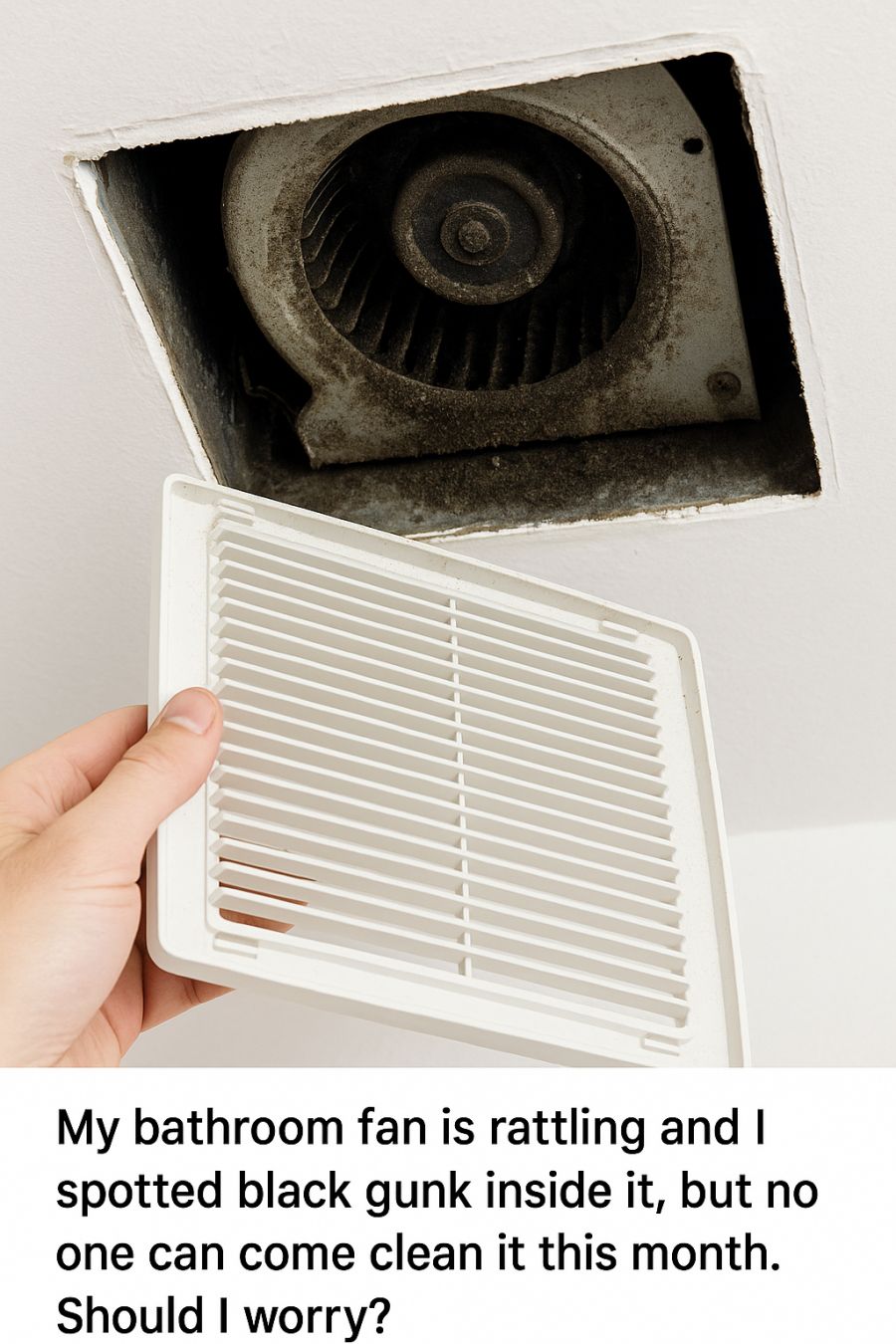
A rattling bathroom fan can be both annoying and concerning, especially when accompanied by the presence of black gunk. This mysterious substance can raise alarm bells about potential health hazards lurking in your home. While waiting for a professional to address the issue might not be ideal, understanding the risks and taking interim measures can help ease your worries.
In this article, we’ll explore the potential causes of these problems, what they might mean for your safety and health, and what steps you can take in the meantime. By the end, you’ll have a clearer understanding of how to manage the situation until expert help arrives.
1. What That Rattling Noise From Your Bathroom Fan Really Means
The rattling noise from your bathroom fan is often a sign that something isn’t functioning correctly. It could be caused by loose screws, a misaligned fan blade, or debris caught in the fan. Over time, vibrations from the fan can loosen components, leading to a more pronounced rattling sound.
Another potential cause is the accumulation of dust and dirt on the fan blades, which can throw them off balance. Regular maintenance and cleaning every six months can help prevent this issue. If the fan is older, it might be time for a replacement, as the motor could be wearing out.
2. Black Gunk: Dust, Mold, Or Something Else?
The black gunk you see could be several things. Most commonly, it could be mold, which thrives in damp, humid environments like bathrooms. Mold appears black or green and can be a health hazard, especially for those with respiratory issues or allergies.
Alternatively, it could be a buildup of dust and dirt mixed with moisture, creating a sticky residue. This can happen if the fan hasn’t been cleaned regularly. To determine what you’re dealing with, consider the texture and smell—mold often has a musty odor.
3. How Worried Should You Be About Mold in a Bathroom Fan?
Mold in a bathroom fan can be a concern due to its potential health effects. Inhalation of mold spores can lead to respiratory problems, allergic reactions, and other health issues. Those with asthma or compromised immune systems are particularly at risk.
While the presence of mold is concerning, it’s important to note that small amounts can be managed with proper cleaning and ventilation. However, if the mold growth is extensive, it may require professional remediation to ensure it is completely removed.
4. Quick Safety Checks You Can Do Today (No Tools Needed)
Start by turning off the bathroom fan and checking for visible damage or excessive dirt buildup on the fan cover. Ensure the power is off to avoid any electrical hazards.
Next, inspect the bathroom for signs of excessive moisture, such as condensation on walls or ceilings. This could indicate a ventilation issue. Also, check if your fan is effectively removing steam when in use; if not, the airflow might be restricted.
5. When a Rattling Fan Becomes an Electrical Hazard
A rattling fan can become an electrical hazard if the noise is due to faulty wiring or a malfunctioning motor. Over time, vibrations can cause wires to fray, leading to potential short circuits or even fires.
If the rattling is accompanied by a burning smell or unusual heat, turn off the fan immediately and contact an electrician. It’s better to err on the side of caution to prevent any dangerous incidents.
6. DIY Visual Inspection: What To Look For Without Taking It Apart
Without dismantling the fan, you can conduct a visual inspection by removing the fan cover. Look for any loose screws or debris that might be causing the noise. Check the blades for dust accumulation and ensure they spin freely.
Also, inspect the fan housing for any signs of mold or moisture damage. If you notice any irregularities, make a note of them to inform a professional when they are able to visit.
7. Viral Cleaning Hacks for Bathroom Fans: What Actually Works
Some popular cleaning hacks involve using a vacuum cleaner with a brush attachment to remove dust and debris from the fan blades and cover. This method is effective for regular maintenance.
Another hack is using a mixture of vinegar and baking soda to clean mold. Apply the mixture to affected areas, let it sit for 30 minutes, then wipe away. However, this is only a temporary solution, and professional cleaning might be necessary for severe mold growth.
8. How To Temporarily Reduce Mold Risk Until a Pro Can Visit
To reduce mold risk, increase ventilation in the bathroom by leaving the door open after showers and using a dehumidifier to control humidity levels. Aim to keep humidity below 50% to discourage mold growth.
Regularly clean surfaces with anti-mold solutions and ensure that any leaks or sources of moisture are promptly addressed to prevent new mold from forming.
9. Simple Ways To Cut Down Moisture and Steam Buildup Right Now
After showering, use a squeegee to remove excess water from walls and glass surfaces to reduce moisture. Consider installing a shower timer to limit the duration of hot showers, which contribute to steam buildup.
Additionally, use bathroom-safe fans or open windows to promote air circulation. Regularly check and clean exhaust fans to ensure they are functioning optimally.
10. When You Should Turn the Fan Off Completely
If the fan is making loud, unusual noises, emitting a burning smell, or showing visible signs of electrical issues, it’s best to turn it off immediately to prevent further damage or risk of fire.
In cases where the fan isn’t effectively ventilating the space or if there’s extensive mold growth, turning it off can prevent the spread of spores until a professional can address the problem.
11. Affordable Stopgap Fixes: From Compressed Air to Disposable Filters
Using compressed air to blow out dust and debris from the fan blades and motor can be a quick fix to reduce noise and improve efficiency. This method is inexpensive and readily available.
Consider using disposable filters designed for bathroom fans to catch dust and mold spores. These can be placed over the fan cover and replaced regularly to maintain cleanliness and airflow.
12. How To Talk To Your Landlord or Property Manager About the Problem
When discussing the issue with your landlord or property manager, be clear and concise about the problem. Provide details about the rattling noise and black gunk, and express your concerns about potential health risks.
Request a timeline for when the issue will be addressed and ask about interim solutions they recommend. Document all communications to have a record of the discussion and any agreed-upon actions.
13. Long-Term Prevention: Keeping Dust and Moisture From Teaming Up Again
To prevent future issues, establish a regular cleaning schedule for your bathroom fan, ideally every three to six months, to keep dust and debris at bay. Use a vacuum or a damp cloth to remove buildup.
Invest in a high-quality exhaust fan with a humidity sensor to automatically manage moisture levels. Additionally, ensure that your bathroom is well-ventilated by using windows, doors, or additional fans to maintain a dry environment.
