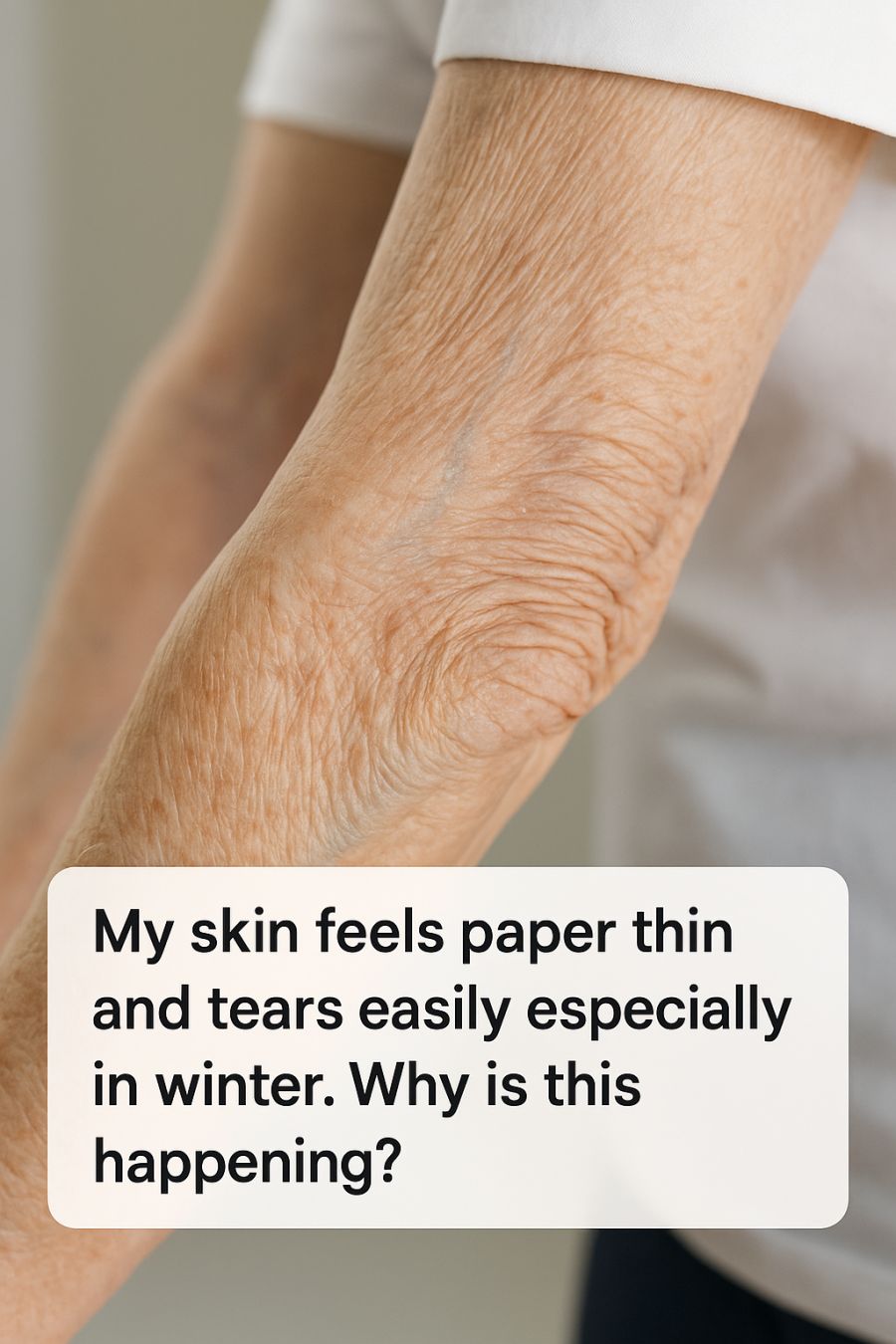
As the cold months approach, many individuals notice that their skin feels more delicate and prone to tears. This sensation, often described as ‘paper thin’ skin, can be distressing and uncomfortable. But what exactly does it mean when your skin feels this way, and why does it seem to worsen during the winter?
Understanding the underlying causes of fragile, tear-prone skin is crucial for effective management and prevention. From environmental factors to lifestyle habits, several elements contribute to this condition, and addressing them can significantly improve your skin’s resilience and health.
1. What It Really Means When Your Skin Feels ‘Paper Thin’
When your skin feels ‘paper thin’, it usually indicates a loss of dermal thickness and strength. The skin comprises several layers, with the epidermis and dermis being the most significant for structural integrity. The dermis, which is approximately 2 mm thick on average, provides elasticity and strength due to its collagen and elastin fibers. A reduction in these components makes the skin more prone to tears and injuries.
Factors such as reduced collagen production, aging, and environmental damage can lead to a thinning of these layers. In some cases, the skin barrier may also be compromised, leading to increased sensitivity and a heightened risk of tears.
2. How Winter Air Strips Your Skin’s Protective Barrier
Winter air is notoriously dry, with humidity levels often dropping below 30%. This lack of moisture in the air can deplete the skin’s natural oils, which serve as a protective barrier against irritants and dehydration. As the skin loses moisture, it becomes more susceptible to cracking and tearing.
Additionally, indoor heating systems further exacerbate this problem by reducing humidity levels indoors, creating an environment where the skin struggles to retain its natural moisture balance. This constant cycle of moisture loss can significantly weaken the skin’s barrier function during the winter months.
3. The Role of Aging and Skin Atrophy in Fragile, Tear-Prone Skin
As we age, the skin naturally undergoes atrophy, a process where the skin becomes thinner and loses its elasticity. This is primarily due to a decrease in collagen production, which is vital for maintaining skin structure and resilience. By the age of 60, collagen levels can be reduced by up to 30%, contributing to a more fragile skin surface.
Age-related changes also include a decrease in the skin’s natural oil production, leading to dryness and increased sensitivity. These factors combined make older skin more prone to tears and injuries, especially when exposed to harsh environmental conditions such as winter weather.
4. Medications and Medical Conditions That Thin the Skin
Certain medications, such as long-term corticosteroid use, can lead to skin thinning. Corticosteroids can inhibit collagen production, leading to a weaker skin structure. Patients using these medications for extended periods may notice their skin becomes more fragile and tears easily.
Medical conditions like Ehlers-Danlos syndrome, lupus, and diabetes can also contribute to skin thinning. These conditions often affect collagen synthesis or skin healing processes, exacerbating the problem of fragile skin.
5. Hidden Nutrient Deficiencies That Weaken Your Skin
Nutrient deficiencies, particularly in vitamins and minerals essential for skin health, can lead to thinning skin. Vitamin C is crucial for collagen synthesis, and a deficiency can impair this process, resulting in weaker skin. Similarly, low levels of zinc and essential fatty acids can affect skin repair and barrier function.
Ensuring a balanced diet rich in these nutrients can help support skin strength and resilience, reducing the risk of tears and injuries.
6. Everyday Habits That Quietly Damage Your Skin Barrier
Habits such as frequent washing with hot water, using harsh soaps, and neglecting to moisturize can damage the skin barrier over time. Hot water strips away natural oils that protect the skin, while harsh soaps can disrupt the skin’s pH balance, leading to irritation.
Neglecting proper skincare routines, especially in winter, can exacerbate these effects, leaving the skin more vulnerable to environmental damage and injuries.
7. Viral TikTok Skincare Hacks That May Be Making Things Worse
Social media platforms like TikTok have popularized numerous skincare hacks, some of which may not be suitable for everyone. For example, using abrasive exfoliants or DIY treatments with acidic ingredients can compromise the skin barrier, especially if used excessively.
It’s essential to approach these trends with caution and consult with a dermatologist before trying new skincare routines, particularly if you have sensitive or already compromised skin.
8. How Over-Exfoliation and Retinoids Can Lead to Tearing Skin
Exfoliation is beneficial for removing dead skin cells, but over-exfoliation can strip away the skin’s protective layers, leaving it vulnerable to damage. Mechanical exfoliants, in particular, can cause microtears if used too aggressively.
Retinoids, while effective for anti-aging, can also cause skin thinning if used excessively. They increase cell turnover, which can lead to peeling and a weakened barrier if the skin isn’t given time to adjust. It’s crucial to use these products as directed and allow time for the skin to acclimate.
9. The Impact of Hot Showers, Harsh Soaps, and Over-Washing
Hot showers, although comforting in cold weather, can strip the skin of its natural oils, leading to dryness and increased fragility. The ideal water temperature for skin health is lukewarm, as it maintains the skin’s moisture balance.
Harsh soaps with sulfates and other irritating ingredients can disrupt the skin’s natural pH and barrier, making it more susceptible to damage. Opting for gentle, hydrating cleansers can help preserve the skin’s integrity.
10. When ‘Sensitive Skin’ Is Actually an Underlying Skin Disorder
Many people attribute their skin sensitivity to having ‘sensitive skin’, but it can sometimes be a sign of an underlying skin disorder such as eczema, psoriasis, or rosacea. These conditions can weaken the skin’s barrier, leading to increased fragility and a heightened risk of tearing.
If your skin sensitivity is persistent and accompanied by other symptoms like redness, itching, or flaking, it’s important to consult a dermatologist for an accurate diagnosis and appropriate treatment.
11. How to Safely Strengthen Thin Skin and Support Repair in Winter
Strengthening thin skin during winter involves adopting a comprehensive skincare routine focused on hydration and protection. Using moisturizers rich in ceramides and hyaluronic acid can help replenish the skin’s moisture and support its barrier function.
Incorporating antioxidants such as vitamin C and E can also promote collagen production and protect against environmental damage. Additionally, using a humidifier indoors can maintain optimal humidity levels, preventing excessive moisture loss from the skin.
12. Red-Flag Symptoms: When to See a Dermatologist Immediately
While many instances of thin, fragile skin can be managed with lifestyle and skincare adjustments, certain symptoms warrant immediate medical attention. These include persistent skin tears that do not heal, severe dryness and cracking, and any signs of infection such as redness, swelling, or pus.
If you experience these symptoms, it’s important to seek the advice of a dermatologist to determine the underlying cause and receive appropriate treatment to prevent further complications.
