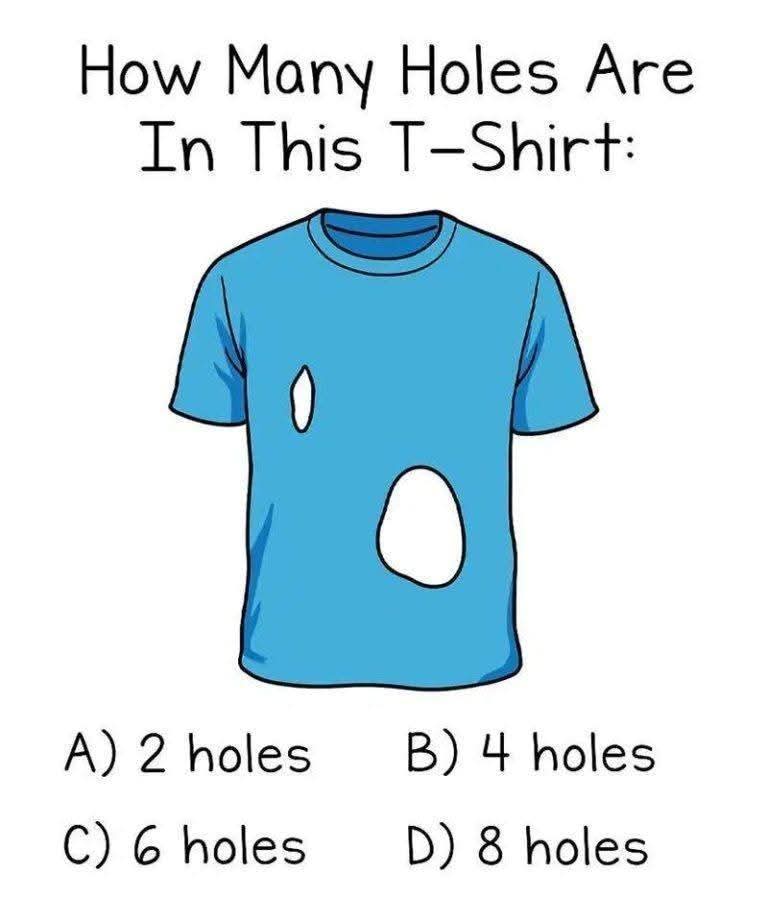
The Question That Breaks Brains
Here’s the classic prompt:“How many holes are there in a T-shirt?”Most people answer instantly.Some say two.Others say three.A few say four.Some argue five.And then there are debates that spiral into chaos.The question looks simple—but it’s deceptively powerful. It reveals how quickly our brains make assumptions, how easily we overlook obvious details, and how perception can override logic.Why We Rush to AnswerHumans are wired to respond quickly to familiar objects.You’ve seen a T-shirt thousands of times.You’ve worn one.Folded one.Washed one.Thrown one on without thinking.Your brain thinks:“I know this. Easy.”
And that confidence is exactly what causes the mistake.When something feels familiar, the brain switches from analysis mode to autopilot. It stops checking details and starts relying on mental shortcuts—also known as heuristics.That’s where things go wrong.The Most Common Wrong Answers (And Why They Happen)Answer #1: “Two Holes”This answer usually comes from focusing only on:One hole for the headOne combined idea of sleevesThe brain compresses information and treats the shirt as a single opening system rather than a three-dimensional object.It’s fast—but inaccurate.Answer #2: “Three Holes”This one feels more thoughtful:One for the headTwo for the armsAt first glance, this seems correct—and many people stop here confidently.But something important is missing.Answer #3: “Four Holes”This answer often comes from people who add:Head holeTwo arm holesBottom openingNow we’re getting closer.But there’s still something people forget.Answer #4: “Five Holes”Some people go further:Head holeTwo arm holesBottom opening
PuncturesTearsCutoutsMissing fabricNot structural openings.So their brain subconsciously excludes:SleevesNeck openingsBottom openingsEven though all of those are technically holes.This linguistic bias is one of the biggest reasons the error rate is so high.Why Only 14% Get It Right
We see it as:ClothingSomething you wearA single object with a “top” and “sides”That mental framing hides the details.Another Bias: “Premature Closure”Premature closure happens when the brain:Finds an answer that feels “good enough”Stops analyzingMoves onThis saves energy—but sacrifices accuracy.Once someone thinks:“Head hole + arm holes = three”Their brain closes the case.The bottom hole never even enters the discussion.Why This Question Goes Viral Again and AgainThe T-shirt hole question resurfaces constantly because it has all the ingredients of a perfect viral puzzle:
Pulling it over their headSliding arms through sleevesPulling it down over their torsoThat physical visualization makes the bottom hole obvious.Thinking spatially beats thinking abstractly.What the 14% Do DifferentlyThose who get it right tend to:Question the wordingResist rushingVisualize objects in 3D
Count deliberatelyDistrust “easy” answersThese habits matter far beyond riddles.For Complete Cooking STEPS Please Head On Over To Next Page Or Open button (>) and don’t forget to SHARE with your Facebook friends
