During the winter months, homeowners may notice peculiar changes in their attics, one of which is the formation of a mysterious white powder along the wood rafters. This phenomenon can be concerning, leaving many wondering about its cause and potential implications for their home. Understanding what this white substance is, and why it appears can help address any underlying issues and prevent potential damage.While the sight of white powder in the attic might initially suggest mold or mildew, it’s often a result of moisture crystallization due to cold temperatures. However, it’s crucial to correctly identify the substance to ensure that it doesn’t pose a risk to the structural integrity of the home or to the health of its inhabitants. This article will explore the reasons behind the appearance of this white powder, how to differentiate it from other substances, and provide guidance on addressing the issue effectively.1. Why White Powder Appears on Attic Rafters in WinterThe formation of white powder on attic rafters during winter is commonly due to frost accumulation. As warm, moist air from the home rises and enters the cooler attic space, the moisture in the air condenses on cold surfaces such as wood rafters, forming ice crystals or frost. This frost can appear as a white, powdery substance as it thaws and refreezes.Typically, this occurs when attic temperatures drop below the dew point of the rising warm air, which is often exacerbated by inadequate insulation or ventilation. The temperature differential between the living space and attic can cause significant amounts of moisture to collect, leading to frost formation that may go unnoticed until it sublimates into the white powder seen in warmer conditions.2. Moisture Crystallization: How Cold Air Turns Vapor Into ‘Frost’Moisture crystallization occurs when humid air comes into contact with cold surfaces, typically at temperatures below 32°F (0°C). In attics, this process is facilitated by the lack of insulation and exposure to the exterior cold. The warm, moist air from the living areas rises and when it hits the cold attic rafters, the moisture condenses and freezes.This frost can form a thin, white layer on the wood surfaces, which will eventually sublimate directly into water vapor as temperatures rise slightly, leaving behind mineral deposits that appear as white powder. Understanding this process is crucial for managing humidity levels and ensuring that attic spaces remain dry.3. Distinguishing Frost Crystals From Mold, Mildew, and EfflorescenceIdentifying the white powder correctly is essential to address the underlying issue. Frost crystals are often dry and powdery, while mold and mildew have a more fuzzy or slimy appearance and may emit a musty odor. Efflorescence, on the other hand, results from water movement through masonry, leaving salt deposits, and is typically found on brick or concrete, not wood.Conducting a simple test can help: swab the substance with a damp cloth and observe any changes. If the substance dissolves easily, it may be efflorescence. Mold and mildew typically do not dissolve and might smear instead. If unsure, it may be best to consult a professional for proper identification.4. Common Attic Moisture Sources Inside the HomeSeveral sources within the home can contribute to moisture accumulation in the attic. Activities such as cooking, showering, and even breathing release moisture into the air. Without proper ventilation, this moisture can migrate upwards into the attic space.Additionally, unsealed attic hatches, recessed lighting, and poorly insulated ductwork can allow warm, moist air to seep into the attic. Identifying and mitigating these sources is crucial in preventing moisture-related issues in the attic.5. Insulation Gaps and Thermal Bridges That Trigger Winter FrostInsulation gaps and thermal bridges are critical contributors to frost formation in attics. Gaps in insulation allow warm air to escape from the living spaces into the attic, while thermal bridges conduct heat directly to the attic, causing temperature fluctuations.Ensuring that insulation is continuous and adequately installed can minimize these issues. It’s also important to address thermal bridging by using materials that reduce heat transfer, such as insulated panels or spray foam, which can help maintain a consistent temperature in the attic.6. Ventilation Problems That Let Moisture Linger in the Roof SpacePoor ventilation is a leading cause of moisture accumulation in attics. Without proper airflow, humidity levels can rise, leading to condensation and frost formation. Ridge vents, soffit vents, and attic fans are essential components of an effective ventilation system.Inspecting and maintaining these systems ensures that air moves freely through the attic space, carrying excess moisture out and preventing frost buildup. Regular checks and cleanings can prevent blockages and ensure that the ventilation system operates efficiently.7. How to Safely Inspect and Test the White Powder YourselfHomeowners can perform a preliminary inspection of the white powder by carefully examining the attic. Wear protective gear such as gloves and a mask to avoid inhaling or contacting potentially harmful substances.If testing the powder, a simple water test can differentiate between efflorescence and frost residue. If unsure about the substance’s nature, collect a small sample in a sealed bag and consult a professional for analysis.8. Short-Term Fixes: Drying Out the Attic and Reducing HumidityTo address immediate moisture issues, consider using a portable dehumidifier to reduce humidity levels in the attic. Ensure that any existing ventilation systems are functioning correctly and not obstructed.Additionally, temporarily increasing ventilation by opening attic windows or installing temporary fans can help dry out the space. These measures can provide short-term relief while more permanent solutions are implemented.9. Long-Term Solutions: Insulation, Air Sealing, and Better VentingLong-term prevention of attic moisture issues involves improving insulation, sealing air leaks, and enhancing ventilation. Adding or upgrading attic insulation prevents warm air from reaching the attic, while sealing gaps and cracks keeps moist air from infiltrating the space.Investing in a comprehensive ventilation system, including ridge and soffit vents, ensures optimal airflow. Regular maintenance and inspections can help identify potential issues early and maintain a dry, frost-free attic environment.10. When the White Powder Signals a Serious Structural or Health RiskIn some cases, the presence of white powder may indicate more serious problems, such as the presence of mold due to prolonged moisture exposure. Mold can deteriorate wood structures and pose health risks to occupants.If the white substance is accompanied by structural damage or persistent health symptoms among residents, it is crucial to seek professional evaluation and remediation to prevent further complications.11. When to Call a Roofer, Insulation Pro, or Indoor Air SpecialistHomeowners should consider calling a professional if the white powder persists despite efforts to control moisture or if there’s uncertainty about its nature. A roofer can inspect for leaks or damage that might contribute to moisture intrusion.An insulation professional can assess and upgrade attic insulation and air sealing. An indoor air quality specialist can evaluate humidity levels and recommend improvements to ventilation systems. Professional assessments ensure that underlying issues are addressed comprehensively, safeguarding the home and its occupants
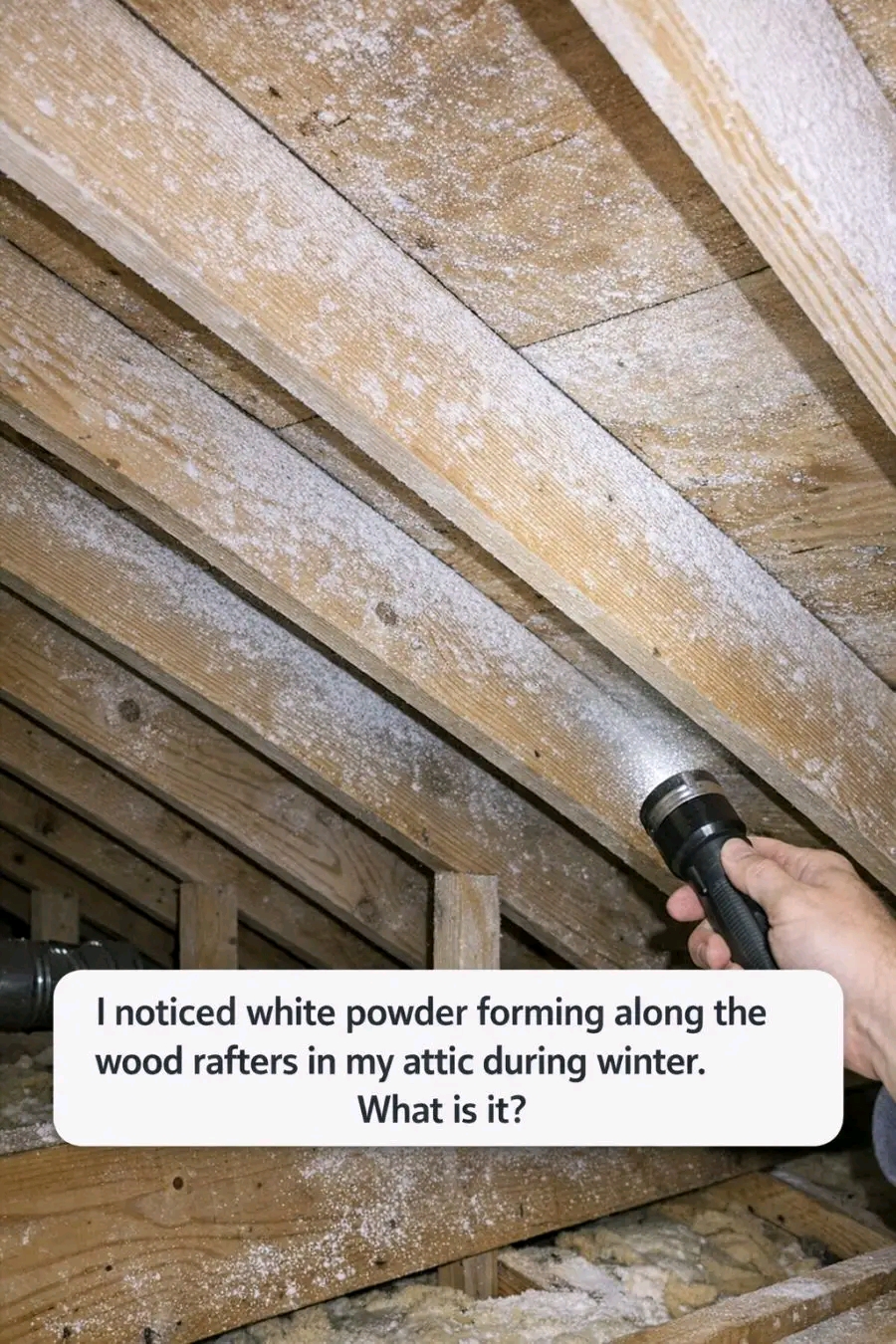
I noticed white powder forming along the wood rafters in my attic during winter. What is it?
ADVERTISEMENT
