If you’ve noticed that your forearms feel persistently rough and dry, almost like sandpaper, you’re not alone. This common issue can be frustrating, especially when you’re unable to see a doctor right away. But don’t worry—there are several things you can do at home to help improve the texture and comfort of your skin.In this article, we will explore possible causes for your rough skin, everyday habits that may be contributing to the problem, and practical, immediate solutions you can implement. From adjusting your shower routine to selecting the right moisturizer, we’ve gathered insights that can make a big difference in how your skin feels.1. Is It Just Dry Skin Or Asteatotic Eczema? How To Tell At HomeDry skin and asteatotic eczema can both cause your forearms to feel rough, but there are subtle differences you can spot at home. Dry skin usually just feels rough and may look flaky, while asteatotic eczema often presents with a cracked, scaly appearance and can be more itchy.To test for asteatotic eczema, gently press the skin on your forearms. If you notice small, fine cracks or a pattern that looks like a dry riverbed, it could indicate eczema. However, if the skin simply feels rough without any pattern, it might just be dry skin. Keeping a symptom diary noting any itching, redness, or irritation can also provide clues.2. Everyday Habits That Quietly Sandpaper Your ForearmsCertain daily habits might be contributing to the rough texture of your forearms. For instance, frequent hand washing or using harsh soaps can strip the skin of its natural oils, leading to dryness. Using hot water, especially in showers, can exacerbate this issue.Also, consider your exposure to the elements. Wind and cold weather can dry out your skin, so wearing protective clothing or applying a barrier cream before heading outdoors can help. Additionally, indoor heating can decrease humidity levels, drying out the skin further. Using a humidifier can help maintain moisture in the air, especially in the winter months.3. The 10-Minute Shower Makeover: Water, Temperature, And TimingYour shower routine can significantly impact the condition of your skin. Aim to keep showers under 10 minutes and use lukewarm water instead of hot. Hot water can strip your skin of essential oils, leading to further dryness and irritation.Consider switching to a gentle, fragrance-free cleanser to avoid irritating your skin. After showering, gently pat your skin dry with a towel instead of rubbing it. Apply moisturizer immediately after to lock in moisture, ideally within three minutes of getting out of the shower.4. The Right Moisturizer: What To Look For On The Label TodayChoosing the right moisturizer is crucial for improving the texture of rough skin. Look for products containing ceramides, which help restore the skin barrier, and hyaluronic acid, which attracts and retains moisture.Other beneficial ingredients include glycerin and urea, which are known for their hydrating properties. Avoid moisturizers with alcohol, fragrances, and dyes, as these can irritate sensitive skin. Opt for creams or ointments over lotions, as they tend to be more effective in retaining moisture.5. How To Layer Products So Rough Forearms Actually Get SofterLayering your skincare products correctly can enhance their effectiveness. Start with a hydrating serum or essence, followed by a rich moisturizer to seal in moisture. If you’re dealing with severe dryness, consider using an occlusive, like petroleum jelly, as the last step to prevent moisture loss.Allow each product to absorb fully into your skin before applying the next. This can take a few minutes for each layer. Consistency is key, so try to follow this routine both morning and night for the best results.6. Simple Kitchen-And-Bathroom Hacks To Protect Your Skin BarrierSome simple changes in your kitchen and bathroom can help protect your skin barrier. Use rubber gloves when doing dishes or cleaning to prevent exposure to harsh chemicals and hot water. Choose fragrance-free and hypoallergenic cleaning products whenever possible.In the bathroom, swap out your regular soap for a gentle, moisturizing cleanser. You can even make a DIY oatmeal bath by grinding oats into a fine powder and adding them to your bathwater. Oatmeal is known for its soothing and anti-inflammatory properties.7. Fabrics, Friction, And Laundry Swaps That Stop Extra IrritationThe fabrics you wear can significantly affect your skin’s condition. Opt for soft, breathable materials like cotton, which are less likely to irritate the skin. Avoid wool and synthetic fibers, which can cause friction and exacerbate dryness.When doing laundry, choose a mild, fragrance-free detergent and avoid fabric softeners, which can leave a residue that irritates the skin. Consider using a double rinse cycle to ensure all detergent is washed out.8. When Over-The-Counter Steroid Creams Make Sense—And How To Use Them SafelyOver-the-counter steroid creams, like hydrocortisone, can be helpful for controlling inflammation and itching associated with eczema. However, they should be used sparingly and according to the package instructions to avoid thinning of the skin.Apply a thin layer to the affected areas once or twice a day. If you don’t see improvement after a week of use, or if symptoms worsen, discontinue use and consult a healthcare professional. Always follow up with a moisturizer to help maintain skin hydration.9. Gentle At-Home Exfoliation: When It Helps And When It Makes Things WorseExfoliation can help remove dead skin cells, but it must be done carefully. Use a gentle exfoliant, like a soft washcloth or a mild scrub, and limit exfoliation to once a week to avoid damaging the skin barrier.If your skin is already irritated or cracked, skip exfoliation until it heals. Over-exfoliating or using harsh scrubs can worsen dryness and lead to increased irritation.10. Red Flags: Signs Your “Dry Skin” Needs Urgent Medical AttentionWhile dry skin is often manageable at home, certain symptoms warrant medical attention. If you notice severe redness, swelling, or oozing, these could be signs of an infection that requires prompt treatment.Additionally, if your skin condition is accompanied by other symptoms such as fever, or if it significantly impacts your daily life, seek medical advice. Persistent rough skin despite home care efforts may also necessitate a professional evaluation.11. What To Track While You Wait For An Appointment So You Get Better AnswersWhile waiting for a medical appointment, keeping a detailed diary of your symptoms can be extremely helpful. Note the onset, duration, and severity of symptoms, as well as any triggers such as stress, diet changes, or environmental factors.Document any products you use and how your skin reacts to them. Taking photos of your skin’s condition at different intervals can also provide valuable information for your healthcare provider, helping them to make a more accurate diagnosis and treatment plan.
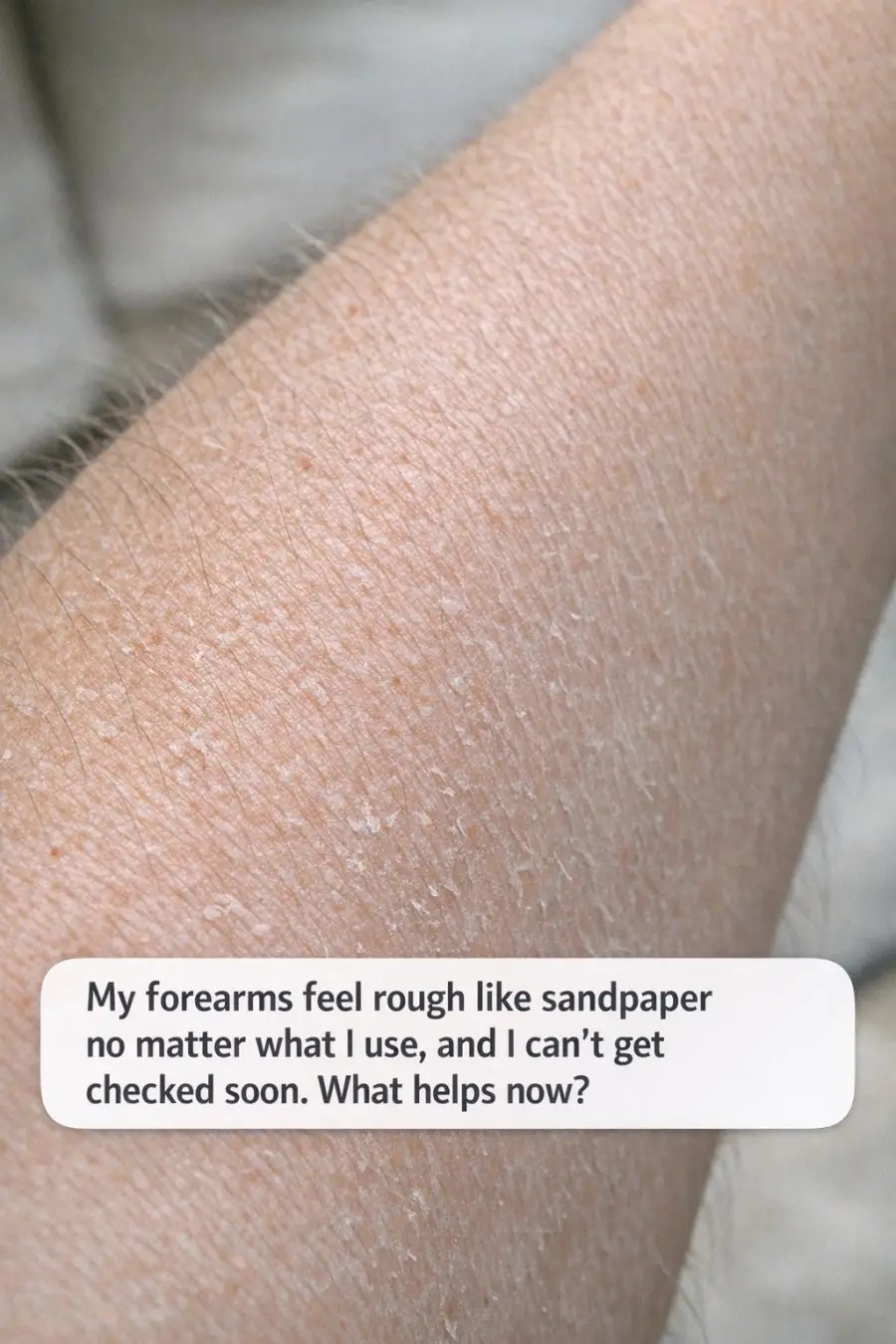
My forearms feel rough like sandpaper no matter what I use, and I can’t get checked soon. What helps now?
ADVERTISEMENT
