Opening your freezer to find your carefully stored meat covered in white crystals can be alarming. Are these crystals a sign of mold, or is it just the dreaded freezer burn? Understanding the difference between these two phenomena is crucial for both food safety and quality.Freezer burn is a common issue that affects many frozen foods, especially meats. It’s caused by exposure to air, leading to dehydration and oxidation. Mold, on the other hand, is a type of fungus that can grow on food under certain conditions, but it’s less common in frozen environments. This article explores how to distinguish between freezer burn and mold, and offers tips on how to prevent both from occurring.1. What Those White Crystals on Frozen Meat Actually AreThe white crystals that often form on frozen meat are typically a result of freezer burn rather than mold. Freezer burn occurs when air comes into contact with the surface of the food, causing moisture to evaporate and form ice crystals. These crystals are usually small, but their formation can lead to changes in the texture and flavor of the meat.While freezer burn affects the quality of the meat, it does not necessarily make it unsafe to eat. Mold, on the other hand, would require different conditions to grow, such as warmth and moisture, which are not typically present in a properly functioning freezer.2. How Freezer Burn Forms: The Science of Ice Crystal FormationFreezer burn forms due to a process called sublimation, where ice transitions directly from a solid to a gas without passing through the liquid phase. This occurs when food is not properly sealed, allowing air to reach the surface. The water molecules on the surface evaporate and then re-freeze as ice crystals.The size of these ice crystals can vary, but they often appear as small, white, rough patches on the meat. The longer the meat is exposed to air, the more severe the freezer burn will be, affecting both the texture and flavor of the meat.3. What Mold on Frozen Meat Looks Like Versus Freezer BurnMold on frozen meat is rare, as mold requires temperatures above freezing and a moist environment to grow. If mold does develop, it typically appears as fuzzy or slimy spots in colors like green, blue, or black. In contrast, freezer burn is characterized by dry, leathery patches with ice crystals.Mold will often emit an unpleasant odor and can penetrate below the surface of the meat, unlike freezer burn, which is typically superficial. If mold is present, the meat should not be consumed, as it can pose health risks.4. Key Visual Clues: Color, Texture, and Pattern of the White StuffTo distinguish between freezer burn and mold, examine the color, texture, and pattern of the white crystals. Freezer burn usually results in pale, white, or grayish patches that are dry and leathery to the touch. The ice crystals are often small and spread evenly across the surface.Mold, however, will appear as irregular patches with a slimy or fuzzy texture. The colors may vary, but they often include shades of green, blue, or black. Mold also tends to be less uniform in appearance compared to the even distribution of freezer burn.5. Smell and Texture Tests: Simple Ways to Double-Check SafetyIf you’re still unsure whether you’re dealing with freezer burn or mold, use your senses of smell and touch to help determine the safety of the meat. Freezer-burned meat may have a slightly off smell, but it should not smell foul or sour. If the smell is unpleasant or pungent, it could be a sign of mold or spoilage.The texture of the meat can also provide clues. Freezer-burned meat will feel dry and firm, while moldy meat may feel slimy or sticky. If the meat passes both the smell and texture tests, it is likely freezer-burned and safe to eat, although it may not be as flavorful.6. Is Freezer-Burned Meat Still Safe to Eat?Although freezer burn can affect the taste and texture of meat, it does not make it unsafe to consume. The primary concern with freezer-burned meat is that it may become tough, dry, and less palatable. However, cooking methods that incorporate moisture, such as stewing or braising, can help mitigate these effects.It’s important to note that while freezer-burned meat is safe to eat, it should be consumed within a reasonable time frame to ensure the best quality. Proper handling and cooking are essential to prevent any risk of foodborne illness.7. When White Crystals Mean You Should Throw the Meat AwayIf the white crystals are accompanied by signs of mold or spoilage, such as an unpleasant odor or slimy texture, it’s best to discard the meat. Mold can penetrate deeper into the meat than freezer burn, posing potential health risks.Additionally, if the meat has been in the freezer for an extended period, it may be best to err on the side of caution and dispose of it. Freezer burn can significantly affect the quality, making the meat less enjoyable to eat.8. How Packaging and Air Exposure Create Freezer BurnProper packaging is crucial in preventing freezer burn. When meat is not adequately sealed, it is exposed to air, which accelerates the sublimation process and leads to the formation of ice crystals. The best way to prevent this is by using airtight packaging, such as vacuum-sealed bags or tightly wrapped plastic wrap.It’s also recommended to remove as much air as possible from the packaging before sealing. Using freezer-safe bags or containers can provide an additional barrier against air exposure, helping to maintain the quality of the meat during storage.9. Smart Freezing Hacks to Prevent White Crystals in the First PlaceTo prevent freezer burn, ensure that your freezer is set to the correct temperature, ideally 0°F (-18°C) or lower. This helps maintain the quality of frozen foods and slows down the sublimation process.When freezing meat, wrap it tightly in plastic wrap, aluminum foil, or freezer paper, and then place it in a resealable freezer bag. Removing as much air as possible before sealing can also help. Labeling the packages with the date of freezing can help manage inventory and ensure that older items are used first.10. How Long You Can Safely Keep Meat in the FreezerThe duration for which meat can be safely stored in the freezer depends on the type of meat and how well it is packaged. Generally, raw poultry can be stored for up to 9 months, while red meats like beef and pork can last between 4 to 12 months.Cooked meats have a shorter shelf life, typically lasting 2 to 3 months in the freezer. It’s important to frequently check the condition of frozen meats and use them within these time frames to ensure both safety and quality.11. What to Do With Meat That’s Already Freezer-BurnedIf you discover that your meat is freezer-burned, don’t despair. You can still use it in dishes where the texture and flavor can be masked or enhanced. Consider using freezer-burned meat in soups, stews, or casseroles where additional ingredients and cooking methods can improve its taste.Trimming away the freezer-burned portions before cooking can also help. Marinating the meat can add flavor and moisture, making it more palatable. Always ensure that the meat is cooked to the appropriate temperature to ensure safety.
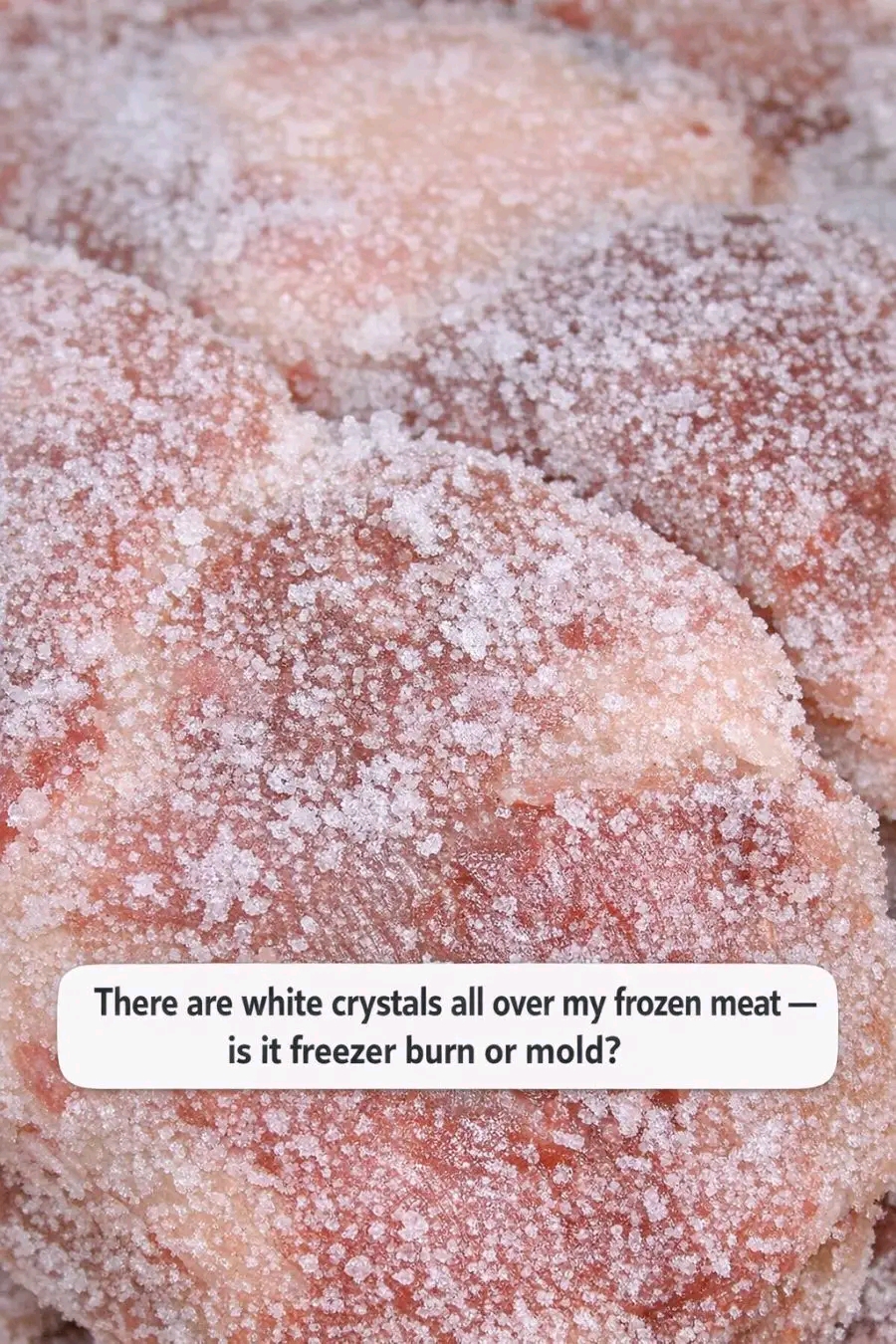
There are white crystals all over my frozen meat — is it freezer burn or mold?
ADVERTISEMENT
