If you’ve ever opened the water tank of your coffee maker and noticed a chalky white coating on the inside, you’re not alone. This common issue can affect any coffee machine that regularly uses tap water. Not only can it be unsightly, but it can also impact the performance of your coffee maker over time.Understanding what this white coating is, why it forms, and how to deal with it effectively can keep your coffee maker running smoothly and your coffee tasting great. In this article, we’ll delve into the mystery of this chalky residue, known as limescale, and provide practical solutions to manage it.1. That Chalky White Coating Is Almost Always LimescaleThe chalky white coating you see is most likely limescale, a hard, off-white, chalky deposit that’s largely composed of calcium carbonate. This substance is left behind when water that contains calcium and magnesium evaporates or is heated. The more mineral content in your water, the more likely you are to see limescale build-up.Limescale is common in areas with hard water—water that has high mineral content. According to the US Geological Survey, over 85% of the water in the United States is considered hard. Limescale forms when the minerals dissolved in hard water precipitate out and solidify, often in places where water is frequently heated or evaporated, such as in your coffee maker’s water tank.2. Why Hard Water Leaves Mineral Deposits in Your Coffee MakerHard water contains dissolved minerals like calcium and magnesium. When water is heated, as it is in a coffee maker, the solubility of these minerals decreases, causing them to precipitate out of the water and form solid deposits. This process happens more quickly at higher temperatures, which is why coffee makers are particularly prone to limescale build-up.The mineral content of your tap water is usually measured in grains per gallon (GPG) or milligrams per liter (mg/L). Water with more than 7 GPG is considered hard. When such water is used in a coffee maker, the heating process accelerates the precipitation of minerals, leaving limescale deposits behind.3. How Limescale Builds Up Inside the Water Tank Over TimeEach time you run your coffee maker, a small amount of limescale is deposited inside the water tank. This build-up is gradual but continuous, especially if you use your machine daily. Initially, you may not notice any major issues, but over time, the accumulation can become significant.Limescale doesn’t just form a film inside the tank; it can also clog the internal components of your coffee maker, such as the heating element and the pipes. This reduces the efficiency of the machine, potentially leading to longer brewing times and inconsistent water temperature, which can affect the flavor of your coffee.4. Is It Dangerous To Drink Coffee Made With Limescale?While limescale itself is not harmful if ingested—after all, it’s primarily composed of minerals that are already present in our diet in trace amounts—it can affect the taste of your coffee. The presence of excessive limescale can lead to a bitter flavor, which coffee enthusiasts often find undesirable.The main concern with limescale is not health-related but rather its impact on your coffee maker’s performance and efficiency. Over time, excessive limescale can cause your machine to work harder, potentially leading to premature wear and damage.5. Signs Your Coffee Maker Has a Limescale Problem (Beyond the White Film)Aside from the visible white deposits, there are other telltale signs that your coffee maker may have a limescale problem. You might notice that your coffee takes longer to brew or that the machine makes more noise than usual. This is because limescale can restrict water flow within the machine.Another sign is a change in taste. If your coffee suddenly tastes more bitter or sour, this could be due to the limescale affecting water temperature and extraction efficiency. Additionally, if your machine is struggling to reach the right temperature, your coffee might be coming out cooler than it should be.6. How To Safely Clean Limescale Out of Your Water TankCleaning limescale out of your coffee maker’s water tank is a straightforward process that involves descaling. Descaling solutions are widely available and typically involve a mixture of water and a mild acid, such as citric acid or vinegar.To descale your machine, fill the water tank with a mixture of equal parts water and your chosen descaler. Run the machine as if you were brewing coffee, but without any coffee grounds. Once the cycle is complete, rinse the machine thoroughly by running two more cycles with just water. This will remove any remaining descaler and limescale residue.7. Vinegar, Citric Acid, or Store-Bought Descaler: What Works Best?Each descaling option has its pros and cons. Vinegar is a popular choice due to its availability and low cost. However, it can leave a lingering smell and taste if not rinsed thoroughly. Citric acid, available in powdered form, is effective and might leave less odor than vinegar.Store-bought descalers are specifically formulated for the task and often include instructions tailored to coffee makers. They may be more expensive but can be more effective and leave no residual smell. Ultimately, the best choice depends on your personal preferences and sensitivity to odors.8. How Often You Should Descale Based on Your Water HardnessThe frequency of descaling depends largely on the hardness of your water and how often you use your coffee maker. If you live in an area with very hard water, you may need to descale as often as once a month. For areas with moderate water hardness, every three months might suffice.A good rule of thumb is to consult your coffee maker’s manual, as manufacturers often provide recommendations based on the typical use and water conditions for their machines. Regular descaling ensures your machine runs efficiently and your coffee tastes its best.9. Simple Daily Habits To Prevent Future BuildupTo minimize limescale build-up, consider using filtered or bottled water if your tap water is hard. This reduces the mineral content that causes limescale. Empty the water tank after each use and let it air dry to prevent mineral deposits from forming.Another simple habit is to wipe down the inside of the water tank with a clean, damp cloth after use. This removes any traces of minerals before they have a chance to solidify. Regular maintenance and care can extend the life of your coffee maker and keep it in top condition.10. When Limescale Damage Means It’s Time To Replace Your MachineIf limescale build-up has been neglected for too long, it can cause irreversible damage to your coffee maker. Signs that limescale has taken its toll include persistent performance issues, such as irregular brewing times, inconsistent temperatures, or leaks.If multiple descaling attempts fail to restore your machine’s functionality, it might be time to consider replacing it. Frequent breakdowns or repairs can be more costly than investing in a new coffee maker, especially if the internal components are severely affected.11. How To Stop Limescale at the Source With Filters and Softer WaterInvesting in a water filter can significantly reduce the hardness of the water you use in your coffee maker. Many home filtration systems are available, ranging from faucet attachments to whole-house softeners. These systems can lower the mineral content in your water, reducing limescale build-up.If installing a filtration system isn’t feasible, using pre-filtered or distilled water for your coffee maker can also help. While this might be more expensive than tap water, it can prevent limescale and keep your coffee maker running smoothly for longer. Regular maintenance, combined with these preventive measures, can effectively manage and even eliminate limescale issues.
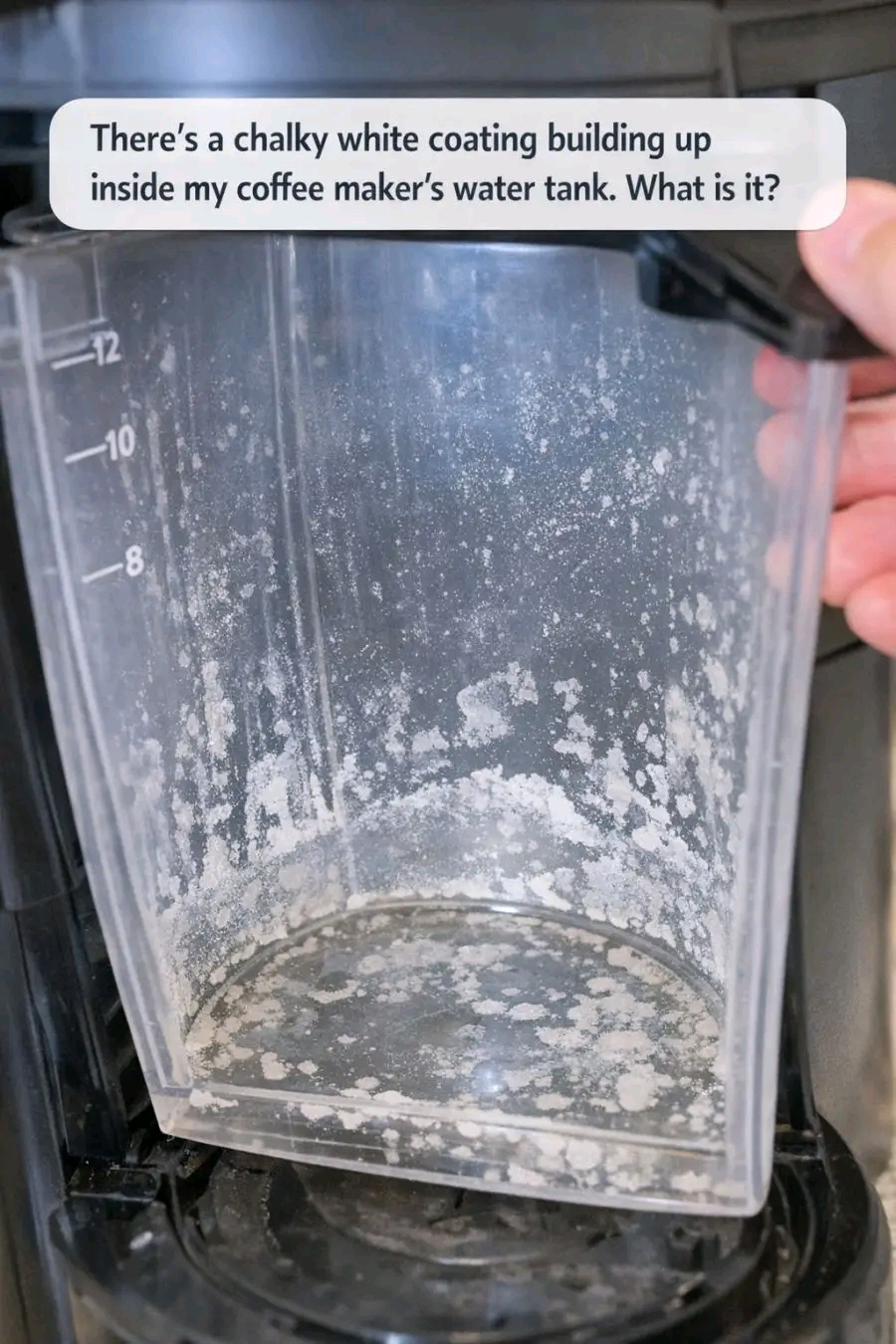
There’s a chalky white coating building up inside my coffee maker’s water tank. What is it?
ADVERTISEMENT
