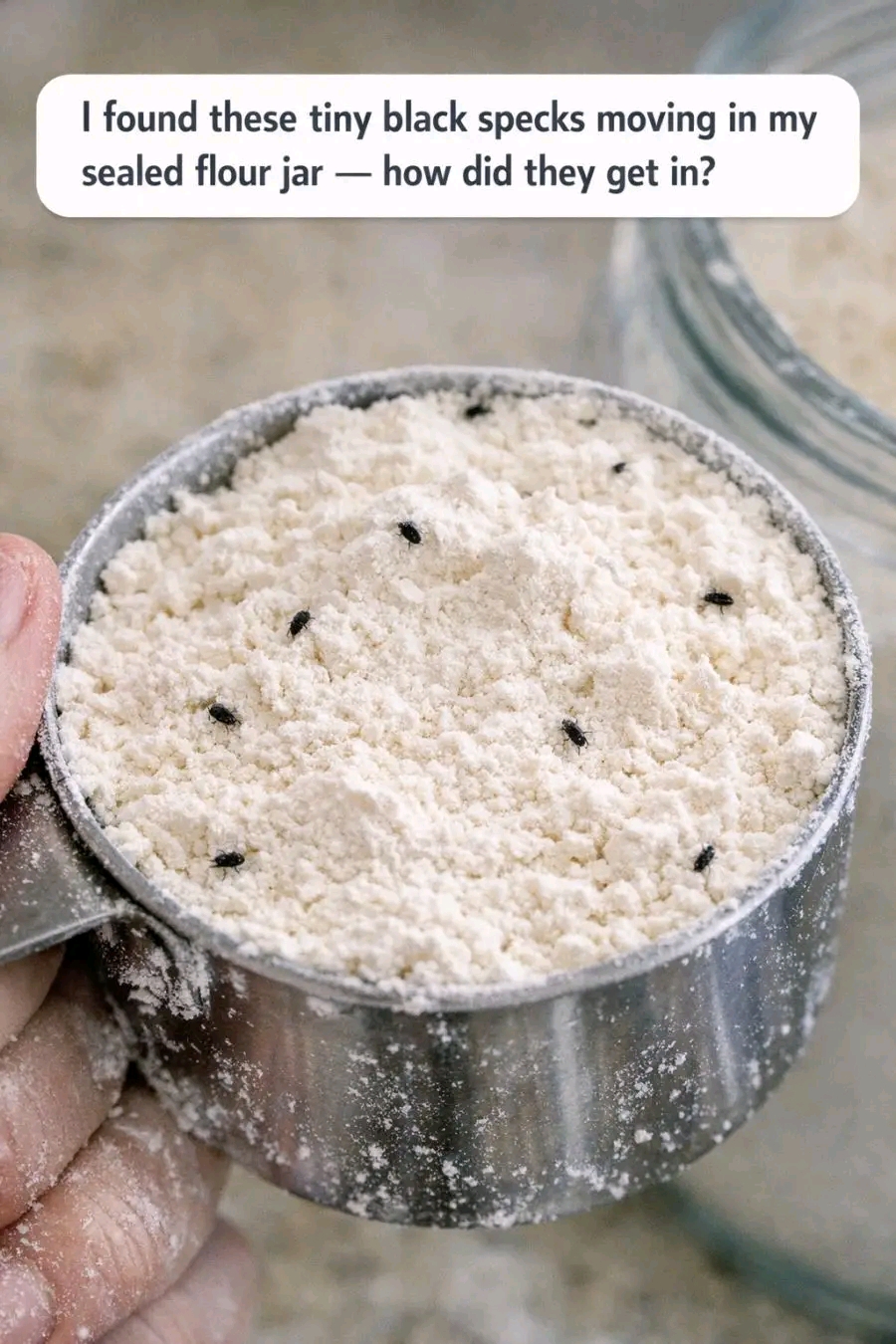
Discovering tiny black specks moving in your sealed flour jar can be unsettling, especially if you were about to embark on a baking project. These unexpected guests might make you wonder how they managed to infiltrate a seemingly secure environment and what they could mean for your kitchen’s hygiene.It’s not uncommon for people to find these unwelcome visitors in their flour. Understanding what they are and how they get into your pantry is crucial for maintaining a clean and safe cooking space. This article delves into the specifics of these tiny invaders, how they manage to get past the defenses of even sealed containers, and what steps you can take to prevent future infestations.
1. What Those Tiny Black Specks in Your Flour Really AreThe tiny black specks you see in your flour are likely flour weevils or similar pantry pests. These insects are small, typically measuring around 2 to 3 millimeters in length, and are known for their ability to infest stored food products. Weevils are not actually born inside the flour; instead, they enter as eggs laid by adult weevils on the grain before it is processed into flour. The most common types of weevils found in flour are the granary weevil and the rice weevil, both of which have distinctive elongated bodies and are well-adapted to living in stored grain products.While the sight of weevils can be off-putting, they are not harmful to humans if accidentally consumed. However, they can cause significant damage to stored grains and other pantry items over time, making it essential to address an infestation promptly.
2. How Flour Weevils Sneak In Before the Jar Is Even SealedFlour weevils often enter your pantry long before you notice them. The infestation usually begins at the processing or packaging stage, where weevils lay eggs on the grain that is later milled into flour. These eggs are tiny and nearly invisible to the naked eye, making it easy for them to go unnoticed. Once the eggs hatch, the larvae consume the flour and grow into adult weevils.Because the infestation starts at the source, simply transferring flour into a sealed jar after purchase may not be enough to prevent the emergence of weevils. The eggs can survive the transfer and hatch inside the sealed container if not dealt with promptly.
3. The Life Cycle Happening Quietly Inside Your FlourAdvertisementThe life cycle of a flour weevil begins with an adult female laying tiny eggs directly onto the grain or flour surface. These eggs are incredibly small, often just a fraction of a millimeter in size, and can go unnoticed even during packaging. Within a few days to a couple of weeks, these eggs hatch into larvae, which begin to feed on the flour.The larval stage is where most of the damage occurs, as they consume the flour and grow. After several weeks, the larvae pupate and transform into adult weevils, ready to continue the cycle by laying more eggs. Under optimal conditions, the entire life cycle from egg to adult can complete in as little as four weeks, allowing populations to grow rapidly if not controlled.
