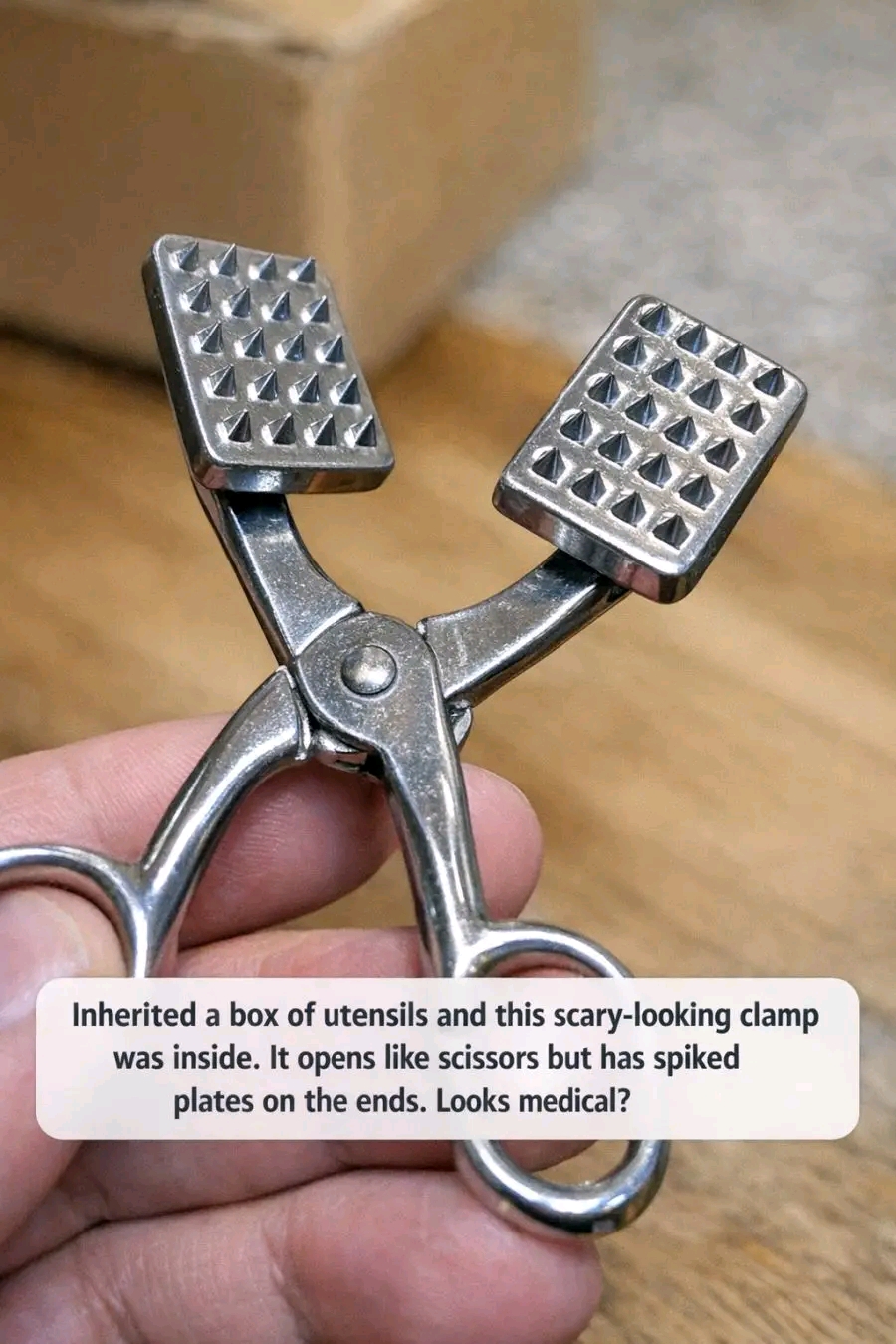
Inheriting a box of utensils can be a fascinating journey into the past, a tangible connection to previous generations and their daily lives. Among the familiar spoons, forks, and knives, you may stumble upon curious items that spark a sense of mystery and intrigue. One such item might be a peculiar clamp that, at first glance, seems more at home in a medical setting than a kitchen. Its unusual design, with scissor-like handles and menacing spiked plates, can easily evoke a sense of unease and fascination.This initial reaction is understandable, as many antique kitchen tools were crafted with a level of intricacy and purpose that is uncommon in modern utensils. The history and function of these tools may not be immediately apparent, requiring some investigation to uncover their true purpose. In this article, we will delve into the mystery of one such utensil, exploring its origins, design, and potential uses, and providing guidance on what to do with such intriguing finds.
1. The Mystery Clamp: First Impressions of a ‘Scary’ UtensilAt first sight, the clamp’s scissor-like mechanism is striking, suggesting a functionality that is both practical and precise. The handles, typically around 8 to 12 inches in length, provide a comfortable grip, and the hinged arms allow for smooth opening and closing. However, what truly captures attention are the spiked plates at the ends, which can appear menacing to the uninitiated.The spikes, often sharp and evenly spaced, are designed to grip firmly, hinting at the tool’s intended purpose. Unlike the smooth surfaces of modern tongs, these plates suggest a need for holding something securely in place, possibly something slippery or large. The overall design is robust, with metal components that suggest durability and a capacity to withstand significant pressure.
2. Why It Looks Medical (But Probably Isn’t)The unsettling appearance of the spiked plates, coupled with the precise, mechanical nature of the tool, can easily lead one to believe it belongs in a surgical kit rather than a kitchen drawer. Medical clamps often feature similar attributes, such as gripping mechanisms and pointed ends, to hold or manipulate tissues during procedures.However, upon closer inspection, subtle differences become apparent. The materials used, typically stainless or cast steel, are more common in kitchen implements than in medical instruments, which often require specialized, sterilizable metals. Furthermore, the size and grip design are more aligned with culinary applications, suggesting that its purpose is more benign and related to food preparation or serving.
3. Key Features: Scissor Grip, Hinged Arms, and Spiked PlatesThe defining features of this utensil are its scissor grip, hinged arms, and spiked plates. The scissor grip allows for one-handed operation, a necessity in both culinary and medical contexts, but here specifically designed to allow chefs or hosts to manage food items efficiently. The hinged arms provide a mechanical advantage, enabling the user to apply significant pressure with minimal effort.The spiked plates are a unique feature, engineered to pierce or hold items securely. Each plate is typically lined with several spikes, each about half an inch long, ensuring that whatever is grasped does not slip free. This design is particularly useful for handling large, awkward, or slippery food items, making it a versatile tool in any kitchen.
