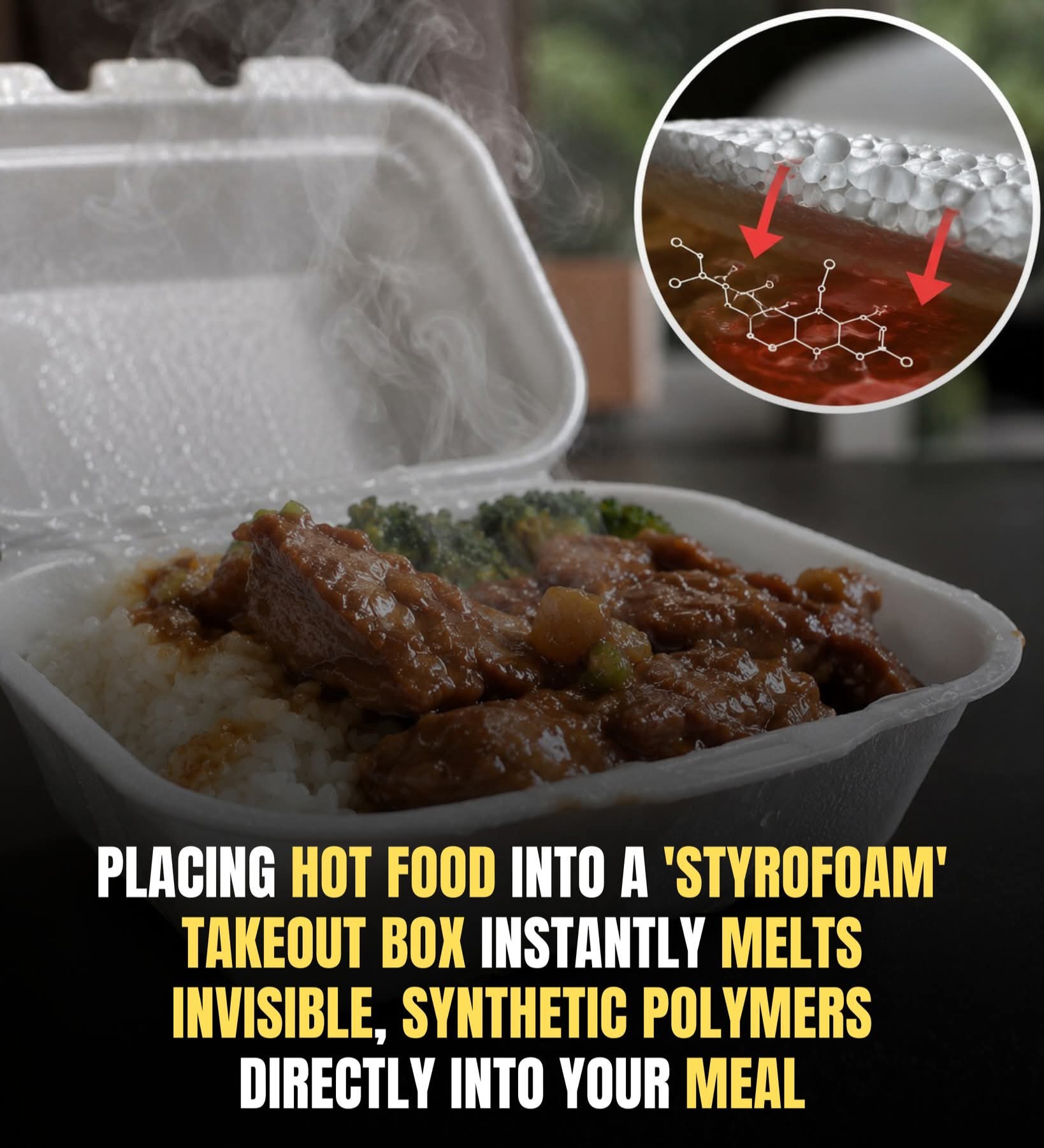
🍱 The Hidden Problem With Putting Hot Food in Styrofoam Containers
Grabbing a lightweight Styrofoam container for leftovers feels completely normal. Restaurants use them everywhere because they’re cheap, convenient, and excellent at insulating food. But many people rarely stop to think about what can happen when very hot or oily foods sit inside these containers for long periods.
Concerns about Styrofoam and food safety mainly center around heat, fat, and the potential release of certain chemicals from the plastic material into food.
While occasional exposure is unlikely to cause immediate harm, understanding how these containers behave under heat can help people make more informed choices.
🧪 What Is “Styrofoam” Actually Made Of?
What most people casually call “Styrofoam” is usually a form of expanded or extruded polystyrene.
This material became popular because it is:
- Lightweight
- Inexpensive
- Good at insulating heat
- Easy to manufacture
At room temperature, polystyrene remains relatively stable and keeps its shape well.
🔥 Why Heat Changes the Situation
The main concern begins when very hot food is placed into polystyrene containers.
Heat can:
- Soften the material
- Increase chemical migration
- Break down parts of the plastic over time
This effect may become stronger when the food is:
- Extremely hot
- Oily or fatty
- Acidic
Fatty foods in particular may interact more easily with certain compounds found in plastics.
⚠️ What Is Styrene?
One of the chemicals associated with polystyrene is styrene.
Styrene is used during the production of polystyrene products and has been studied extensively in toxicology and environmental health research.
Scientists have examined:
- Occupational exposure to styrene
- Airborne exposure in industrial settings
- Potential migration into food under certain conditions
Small amounts of styrene can migrate from containers into food, especially when exposed to high heat.
🍟 Hot and Greasy Foods May Increase Migration
Research suggests chemical migration may increase when containers hold:
- Fried foods
- Oily sauces
- Very hot soups
- Melted cheese dishes
Heat and fat together can make it easier for small amounts of chemicals to move from the container into the food.
This doesn’t mean one takeout meal is automatically dangerous, but repeated exposure is one reason some experts recommend reducing contact between hot foods and polystyrene.
🥡 Why Restaurants Still Use These Containers
Despite concerns, polystyrene remains widely used because it is:
- Cheap
- Lightweight
- Excellent at maintaining food temperature
- Convenient for transport
For many businesses, cost and practicality play a major role in packaging choices.
However, some cities and countries have begun limiting or banning certain foam food containers due to environmental and health concerns.
🌍 Environmental Concerns Go Beyond Food Safety
Another major criticism of polystyrene is environmental impact.
These containers:
- Break apart easily
- Persist in the environment for long periods
- Are difficult to recycle in many regions
Foam waste often accumulates in waterways, streets, and landfills.
🍽️ Safer Alternatives for Hot Food
Many people now prefer transferring hot leftovers into:
- Glass containers
- Ceramic dishes
- Stainless steel
- Paper or cardboard packaging designed for heat
These materials are generally considered more stable when exposed to high temperatures.
❄️ Cold Foods Are Less Concerning
The biggest concerns involve heat. Cold or room-temperature foods are less likely to increase chemical migration from polystyrene.
That’s why exposure risk differs depending on:
- Food temperature
- Fat content
- Duration of contact
⚠️ Important Perspective
It’s important not to exaggerate the risk.
Current evidence does not show that occasional use of Styrofoam containers automatically causes illness or immediate harm. Regulatory agencies set limits and safety standards for food-contact materials.
However, reducing unnecessary exposure to heat-sensitive plastics is a precaution many health-conscious people choose to take.
🌟 Final Thoughts
Styrofoam containers are convenient, lightweight, and common—but the interaction between heat, fat, and polystyrene has raised ongoing questions among researchers and health experts.
Hot, oily foods may increase the migration of small amounts of styrene into food, which is why many people prefer safer alternatives like glass or heat-stable containers whenever possible.
Sometimes healthier habits aren’t about fear—they’re simply about making small choices that reduce unnecessary exposure over time. 🍱✨
