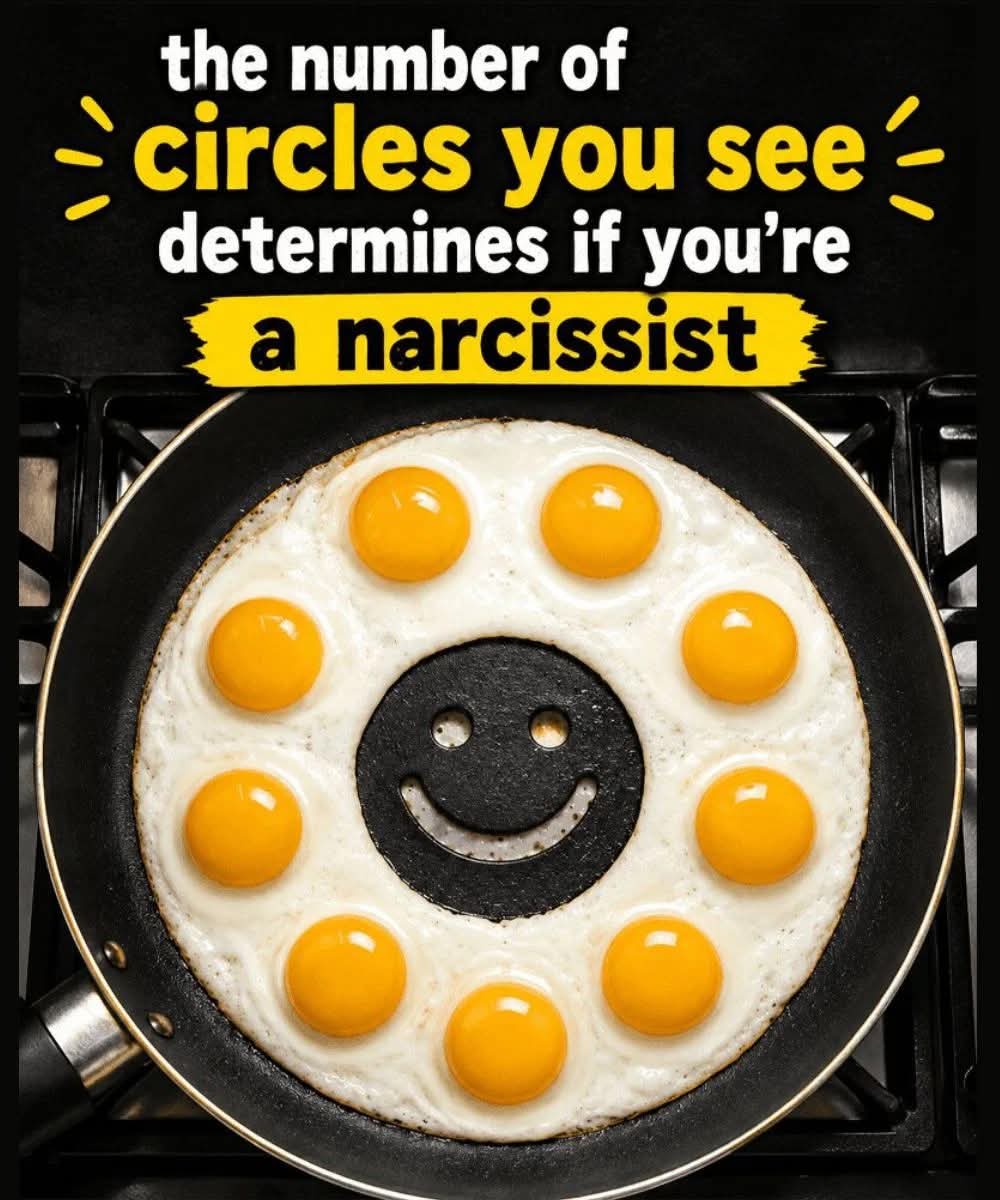
At first glance, this image looks simple: a frying pan, a ring of eggs, bright yellow yolks, and a playful message asking how many circles you can spot. But like many viral visual puzzles, the answer depends on how carefully you look. Some people count only the obvious circles, while others notice hidden shapes, outlines, and repeated patterns that are easy to miss.
The image claims that “the number of circles you see determines if you’re a narcissist.” While that sounds dramatic, it is important to remember that a puzzle like this cannot diagnose anyone’s personality. Narcissism is a complex psychological trait, and only a qualified professional can assess it properly. However, puzzles like this can still be fun because they reveal how differently people observe the same picture.
1. The Obvious Circles
Most viewers first notice the egg yolks. There are several bright yellow yolks arranged around the pan, and each one clearly forms a circle. These are the easiest circles to count because they stand out against the white egg background.
Then there is the large circular shape of the fried egg itself. The egg white forms a big ring around the center of the pan. The pan is also round, adding another large circle to the image. These obvious shapes are what many people count first.
2. The Hidden Circles

If you look more closely, you may notice additional circles. The smiley face in the middle contains circular eyes. The center area itself may also be counted as a circle. The rim of the pan forms another circular outline. Even small details, such as reflections on the egg yolks, may appear circular.
This is where the puzzle becomes interesting. Some people count only complete circles. Others count partial circles, outlines, shadows, and circular details. That means two people can look at the same image and give very different answers.
3. What Your Answer May Suggest
A lower number may suggest that you focus on the main idea first. You may prefer simple, direct answers and avoid overthinking small details. This does not mean you are careless; it may simply mean your brain filters information quickly.
A higher number may suggest that you are detail-oriented. You may enjoy searching for hidden patterns and may not stop at the first obvious answer. People like this often notice small visual clues that others skip.
But again, this does not prove whether someone is narcissistic. It only shows how they approach a visual challenge.
4. Why These Puzzles Go Viral
Visual puzzles are popular because they invite people to compare answers. One person may say they see nine circles, while another may claim there are fifteen or more. This creates curiosity and debate.
The bold text in the image also makes people react emotionally. When a puzzle connects your answer to personality, it becomes more shareable. People want to know what their answer “means,” even when the result is mostly for entertainment.
5. The Real Lesson Behind the Image
The real value of this puzzle is not whether it can label your personality. It is a reminder that perception is personal. We do not all notice the same things at the same time. Some people see the big picture first, while others immediately search for details.
So, how many circles do you see? Count the yolks, the pan, the center face, the eyes, and any circular outlines you can find. Then ask a friend to do the same. You may be surprised by how different your answers are.
In the end, this image is less about narcissism and more about attention, perception, and how the mind organizes what it sees.
