Trees Are Basically Nature’s Air Conditioners 🌳❄️
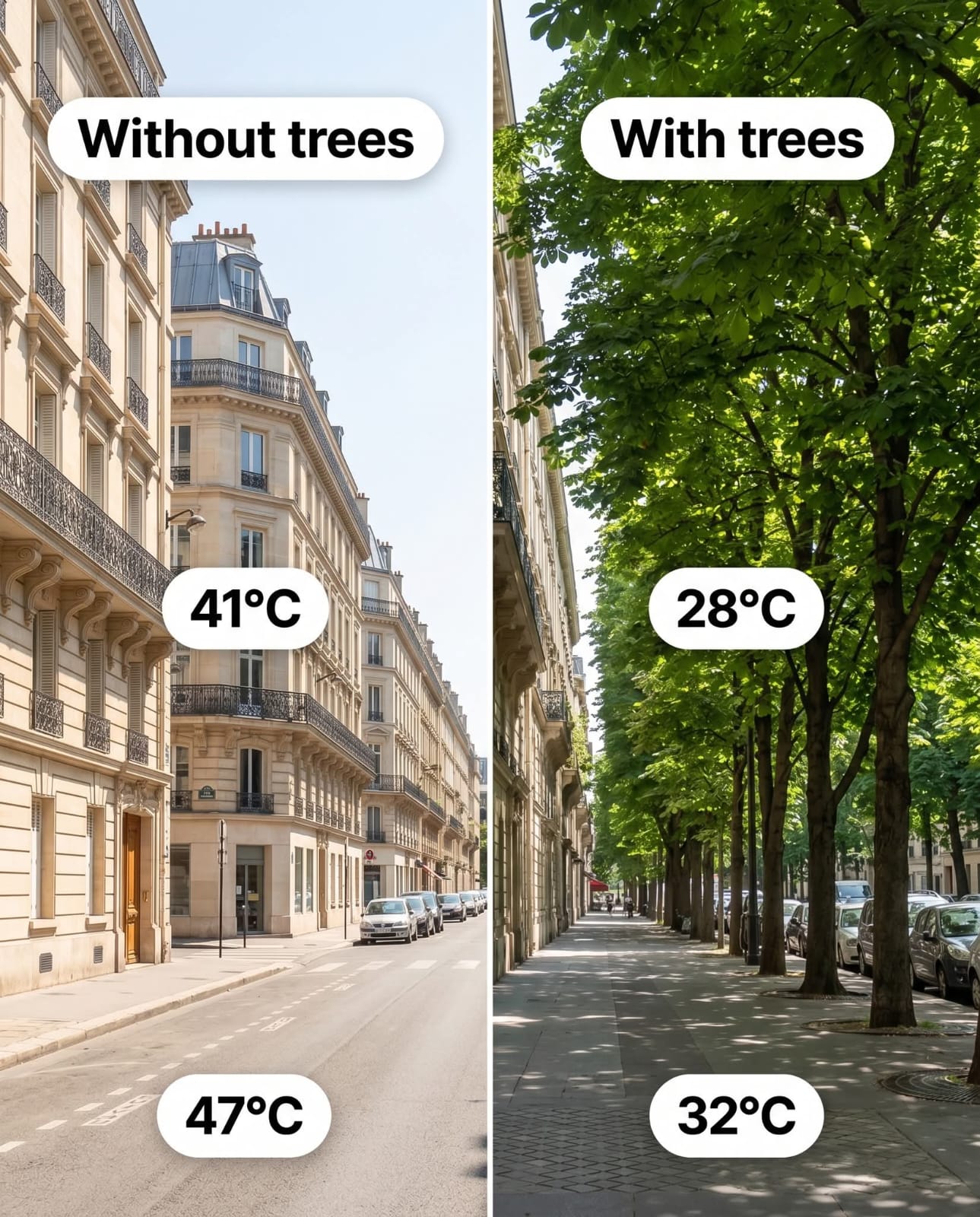
Put two streets side by side in the middle of summer.
One street is lined with large, healthy trees that stretch their branches overhead, creating a canopy of shade. The other is mostly bare, with exposed pavement, concrete sidewalks, and buildings baking under the sun.
Walk down both streets on a hot afternoon, and you’ll immediately notice the difference.
The tree-lined street feels cooler, more comfortable, and more inviting. The treeless street often feels hotter, brighter, and more exhausting.
This isn’t just your imagination. Trees truly function as nature’s air conditioners.
How Trees Cool the Air
Trees cool their surroundings in two major ways: shade and evaporation.
The most obvious benefit is shade. Tree canopies block sunlight from directly hitting roads, sidewalks, vehicles, buildings, and people. Surfaces that remain shaded absorb far less heat than those exposed to direct sunlight all day.
But trees do something even more impressive.
As they absorb water through their roots, they release some of that moisture through tiny pores in their leaves. This process, known as transpiration, helps cool the surrounding air much like perspiration cools the human body.
The result is a natural cooling effect that can make neighborhoods noticeably more comfortable during hot weather.
Fighting the Urban Heat Island Effect
Cities tend to be warmer than nearby rural areas because roads, parking lots, rooftops, and buildings absorb and store heat throughout the day.
This phenomenon is known as the urban heat island effect.
Dark surfaces such as asphalt can become extremely hot under direct sunlight. Even after sunset, they continue releasing stored heat, keeping temperatures elevated into the evening.
Trees help combat this effect by shading heat-absorbing surfaces and cooling the air around them.
In neighborhoods with abundant tree cover, temperatures can often feel significantly lower than in areas dominated by concrete and pavement.
Saving Energy at Home
Trees don’t just cool streets—they can also help cool homes.
When strategically planted around houses, trees can reduce the amount of direct sunlight hitting walls, roofs, and windows. This can lower indoor temperatures and reduce the need for air conditioning during hot months.
For homeowners, this often translates into lower energy consumption and reduced utility bills.
A well-placed tree can provide cooling benefits for decades while continuing to grow and improve the landscape.
Cleaner Air and Healthier Communities
The benefits of trees go far beyond temperature control.
Trees help filter pollutants from the air, capture dust particles, and absorb carbon dioxide. They also release oxygen, contributing to healthier urban environments.
Research has shown that greener neighborhoods are often associated with improved well-being, increased outdoor activity, and greater overall quality of life.
People are naturally drawn to shaded parks, tree-lined streets, and green spaces because they feel more pleasant and comfortable.
Supporting Wildlife
Trees provide critical habitat for countless species of birds, insects, and small animals.
Their branches offer nesting sites, their leaves provide food for many insects, and their presence helps support entire ecosystems within urban and suburban areas.
A single mature tree can become home to dozens of different species, making it an important contributor to local biodiversity.
A Small Change With a Big Impact
Planting a tree may seem like a small act, but the long-term impact can be enormous.
As trees mature, they provide shade, cool neighborhoods, improve air quality, support wildlife, and beautify communities. Their benefits increase year after year, often lasting for generations.
In a world facing rising temperatures and growing urbanization, trees remain one of the simplest and most effective tools available for creating cooler, healthier environments.
The Bottom Line
The next time you walk down a shaded street on a hot summer day, take a moment to appreciate the trees overhead.
They’re doing far more than providing a pleasant view.
They’re cooling the air, protecting the pavement, supporting wildlife, improving health, and making communities more livable—all without electricity, fuel, or complicated technology.
Trees truly are nature’s air conditioners, quietly working every day to make our world a little cooler.
