🪳 Cockroach Milk: The Surprising Superfood Scientists Are Studying
When most people hear the word “cockroach,” food is probably the last thing that comes to mind. Yet one of the most unusual discoveries in modern nutrition research involves a species of cockroach that produces a substance often referred to as “cockroach milk.”
The idea sounds shocking, but behind the headlines lies a fascinating scientific story about evolution, nutrition, and the search for future food sources.
While cockroach milk is not something you’ll find in grocery stores anytime soon, researchers believe it could offer valuable insights into how nature creates highly concentrated sources of nourishment.
🪳 The Cockroach Behind the Discovery
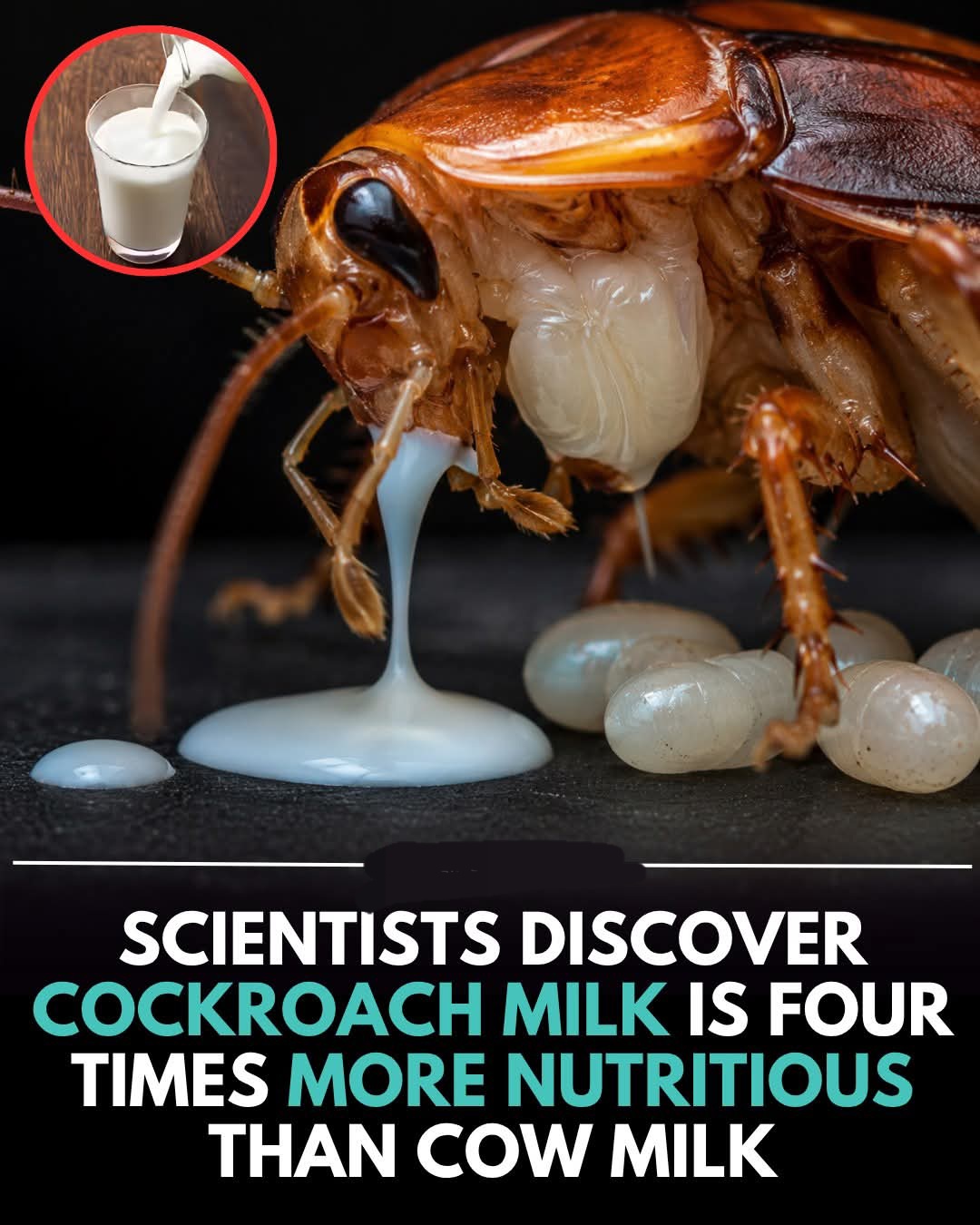
The species attracting attention is the Pacific beetle cockroach.
Unlike most cockroaches, which lay eggs, this remarkable insect gives birth to live young.
To nourish its developing offspring, the female produces a nutrient-rich liquid inside her brood sac.
As the young cockroaches consume this liquid, it forms protein crystals within their digestive systems.
These crystals became the focus of scientific research because of their extraordinary nutritional density.
🔬 What Makes It So Special?
Researchers discovered that the protein crystals contain a combination of:
✅ Protein
✅ Fats
✅ Sugars
✅ Essential amino acids
The crystals are designed to provide developing young with a concentrated source of nutrition.
What makes them particularly interesting is that they release nutrients gradually over time rather than all at once.
This slow-release characteristic helps provide a steady source of energy during development.
💪 A Nutritional Powerhouse
Studies found that these protein crystals are extremely nutrient-dense compared to many conventional foods.
Scientists were fascinated by their ability to package multiple nutrients into a compact form.
For the growing cockroach offspring, this provides an efficient way to receive the energy and building blocks needed for development.
It’s a remarkable example of how evolution can create highly specialized nutritional systems.
🧬 Why Scientists Are Interested
The excitement surrounding cockroach milk is not about drinking milk from insects.
Instead, researchers are interested in understanding the biological structure of the protein crystals.
Potential areas of study include:
- Protein engineering
- Nutritional science
- Sustainable food production
- Biotechnology
The goal is to learn from nature’s design rather than to directly harvest the substance on a large scale.
🚫 No, Nobody Plans to Milk Cockroaches
One of the biggest misconceptions surrounding this topic is the idea of commercial cockroach dairies.
In reality, producing cockroach milk by collecting it directly from insects would be highly impractical.
The amount produced by each insect is extremely small.
Instead, scientists believe that if similar proteins were ever used commercially, they would likely be manufactured through biotechnology.
This could involve using:
🧪 Yeast
🧫 Microbial fermentation
🔬 Laboratory production systems
Rather than harvesting the material from insects themselves.
🌎 The Search for Future Food Sources
As the global population grows, researchers continue exploring new ways to produce nutritious foods more efficiently.
This has led scientists to investigate:
🌱 Plant proteins
🍄 Fungal proteins
🦗 Insect proteins
🧬 Engineered proteins
Cockroach milk research fits into this broader effort to understand how biological systems create highly efficient nutrition.
🤔 Could Humans Ever Consume It?
At the moment, cockroach milk remains a scientific curiosity rather than a commercial food product.
Many questions remain unanswered, including:
- Large-scale production methods
- Safety assessments
- Cost-effectiveness
- Consumer acceptance
Even if the protein structure proves useful, it may take years of research before any practical applications emerge.
🌿 Nature’s Unexpected Innovations
One reason this discovery captured global attention is that it reminds us how little we still know about many living organisms.
Nature often develops solutions to biological challenges in unexpected ways.
From spider silk stronger than steel to plants that survive extreme environments, the natural world continues to inspire scientific innovation.
Cockroach milk is another example of how unusual discoveries can emerge from studying even the most overlooked creatures.
🔭 The Future of the Research
Scientists continue to investigate the structure and properties of these protein crystals.
Future studies may help researchers better understand:
- Nutrient delivery systems
- Protein design
- Sustainable food technologies
- Biological energy storage
Whether or not cockroach-inspired proteins ever become part of human nutrition, the research itself is expanding our knowledge of biology.
The Bottom Line
Cockroach milk may sound like science fiction, but it is based on a real biological phenomenon found in the Pacific beetle cockroach.
The nutrient-rich protein crystals produced for its offspring have attracted scientific interest because of their unique nutritional composition and slow-release energy properties.
While nobody is planning to milk cockroaches for your morning cereal, the discovery highlights how even the most unexpected organisms can inspire advances in food science and biotechnology.
Sometimes the most fascinating scientific breakthroughs come from the last places we would ever think to look.
🪳🔬 Would you ever try a food product inspired by this kind of research if scientists proved it was safe, nutritious, and sustainable?
