Here’s a full article for your website:
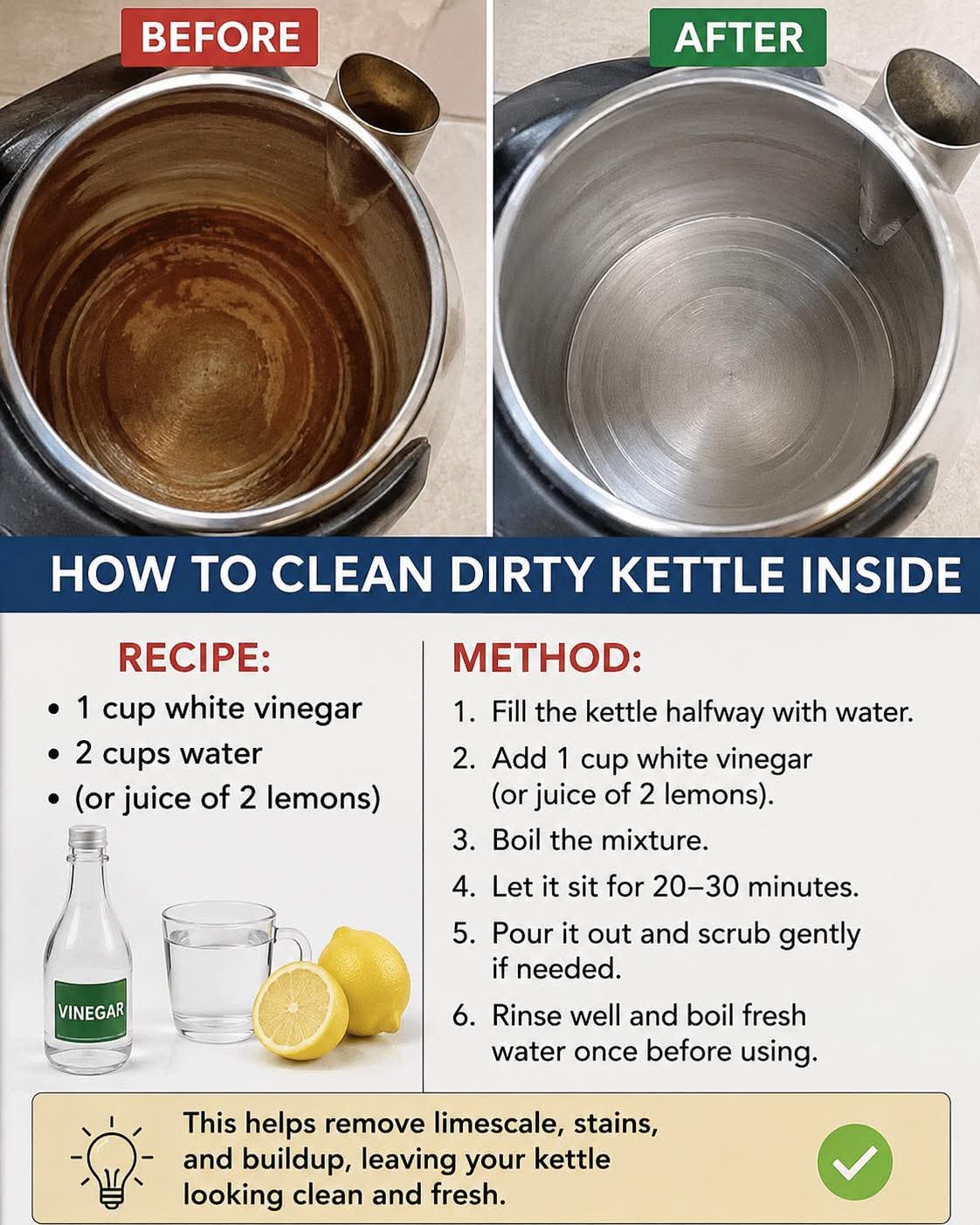
☕ How to Clean a Dirty Kettle Inside and Make It Shine Again
Over time, many kettles develop a white, chalky buildup inside. This residue, known as limescale, is especially common in areas with hard water and can leave your kettle looking dirty even when it’s freshly washed.
The good news is that cleaning the inside of a kettle is simple, inexpensive, and usually requires only a few household ingredients.
With a little effort, you can restore your kettle and help it perform more efficiently.
🫖 Why Does Buildup Form?
When water is heated, naturally occurring minerals such as calcium and magnesium can be left behind.
Over time, these minerals accumulate and create:
- White deposits
- Chalky residue
- Stains on the heating element
- Cloudy-looking interiors
This buildup is called limescale.
While small amounts are usually harmless, heavy deposits can affect the kettle’s performance.
🍋 Method 1: Clean with White Vinegar
One of the most popular ways to remove limescale is with white vinegar.
What You’ll Need
- White vinegar
- Water
- Soft sponge or cloth
Instructions
- Fill the kettle halfway with equal parts water and white vinegar.
- Bring the mixture to a boil.
- Turn off the kettle and let it sit for 20–30 minutes.
- Pour out the solution.
- Rinse thoroughly several times with clean water.
- Boil fresh water once or twice and discard it before using the kettle again.
The vinegar helps dissolve mineral deposits and loosen stubborn buildup.
🍋 Method 2: Clean with Lemon Juice
If you prefer a fresher smell, lemon juice can also help break down limescale.
Instructions
- Fill the kettle with water.
- Add the juice of one or two lemons.
- Bring the mixture to a boil.
- Let it sit for about 30 minutes.
- Empty and rinse thoroughly.
Many people enjoy this method because it leaves a pleasant citrus scent.
🧽 Removing Stubborn Deposits
If some residue remains after soaking:
- Use a soft sponge
- Gently wipe the interior
- Avoid abrasive scrubbers that may damage the surface
Never use steel wool inside most kettles, as it can scratch the metal.
🚫 What to Avoid
To protect your kettle:
❌ Don’t use harsh chemicals not intended for food-contact surfaces.
❌ Don’t scrape aggressively with metal tools.
❌ Don’t immerse electric kettles in water.
❌ Don’t forget to rinse thoroughly after cleaning.
💧 How to Reduce Future Limescale
You may not be able to eliminate limescale completely, but you can slow its buildup.
Helpful tips include:
✅ Empty standing water after use.
✅ Clean the kettle regularly.
✅ Use filtered water if available.
✅ Avoid leaving water sitting for long periods.
Regular maintenance often prevents heavy deposits from forming.
🌟 Signs Your Kettle Needs Cleaning
It may be time to descale your kettle if you notice:
☕ White crusty deposits
☕ Floating mineral flakes
☕ Longer boiling times
☕ Strange mineral odors
☕ Visible buildup on the heating element
The sooner you clean it, the easier the process usually is.
Why Regular Cleaning Matters
A clean kettle:
✔ Boils efficiently
✔ Looks better
✔ Reduces mineral buildup
✔ Helps maintain performance
✔ Makes every cup of tea or coffee more enjoyable
Just a few minutes of maintenance can keep your kettle working well for years.
The Bottom Line
Limescale is a common problem, but it’s easy to remove using simple household ingredients such as white vinegar or lemon juice.
Regular cleaning helps keep your kettle looking clean, boiling efficiently, and ready for your next cup of tea, coffee, or hot chocolate.
Sometimes the simplest cleaning tricks are the most effective.
☕✨ How often do you clean the inside of your kettle?
