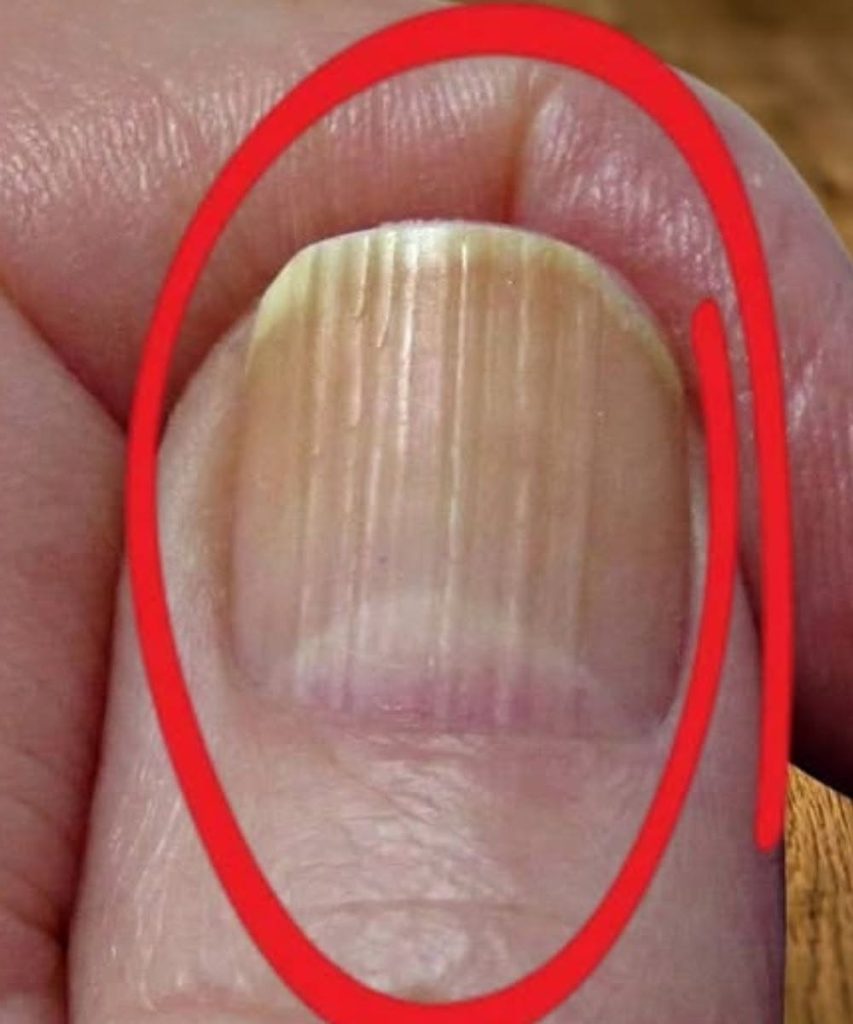
If you’ve ever taken a close look at your nails and spotted faint vertical lines stretching from the base to the tip, you’re certainly not alone. These markings, commonly known as longitudinal ridges, are a frequent change many people notice as they age. Although they may seem alarming at first, they are typically a normal part of getting older.
What Are Vertical Nail Lines?
Vertical nail lines are raised ridges that run from the cuticle all the way to the nail tip. Unlike horizontal lines—which can sometimes be linked to illness or injury—vertical ridges are usually harmless. They often become more visible with age, particularly after 40.
Why Do They Develop as We Age?
As the body ages, it produces lower amounts of certain natural oils and proteins, including keratin, which plays an important role in keeping nails strong and smooth. This reduction can make the nail plate thinner and drier, resulting in noticeable ridges.
Aging can also slightly reduce blood circulation, which may influence how nutrients reach the nail matrix—the area responsible for nail growth. As a result, subtle changes in nail texture, such as vertical lines, can appear.
Can Vertical Lines Ever Signal a Problem?
Most of the time, vertical ridges are completely normal. However, there are some situations when they deserve closer attention:
- If the ridges suddenly become much deeper or change rapidly
- If they occur along with discoloration, such as dark streaks
- If the nails become brittle, split easily, or change shape
These changes may be related to nutritional deficiencies, dehydration, or other underlying health concerns. If you notice them, consulting a healthcare professional is a wise step.
How to Care for Nails With Vertical Lines
Although vertical ridges are a natural occurrence, there are several ways to support nail health and improve their appearance:
- Stay hydrated: Drinking enough water helps keep nails moisturized
- Use nail oils: Cuticle oils or vitamin E may help reduce dryness and smooth the nail surface
- Maintain a balanced diet: Nutrients such as biotin, iron, and zinc help support healthy nail growth
- Limit harsh chemicals: Reduce exposure to strong nail polish removers and cleaning products
- Buff gently: Light buffing can make ridges less visible, but avoid excessive buffing
The Bottom Line
Vertical lines on the nails are generally a normal sign of aging, much like fine lines that appear on the skin. They usually reflect natural changes in the body rather than a serious health concern. By caring for your nails properly and maintaining healthy habits, you can help keep them looking strong and smooth at any age.
If you’re ever uncertain about changes in your nails, seeking professional advice is always the best approach. Your nails can provide small insights into your overall health, making them worth paying attention to.
