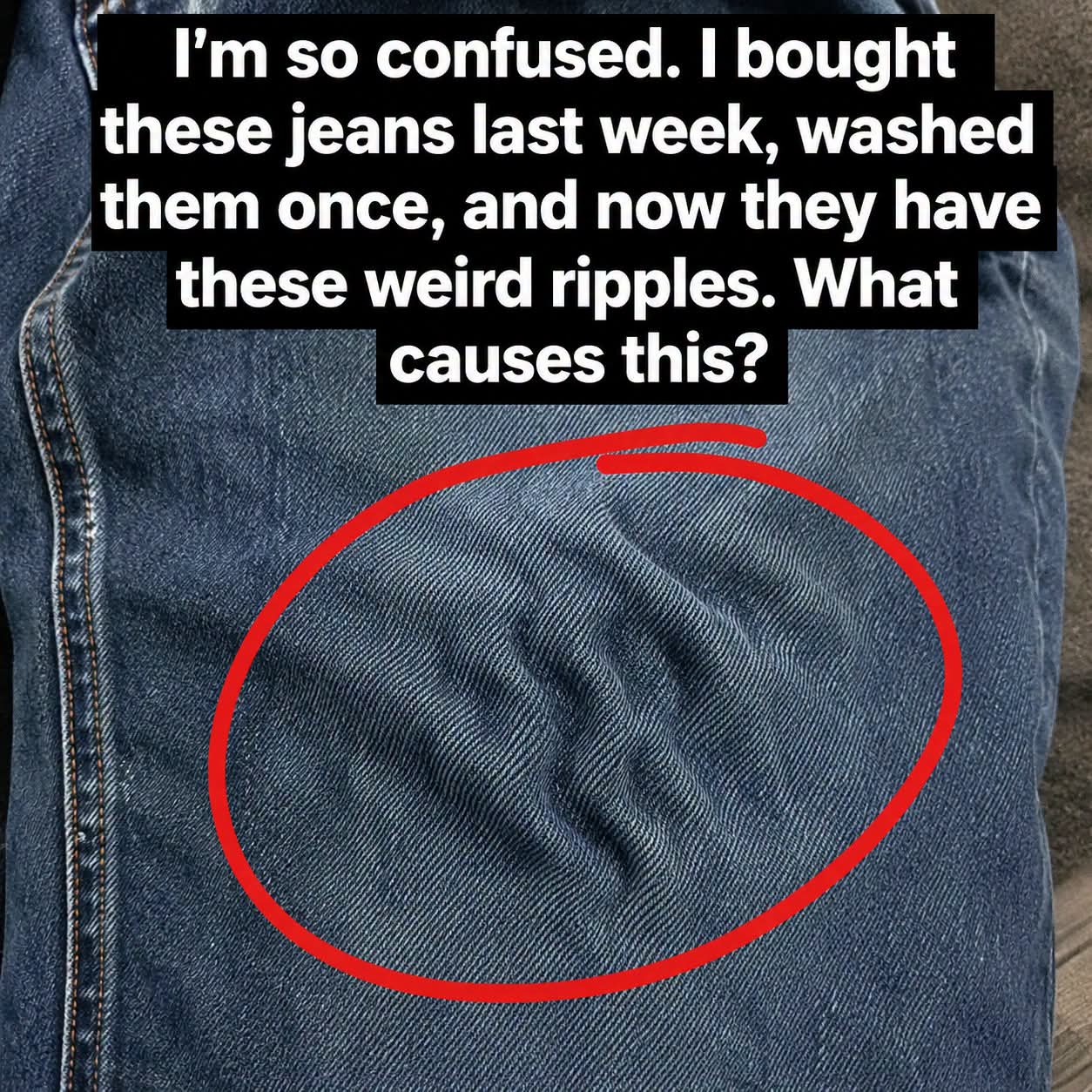
👖 I Bought These Jeans Last Week, Washed Them Once, and Now They Have Weird Ripples. What Causes That?
You finally find the perfect pair of jeans.
They fit great, look fantastic, and feel comfortable.
Then you wash them for the first time.
When they come out of the laundry, you notice strange ripples, twisting seams, or wavy lines running down the legs.
What happened?
Did you do something wrong?
Did the jeans shrink?
Are they defective?
The good news is that this is actually a common issue, and in many cases, it has more to do with fabric construction than anything you did.
👖 What Are Jean Ripples?
These ripples are often called:
- Leg twisting
- Seam twisting
- Fabric puckering
- Denim rippling
They usually appear as wavy patterns near seams or along the legs after washing.
Sometimes they are subtle. Other times they can be very noticeable.
🧵 The Main Cause: Fabric Tension
Most denim is made from woven cotton fibers.
During manufacturing, the fabric is stretched, dyed, treated, and sewn under tension.
When the jeans are washed for the first time, those fibers begin to relax.
As they settle into their natural position, the fabric can shift slightly, creating ripples or twists.
🔄 Why Seams Sometimes Twist
Have you ever noticed a side seam that slowly moves toward the front or back of the leg?
This phenomenon is known as leg twist.
It happens because denim fabric contains diagonal threads called twill.
The natural structure of twill can cause the fabric to rotate slightly after washing.
This effect is especially common in certain styles of denim.
🌡️ Heat Can Make It Worse
High temperatures can increase rippling and distortion.
Common culprits include:
🔥 Hot wash cycles
🔥 High dryer heat
🔥 Over-drying
Heat causes fibers to contract and can exaggerate existing tension in the fabric.
💧 Shrinkage Plays a Role
Even pre-washed jeans can experience a small amount of shrinkage.
As different parts of the garment shrink at slightly different rates, wrinkles and ripples may form.
This is especially noticeable around:
- Outer seams
- Inner seams
- Knees
- Thighs
- Hems
🏭 Sometimes It’s a Manufacturing Issue
Not all jeans are made the same.
Lower-cost production methods may result in:
❌ Fabric not being fully stabilized
❌ Uneven tension during sewing
❌ Less quality control
In these cases, rippling can appear after only one wash.
That doesn’t necessarily mean the jeans are damaged—it simply reflects how they were constructed.
👖 Stretch Denim Is More Susceptible
Many modern jeans contain elastic fibers such as elastane or spandex.
These materials improve comfort and flexibility.
However, they can also contribute to:
- Wavy seams
- Fabric puckering
- Uneven shrinkage
Especially after repeated washing and drying.
🧺 How to Reduce Ripples
While you can’t always prevent them completely, you can minimize the problem.
Wash in Cold Water
Cold water is gentler on denim fibers and helps reduce shrinkage.
Turn Jeans Inside Out
This protects the outer fabric and reduces stress during washing.
Avoid High Heat
Air-drying or using low dryer temperatures can help maintain the shape of the jeans.
Don’t Overwash
Many denim enthusiasts wash their jeans only when necessary.
Less washing means less stress on the fabric.
Can Ripples Be Fixed?
Sometimes.
Minor ripples may improve after:
✔ Wearing the jeans
✔ Steam treatment
✔ Gentle ironing (following care instructions)
✔ Hanging them properly after washing
However, some ripples are simply part of the fabric’s natural aging process.
The Good News
In most cases, ripples don’t affect:
✅ Comfort
✅ Durability
✅ Wearability
They’re usually cosmetic rather than structural.
Many denim fans actually view slight rippling as a normal characteristic of real denim.
The Bottom Line
If your new jeans developed strange ripples after the first wash, you’re not alone.
The most common causes include fabric tension, shrinkage, twill construction, heat exposure, and normal settling of the fibers after washing.
Most of the time, it’s not a sign that you ruined your jeans.
It’s simply denim doing what denim has done for decades.
👖👇 Have you ever had a pair of jeans change appearance after the very first wash?
