Planting flower bulbs can transform an ordinary garden into a colorful display of blooms, but achieving neat spacing and uniform growth often requires more effort than expected. Measuring distances, keeping rows straight, and ensuring bulbs remain upright can become tedious, especially when planting large quantities.
Fortunately, many gardeners have discovered a simple solution hiding in their recycling bins: cardboard egg cartons.
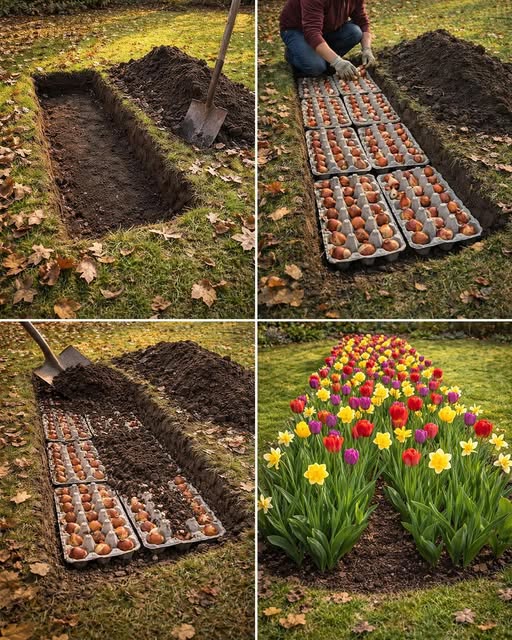
Using egg cartons as planting guides inside a trench helps create perfectly spaced rows while reducing planting time and minimizing bulb damage. This inexpensive and environmentally friendly technique is ideal for beginners and experienced gardeners alike.
Why Use Egg Cartons for Bulb Planting?
Traditional bulb planting usually involves digging individual holes or carefully measuring spacing between bulbs. While effective, this process can be slow and inconsistent.
Cardboard egg cartons naturally provide evenly spaced compartments that keep bulbs separated and organized. Once buried, the cartons gradually decompose, adding a small amount of organic material to the soil.
Benefits include:
- Consistent bulb spacing
- Uniform planting depth
- Faster installation
- Reduced bulb movement
- Improved garden organization
- Environmentally friendly recycling
How the Egg Carton Trench Method Works
The principle is simple. Instead of placing bulbs individually into separate holes, dig one long trench and place cardboard egg cartons along the bottom.
Each cup becomes a planting spot, helping every bulb stay in place while maintaining equal spacing.
Basic Planting Steps
- Dig a straight trench at the correct depth for your bulbs.
- Place empty cardboard egg cartons in the bottom of the trench.
- Set one bulb into each cup with the pointed end facing upward.
- Cover the cartons and bulbs completely with soil.
- Water thoroughly after planting.
Best Bulbs for This Method
This technique works well with many small and medium flowering bulbs, especially:
- Tulips
- Daffodils
- Crocus
- Hyacinths
- Grape hyacinths
- Snowdrops
- Scilla
- Anemone blanda
- Iris reticulata
- Freesia
- Ranunculus
Large bulbs such as giant alliums or large decorative lilies usually need deeper planting and wider spacing, so they are better planted individually.
Choosing the Right Egg Cartons
Use only plain cardboard or recycled paper egg cartons. They should be uncoated and free from plastic or wax.
Avoid:
- Plastic egg containers
- Styrofoam cartons
- Wax-coated cartons
- Colored or glossy packaging
You can poke small drainage holes in each cup before placing the cartons in the trench, especially if your soil holds too much moisture.
Ideal Planting Depth
A useful rule is to plant bulbs at a depth of about two to three times their height.
Examples:
- Tulips and daffodils: 12–15 cm deep
- Crocus and muscari: 6–8 cm deep
- Hyacinths: 10–12 cm deep
- Small iris bulbs: 6–8 cm deep
Tips for Healthy Blooms
- Choose firm bulbs with no mold or soft spots.
- Plant spring-blooming bulbs in autumn.
- Plant summer-blooming bulbs in spring after frost.
- Improve heavy soil with compost.
- Place bulbs pointed end upward.
- Water deeply once after planting.
- Add mulch to protect the soil.
- Leave green foliage after blooming until it turns yellow.
Common Mistakes to Avoid
- Planting bulbs too shallow
- Using plastic cartons
- Overwatering during winter
- Planting damaged or moldy bulbs
- Using poorly drained heavy clay soil
- Cutting foliage immediately after flowers fade
Final Thoughts
The egg carton trench method is a practical, low-cost way to plant flower bulbs neatly and efficiently. It helps keep bulbs evenly spaced, upright, and organized while making the planting process faster.
Whether you are planting tulips, daffodils, crocuses, hyacinths, or other small bulbs, this simple technique can help create fuller, cleaner, and more beautiful flower beds.
With healthy bulbs, correct depth, good drainage, and a little patience, your garden can reward you with colorful blooms season after season.
