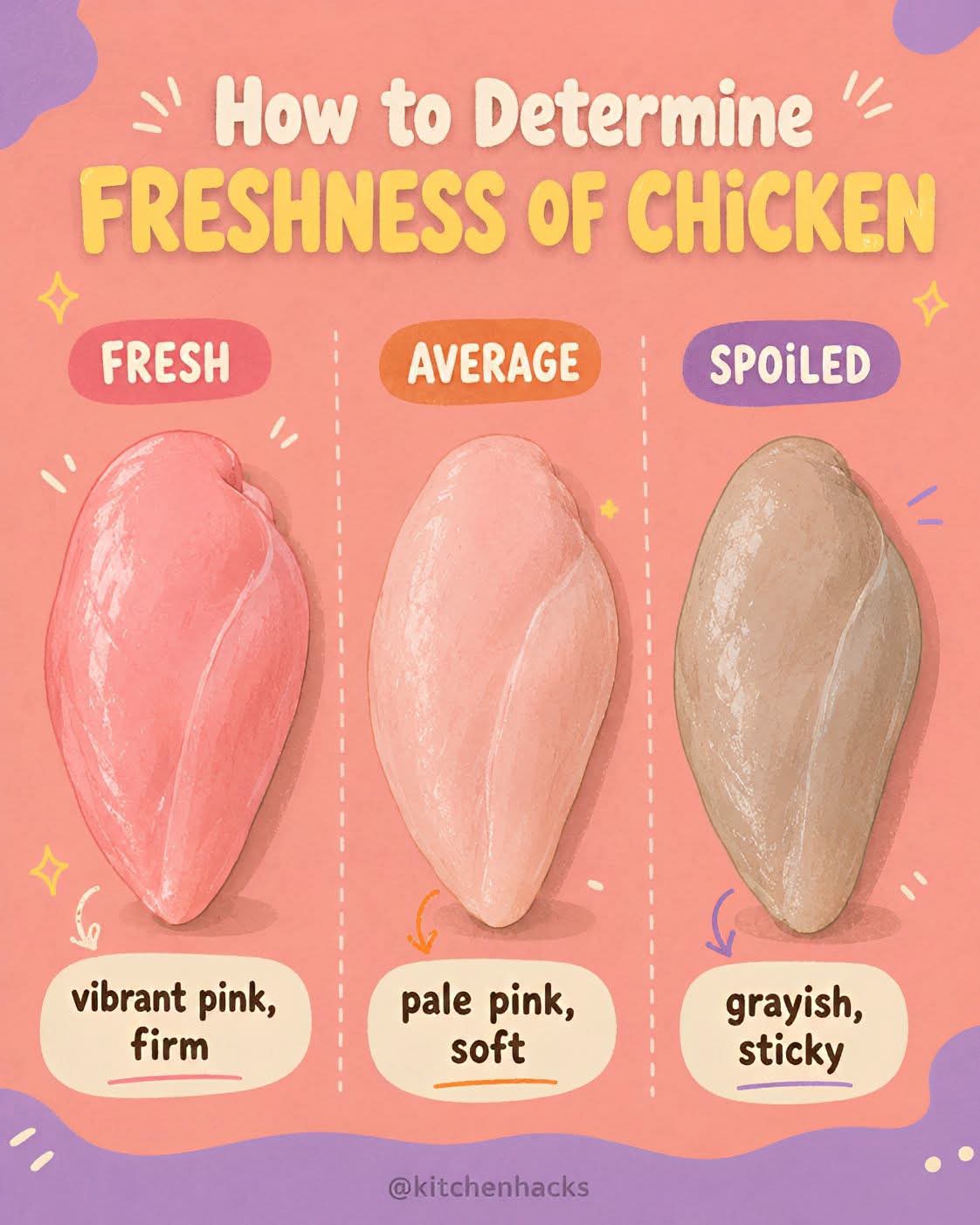
🍗 If Your Chicken Looks Like THIS… It Might Be Time to Throw It Away
Chicken is one of the most popular proteins in kitchens around the world, but it’s also one of the foods that requires the greatest care when it comes to storage and handling.
If you ever notice that your raw chicken doesn’t look, smell, or feel right, it’s usually safest not to take any chances.
Here are the warning signs that chicken may have spoiled and should be discarded.
🚩 1. A Slimy or Sticky Texture
Fresh raw chicken should feel moist but not slimy.
If the surface feels:
- Sticky
- Slimy
- Thick or slippery
even after rinsing is not recommended, the chicken may have spoiled due to bacterial growth.
A slimy texture is one of the most common warning signs that it’s no longer safe to eat.
👃 2. A Strong or Unpleasant Odor
Fresh chicken has very little smell.
If you notice an odor that is:
- Sour
- Rotten
- Sulfur-like
- Ammonia-like
- Strongly unpleasant
it’s best to throw the chicken away.
Never rely on cooking to “fix” spoiled meat.
🎨 3. Unusual Color Changes
Raw chicken naturally ranges from pale pink to light peach.
Be cautious if you notice:
- Gray patches
- Green spots
- Yellowish discoloration accompanied by other spoilage signs
- Mold of any color
While slight color changes can sometimes occur from normal exposure to air, color changes combined with bad odor or slime are strong indicators that the chicken should be discarded.
🦠 4. Visible Mold
If you see any fuzzy growth or mold on the chicken or its packaging, do not trim it off.
Discard the entire package immediately.
📅 5. It’s Been Stored Too Long
Even if chicken looks normal, storage time matters.
As a general guideline:
- Raw chicken: Refrigerate and use within 1–2 days.
- Cooked chicken: Use within 3–4 days when refrigerated.
If you’re not planning to cook it within those time frames, freezing is usually the better option.
🌡️ 6. Improper Temperature
Chicken should be kept refrigerated at 40°F (4°C) or below.
If raw chicken has been left at room temperature for more than 2 hours—or more than 1 hour when temperatures are above 90°F (32°C)—it’s safest to discard it.
Bacteria can multiply quickly in the “danger zone” between 40°F and 140°F (4°C to 60°C).
❌ Can Cooking Make Spoiled Chicken Safe?
No.
Cooking chicken to the proper internal temperature kills many harmful bacteria, but it does not make spoiled chicken safe to eat if spoilage has already occurred.
Some bacteria can produce toxins that are not destroyed by normal cooking temperatures.
If the chicken shows signs of spoilage, it’s safest to throw it away.
🧊 Tips to Keep Chicken Fresh Longer
To help maintain quality and safety:
- Refrigerate chicken promptly after shopping.
- Store it on the lowest shelf to help prevent juices from dripping onto other foods.
- Freeze chicken if you won’t use it within a couple of days.
- Thaw frozen chicken in the refrigerator, under cold running water, or in the microwave—not on the countertop.
- Wash your hands, cutting boards, and utensils thoroughly after handling raw chicken.
🍽️ Cook Chicken Thoroughly
When cooking chicken, use a food thermometer to check that the thickest part reaches an internal temperature of 165°F (74°C).
Proper cooking helps reduce the risk of foodborne illness, but it does not reverse spoilage.
The Bottom Line
When it comes to chicken, it’s always better to be cautious. If you notice a slimy texture, a foul odor, visible mold, or significant discoloration—especially if more than one sign is present—the safest choice is to discard it.
When in doubt, don’t risk it. Replacing a package of chicken is far less costly than dealing with foodborne illness.
💬 Have you ever opened a package of chicken and immediately knew something wasn’t right? What signs do you always look for before cooking? Share your tips in the comments!
