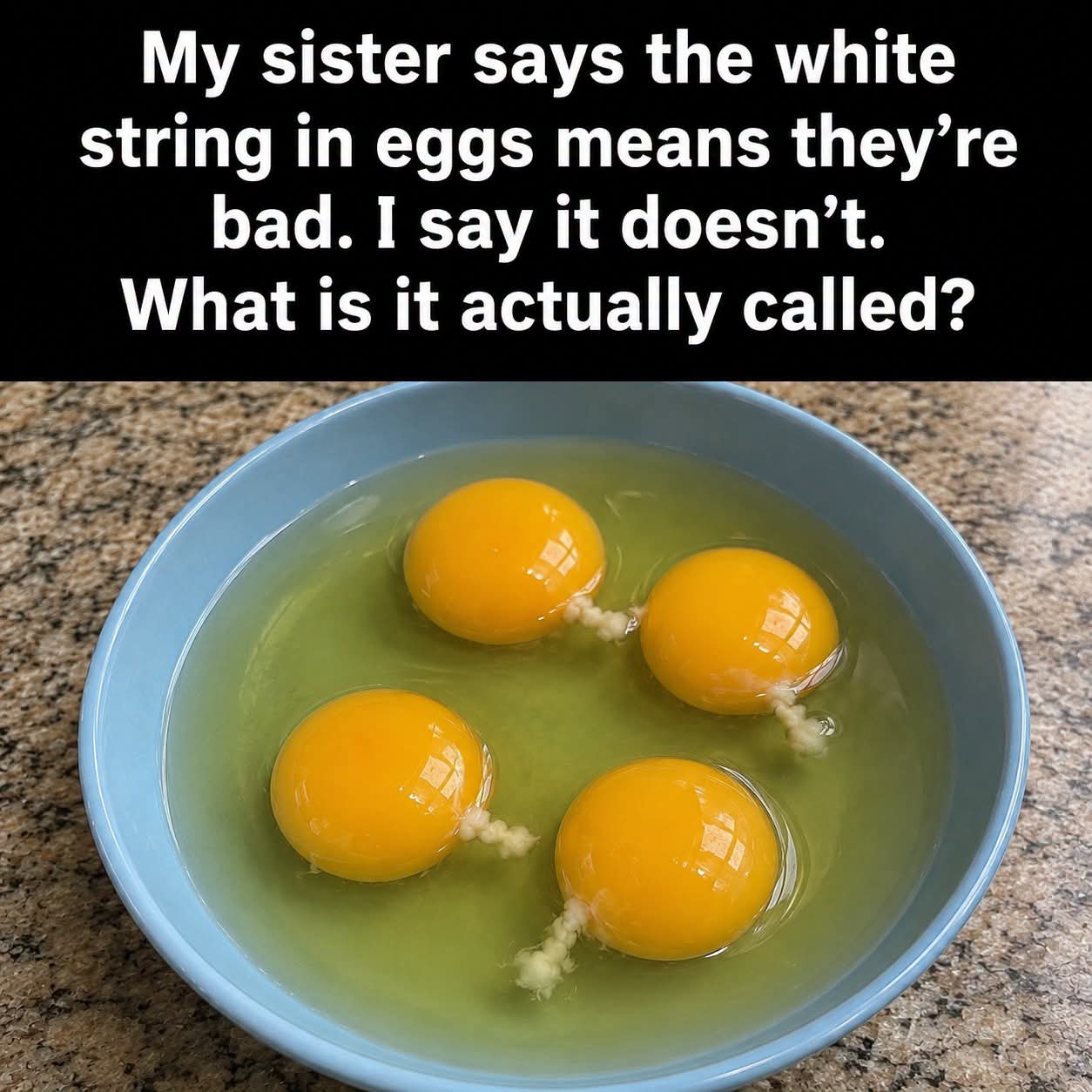
My Sister Says the White String in Eggs Means They’re Bad—I Say It Doesn’t. What Is It Actually Called?
Have you ever cracked open an egg and noticed a small white, string-like strand attached to the yolk?
Some people believe it’s a sign that the egg has gone bad, while others insist it’s completely normal. So, who’s right?
The good news is that the white string is not a sign of spoilage. In fact, it’s a natural part of every fresh egg.
What Is the White String Called?
The white string is called the chalaza (pronounced kuh-LAY-zuh). Most eggs have one or two chalazae.
These twisted, rope-like strands are made from egg white (albumen) and act like tiny anchors, helping keep the yolk centered inside the shell.
Without the chalazae, the yolk would move around much more easily and be less protected.
Does It Mean the Egg Is Bad?
No.
Seeing a chalaza is actually a good sign. It’s often more noticeable in fresh eggs because the egg white is thicker and firmer.
As an egg ages, the white becomes thinner, and the chalazae usually become less visible.
So if you notice a prominent white string, it often suggests the egg is relatively fresh—not spoiled.
Is It Safe to Eat?
Absolutely.
The chalaza is completely edible and made of the same natural proteins found in the egg white.
Many people don’t even notice it after the egg is cooked, while others remove it for recipes that require an especially smooth texture, such as custards or certain desserts. Either way, it’s perfectly safe to eat.
How Can You Tell If an Egg Has Gone Bad?
Instead of looking for the chalaza, watch for these signs:
- A strong sulfur or rotten odor when the egg is cracked.
- An unusual pink, green, black, or iridescent discoloration inside the egg.
- Visible mold on the shell or inside the egg.
- A cracked egg that has been improperly stored or shows signs of contamination.
If an egg smells fresh and looks normal, the presence of a chalaza isn’t something to worry about.
Why Do Some Eggs Have Larger Chalazae?
The size of the chalaza can vary depending on the hen and how fresh the egg is.
Fresh eggs often have firmer whites and more noticeable chalazae, while older eggs tend to have thinner whites that make the strands less obvious.
That’s one reason bakers and chefs often appreciate fresh eggs—they hold their shape better during cooking.
The Bottom Line
The next time someone tells you the white string inside an egg means it’s gone bad, you can confidently tell them it’s actually called the chalaza, and it’s a completely normal, edible part of the egg.
In fact, a clearly visible chalaza is often associated with a fresher egg rather than a spoiled one. So crack that egg, enjoy your breakfast, and know that the little white string is simply doing the job nature designed it to do.
