We’ve all been there — you buy a fresh package of ground beef, excited to whip up a delicious meal, only to find that the meat looks less than appetizing once you open it. You break apart the block, expecting a vibrant red color, but instead, the inside is disturbingly grey. It’s a common occurrence that leaves many home cooks puzzled and concerned about food safety.
While the outside of the ground beef remains a healthy red, the interior’s greyish hue can be off-putting. Despite its appearance, the meat might still smell okay, leading to a culinary conundrum: is it safe to eat, or should it be tossed out? Understanding why meat changes color and how to assess its safety is crucial for any cook. Let’s delve into the reasons behind these color changes and what actions to take.
1. Why Ground Beef Turns Grey Inside While Staying Red Outside
The phenomenon of ground beef turning grey inside while remaining red on the outside is primarily due to oxygen exposure. The red color of fresh meat comes from oxymyoglobin, a pigment formed when myoglobin in the meat is exposed to oxygen. This bright red layer forms on the surface where the meat meets the air.
Inside the package, where oxygen is limited, myoglobin turns into a different form called metmyoglobin, which has a greyish-brown color. This transformation is entirely natural and doesn’t necessarily indicate spoilage. However, it’s crucial to evaluate other factors to determine the meat’s safety for consumption.
2. First Step: Stop and Inspect the Color, Texture, and Smell
When faced with grey ground beef, your first step should be to thoroughly inspect it. Start by looking at the color variation — a uniform grey throughout might be concerning, but a grey interior with a red exterior is often normal. Next, assess the texture. Fresh beef should be slightly moist but not sticky or slimy.
The final and most crucial test is the smell. Fresh meat has a distinct, mild scent, while spoiled meat will emit a sour or acrid odor. If your beef passes the color and smell checks but still has a questionable texture, it might be best to err on the side of caution.
3. How Long Ground Beef Really Lasts in the Fridge
Ground beef typically has a short shelf life, lasting only 1 to 2 days in the refrigerator at 40°F (4°C) or below. Beyond this period, the risk of spoilage increases significantly. If you’re unsure about how long your beef has been stored, it’s safer to discard it.
To maximize shelf life, ensure your refrigerator is at the correct temperature and store the beef in its original packaging or a tightly sealed container. If you don’t plan to use the beef within a day or two, consider freezing it to extend its freshness.
4. The Science of Oxygen, Myoglobin, and Color Changes in Meat
Myoglobin, a protein in muscle tissue, plays a key role in meat coloration. When exposed to air, myoglobin binds with oxygen, forming oxymyoglobin, which gives meat its appealing red hue. However, when oxygen is limited — as it is inside a tightly packed block of ground beef — myoglobin shifts to metmyoglobin, leading to a greyish coloration.
This change is purely cosmetic and doesn’t affect the safety of the meat. However, it’s important to remember that color alone isn’t a definitive indicator of freshness or safety.
5. When Grey Meat Is Probably Safe — and When It Definitely Isn’t
Grey meat can be safe to eat if it passes the other sensory checks: smell and texture. If the meat smells fresh and is not sticky or slimy, it’s likely safe. However, if the meat emits a foul odor or has an off texture, it should not be consumed.
It’s worth noting that ground beef can harbor bacteria like E. coli or Salmonella, which are not detectable by sight or smell. Thus, even if the beef seems okay, proper cooking to the right temperature is crucial to ensure safety.
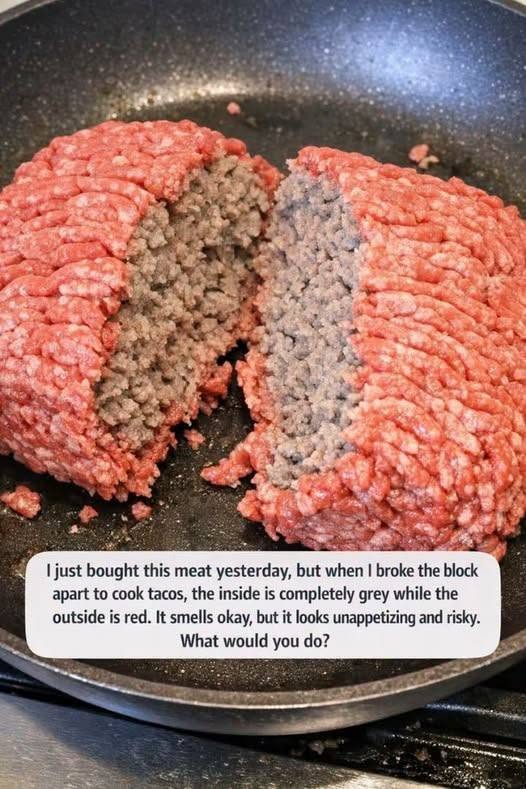
I just bought this meat yesterday, but when I broke the block apart to cook tacos, the inside is completely grey while the outside is red. It smells okay, but it looks unappetizing and risky.
ADVERTISEMENT
