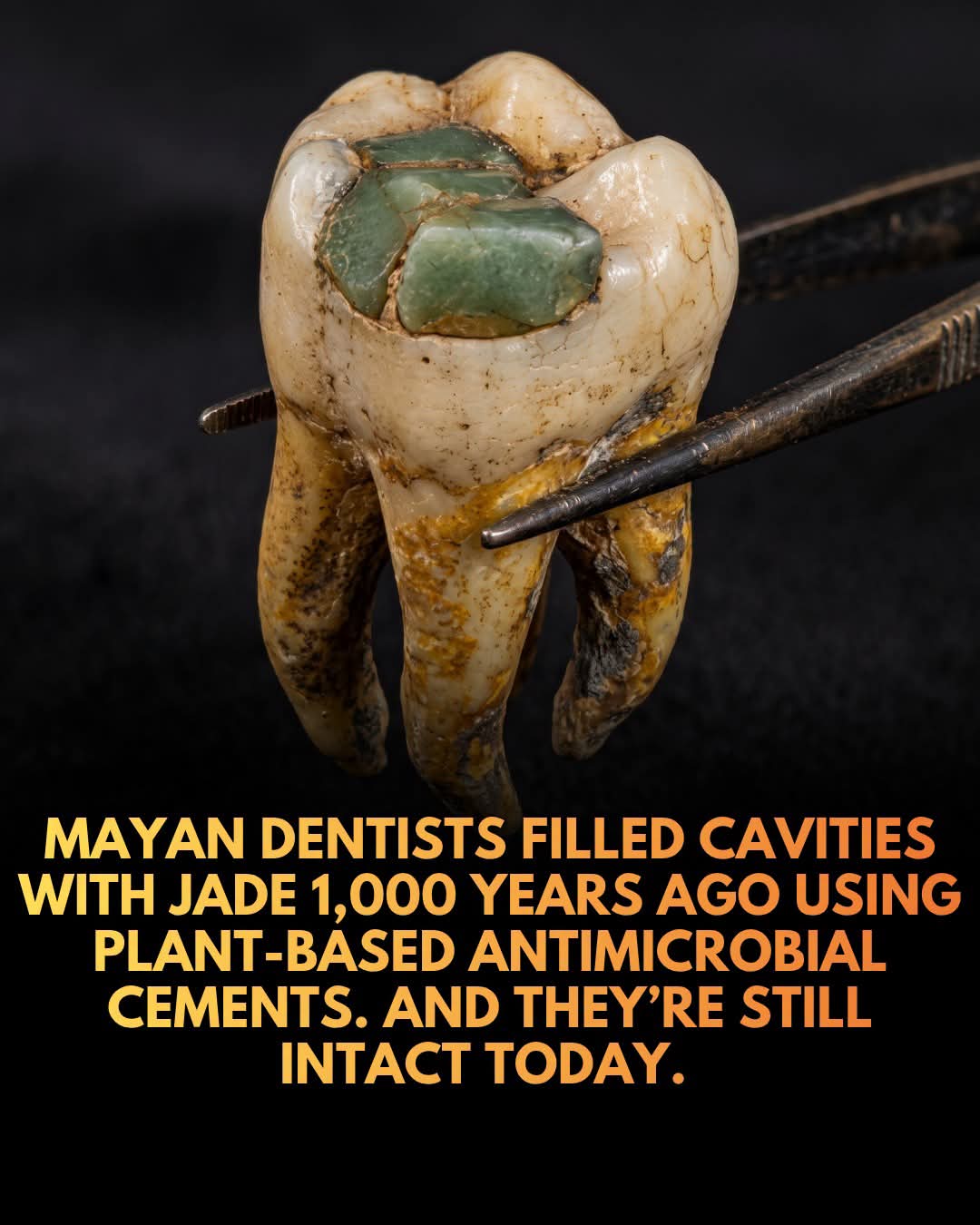
Centuries before dental clinics, the ancient Maya used sophisticated jade fillings to treat toothaches.
For decades, archaeologists have uncovered Maya teeth decorated with precious stones like jade and pyrite. Traditionally, researchers believed these alterations were purely cosmetic, representing a form of ancient ‘grill’ for social status or rituals. However, a new analysis of a back molar containing a jade inlay is challenging this assumption.
Since this hidden tooth would not have been visible in normal social interactions, researchers suggest the procedure was functional. Further examination using 3D imaging revealed calcification within the tooth’s pulp, indicating that the individual was alive when the filling was placed and that the procedure was likely done to relieve pain or treat a cavity.
The study also highlighted the incredible durability of the organic cement used to bind these stones to the teeth. Analysis of these ancient sealants revealed a mixture of calcium, phosphates, bitumen, and essential oils that have remarkably outlasted modern-day fillings. Many of these jade inlays have remained firmly in place for over a millennium, showing that Maya practitioners possessed advanced pharmaceutical and metallurgical skills. These findings suggest that the Maya were not only masters of aesthetic modification but also pioneer dentists who developed enduring therapeutic treatments long before the era of modern medicine.
source: Mata-Castillo, E., Cucina, A., Ramírez-Salomón, M., Monsreal-Peniche, M. B., Luin, C., & Vega-Lizama, E. (2026). A Prehispanic Maya molar with occlusal jadeite inlay. Journal of Archaeological Science: Reports, 72, 105731.
