🧵 ! Do You Remember the Old Sewing Machine Buttonholer?
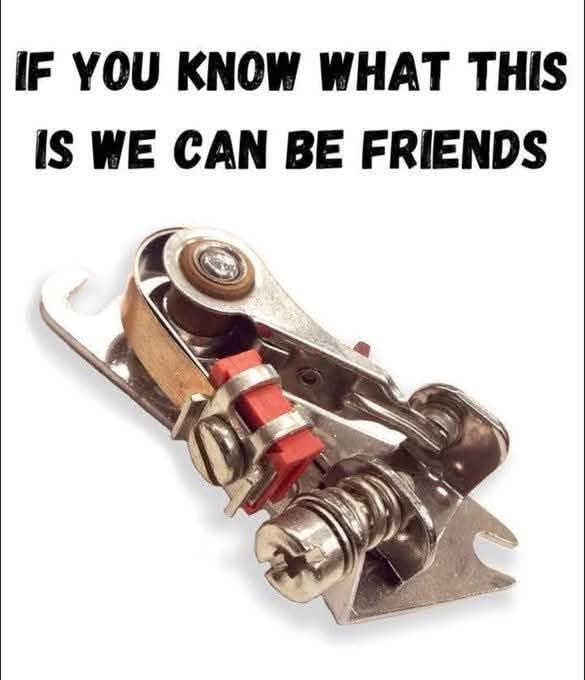
At first glance, this little metal contraption might look like something from a toolbox.
It has springs, screws, metal plates, a small roller, and several moving parts. Today, many people would have absolutely no idea what it was designed to do.
But if you grew up around an old-fashioned sewing machine, you might recognize it immediately.
It’s a vintage sewing-machine buttonhole attachment, often called a buttonholer. 🧵
The pictured style is from the era when sewing machines could be fitted with specialized mechanical attachments instead of relying on modern computerized settings.


🧵 What Did This Strange Little Tool Do?
Its job was simple—but incredibly useful.
It helped a sewing machine make buttonholes.
Before buttonhole functions were built into modern computerized machines, creating a neat, consistent buttonhole could require careful measuring and hand sewing.
A mechanical buttonholer changed that.
The attachment connected to the sewing machine and used the machine’s needle movement to operate its mechanism. Instead of simply letting the fabric move normally beneath the needle, the buttonholer controlled the movement of the fabric to create the buttonhole stitches. (Wikipedia)
That meant you could create buttonholes that were much more uniform than trying to make every one by hand.
👗 Why Was It Such a Big Deal?
Think about making a shirt or dress with several buttons.
You don’t want one buttonhole to be large, another tiny, and another crooked.
You want them to look like they belong together.
A buttonholer helped make that possible.
Some vintage models allowed the user to adjust the width, spacing, and size of the buttonhole. Certain Singer models could produce buttonholes in several sizes, with some models also capable of making longer buttonholes using a different technique. (Singer Sewing Info)
For someone who regularly made clothing at home, that could save a tremendous amount of time.
🔧 How Did It Work?
The mechanism looks complicated because there is quite a bit going on in a very small space.
The attachment connects to the sewing machine around the needle/presser-bar area.
A forked arm interacts with the needle clamp.
As the needle moves up and down, that motion operates the buttonholer’s mechanism.
The attachment then moves the fabric back and forth in the pattern needed to form the buttonhole.
Some buttonholers also used interchangeable templates or cams to determine the size and shape of the buttonhole. (Wikipedia)
In other words, the sewing machine supplied the movement, while the attachment controlled the pattern.
🧵 Those Little Pieces Had a Purpose
If you ever found one of these in an old sewing basket, you might have wondered why there were so many strange-looking pieces.
Some buttonholer sets came with:
- The main buttonhole attachment
- A mounting screw
- A feed-cover plate
- Different buttonhole templates
- Adjustment pieces
- Instructions
The templates could be used to create different buttonhole sizes and, on some models, different shapes such as keyhole buttonholes or eyelets. (Wikipedia)
So those little metal pieces weren’t random accessories.
They were essentially the settings for the buttonhole you wanted to make.
🪡 A Clever Solution Before Computerized Sewing Machines
Modern sewing machines can make buttonholes look almost effortless.
Some machines have built-in buttonhole programs where you select a setting, attach the appropriate foot, and let the machine do the work.
Older machines didn’t have that luxury.
Instead, manufacturers developed ingenious mechanical attachments.
Singer, for example, sold a long series of buttonhole attachments, with different models designed for different sewing machines. Singer also had attachments manufactured by companies such as Greist. Greist’s template-style buttonholers became particularly widespread and were sold for Singer machines for decades. (Wikipedia)
🧶 The Kind of Tool Grandma Might Have Kept in a Sewing Box
For many families, sewing wasn’t just a hobby.
People repaired clothing.
They shortened dresses.
They replaced zippers.
They added buttons.
They made children’s clothes.
They altered garments as children grew.
A sewing machine was an important household tool, and accessories like this buttonholer expanded what the machine could do.
A little attachment could turn an ordinary straight-stitch sewing machine into something much more versatile.
❤️ Why Old Sewing Tools Bring Back Memories
There’s something special about finding one of these old attachments.
It might have been sitting in a little box underneath a sewing machine.
Maybe it belonged to your mother.
Maybe your grandmother had one.
Maybe you remember opening an old sewing-machine cabinet and finding dozens of mysterious metal feet and attachments inside.
And if you didn’t sew, you may have spent years wondering what half of those things were actually for. 😂
Today’s sewing machines can do incredible things automatically, but these old mechanical attachments remind us how clever people were at getting more from relatively simple machines.
🕰️ Before You Throw That Old Sewing Attachment Away…
If you find an old buttonholer in an estate sale, sewing basket, or sewing-machine cabinet, don’t automatically assume it’s useless junk.
Vintage sewing-machine attachments can be interesting to collectors, and complete sets with their original cases, templates, screws, and instruction manuals are particularly useful for identifying exactly what they are.
For example, the Singer Simanco 86718 buttonholer was designed for many low-shank Singer machines and came with a feed-cover plate and other necessary hardware. (Singer Sewing Info)
The exact model matters, though, because vintage sewing machines used different attachment systems.
🧵 THE OLD-FASHIONED WAY OF MAKING A BUTTONHOLE
Imagine sitting at the sewing machine.
You have your fabric carefully positioned.
The buttonholer is attached.
You’ve selected the appropriate setting.
You lower the presser foot.
The machine starts moving.
Up and down.
Back and forth.
Slowly, a neat row of stitches begins forming.
What looks like a complicated little machine is actually doing something remarkably precise.
And when you’re finished, you have a buttonhole ready for the button.
No computer screen.
No touchscreen.
No automatic embroidery program.
Just metal, springs, gears, a sewing machine, and someone who knew exactly what they were doing.
🧵 DO YOU REMEMBER THIS?
Now it’s your turn!
❤️ If you recognize this old sewing-machine buttonholer, you probably remember a different era of sewing.
Did your mother or grandmother have one?
Did you ever use one?
Do you still have an old sewing-machine attachment box somewhere?
And most importantly…
🧵 Did you know what this was before reading the answer?
YES — I remember it! ❤️
NO — I had absolutely no idea! 😂
I still have one! 🧵
If you remember these old sewing tools, tell us what you remember about them in the comments. Sometimes a tiny piece of metal can bring back an entire childhood. ❤️
