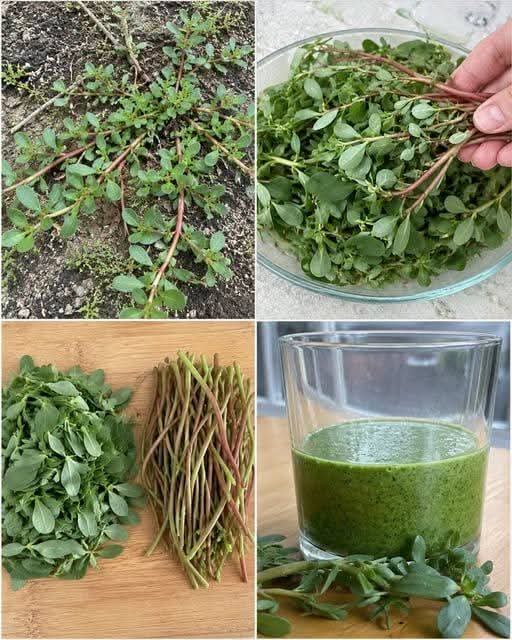
🌿 8 Reasons to Leave Purslane Growing in Your Garden
For years, many gardeners have looked at purslane and immediately reached for the weeds bucket.
But what if that little plant spreading across your garden isn’t something you need to get rid of?
Purslane (Portulaca oleracea) is often treated as a weed, but it’s also an edible plant that has been used as food in many parts of the world. It is especially well known in Mediterranean, Asian, African, and Latin American cuisines. (UC Agriculture and Natural Resources)
So before you pull every last piece from your garden, here are 8 reasons you might want to leave some purslane growing.
🌱 1. It’s Edible
One of the biggest reasons to leave purslane alone is also the simplest:
You can eat it.
The tender leaves and stems can be eaten raw or cooked. Purslane has a slightly tangy, salty flavor and a succulent texture that makes it interesting in salads, soups, sauces, and cooked dishes. (Cornell Cooperative Extension)
Instead of thinking:
“That’s a weed!”
you might start thinking:
“That’s dinner!” 😂
🥗 2. It’s Surprisingly Nutritious
Purslane isn’t just edible—it has an impressive nutritional profile.
Research has found that it provides nutrients including vitamins A, C and E, potassium, magnesium, calcium and iron, along with antioxidant compounds. (PubMed Central (PMC))
It’s also notable because it contains alpha-linolenic acid (ALA), an omega-3 fatty acid that is uncommon among leafy vegetables. (PubMed Central (PMC))
That makes this humble garden volunteer a surprisingly interesting addition to the kitchen.
🌿 3. It Doesn’t Need Much Attention
Purslane is tough.
It can tolerate poor, dry conditions and has characteristics that help it survive hot weather. Its succulent leaves store water, allowing the plant to remain productive when conditions are less than ideal. (Cornell Cooperative Extension)
For gardeners who don’t want to spend every summer watering every inch of the yard, a plant that can survive on its own can certainly be interesting.
Of course, its ability to thrive is also why some gardeners find it difficult to control!
☀️ 4. It Can Handle Hot, Dry Weather
Purslane is particularly well adapted to warm conditions.
Its fleshy leaves and stems help it conserve water, and it can continue growing in conditions that would make some more delicate greens struggle. (Cornell Cooperative Extension)
That makes it an interesting plant for gardens where summers are hot and water is limited.
Instead of fighting the conditions, purslane seems to say:
“Don’t worry. I’ve got this.” 😄
🥘 5. You Can Use It in So Many Recipes
If you leave some purslane growing, you don’t have to eat it the same way every time.
Try it in:
🥗 Salads
Young leaves and tender stems can add a fresh, slightly tangy element.
🍲 Soups
Purslane can be cooked into soups and stews.
🍳 Eggs
Sauté it with onions, garlic, or other vegetables and add it to eggs.
🌮 Tacos
In some cuisines, purslane is cooked and used in savory dishes.
🥣 Sauces
Its texture can work beautifully in cooked sauces.
🌿 Pesto
You can experiment by blending purslane with basil, lemon, olive oil, garlic, and nuts or seeds.
There are countless ways to turn an unwanted garden plant into something useful.
🌱 6. It Can Provide Ground Cover
Purslane grows close to the ground and spreads outward.
That can be useful in certain areas because it can cover bare soil.
However, this is a double-edged sword.
Purslane’s rapid growth can also allow it to compete with plants you actually want growing. Iowa State University Extension notes that it can spread rapidly and become difficult to manage when it gets out of control. (ISU Extension and Outreach Blogs)
So you don’t necessarily have to let it take over.
A better approach may be:
Keep some. Control the rest.
🐝 7. It Can Become Part of a More Diverse Garden
A garden doesn’t have to contain only plants that were deliberately purchased and planted.
Volunteer plants can become part of a more diverse growing space.
Purslane produces small flowers and can contribute to the overall plant diversity around a garden.
That doesn’t mean you should consider it a replacement for plants specifically grown to support pollinators, but there’s also no need to remove every volunteer plant automatically.
Sometimes a little biodiversity is worth leaving alone.
♻️ 8. It’s a Perfect Example of “Don’t Waste What Nature Gives You”
Perhaps the best reason to leave purslane growing is philosophical.
We spend money buying seeds.
We prepare soil.
We water.
We fertilize.
We protect plants from pests.
And then a plant grows naturally in the garden and we immediately pull it out.
Purslane challenges that idea.
Instead of seeing it only as a weed, you can ask:
“Is there something useful I can do with this?”
If the answer is yes, harvest some and use it.
That’s especially appealing for anyone interested in growing food, reducing waste, and getting more use from the space they already have.
⚠️ But Don’t Let Purslane Take Over
Leaving purslane doesn’t mean allowing it to grow everywhere.
Purslane spreads easily, and its rapid growth can interfere with other plants. (ISU Extension and Outreach Blogs)
If it’s growing between your tomatoes, peppers, beans, or other crops and competing for space, water, or nutrients, pull some out.
You can think of it as managed abundance:
🌱 Keep a patch.
🥗 Harvest it.
✂️ Remove it where it crowds your crops.
That way, you get the benefits without allowing it to become a garden takeover.
🧼 Before You Eat It, Know What You’re Harvesting
This is important.
Never eat a wild plant simply because it looks like something you’ve seen online.
Make sure you’ve correctly identified it as common purslane (Portulaca oleracea) and that it hasn’t been exposed to pesticides, herbicides, contaminated soil, animal waste, or other pollutants.
Also be aware that purslane is relatively high in oxalates. People who are prone to kidney stones or who have certain kidney-related conditions may need to limit high-oxalate foods and should ask a healthcare professional what is appropriate for them. (ISU Extension and Outreach Blogs)
And don’t confuse purslane with other plants that may look somewhat similar.
Correct identification comes first.
🌿 Weed or Vegetable?
That’s really the question.
One gardener sees purslane and says:
“Get that weed out of my garden!”
Another sees the exact same plant and says:
“Don’t touch it—I’m making dinner.” 😂
Both reactions make sense.
Purslane can absolutely become a nuisance when it spreads too aggressively. But it’s also an edible, nutritious plant that has been cultivated and eaten for thousands of years. (UC Agriculture and Natural Resources)
So perhaps the answer isn’t weed OR vegetable.
Maybe it’s:
A little bit of both.
🌱 WOULD YOU LEAVE PURSLANE GROWING?
If purslane appeared naturally in your garden, what would you do?
🌿 A. Leave it and eat it!
✂️ B. Keep a small patch but control it.
🚫 C. Pull it all out.
🥗 D. I’ve been eating it for years!
🤷 E. I had no idea it was edible!
👇 WHAT WOULD YOU DO?
Have you ever eaten purslane?
Tell us how you prepare it—salad, soup, sautéed, pesto, eggs, or something completely different! 🌿🥗❤️
