🍳 — and the Winner Was a Total Curveball
There are few foods as simple as a fried egg. Crack an egg into a pan, add a little fat, wait a few minutes, and you’re done.
But if you’ve ever tried to make the perfect fried egg, you know it isn’t always that easy.
Do you want crispy edges or tender whites? A runny yolk or a jammy center? Butter or oil? Should you cover the pan? What about adding a splash of water?
So what happens when you actually test the most popular methods side by side?
The results are surprisingly interesting—and the winning technique isn’t necessarily the one you’d expect. 🍳
The Fried Egg Experiment
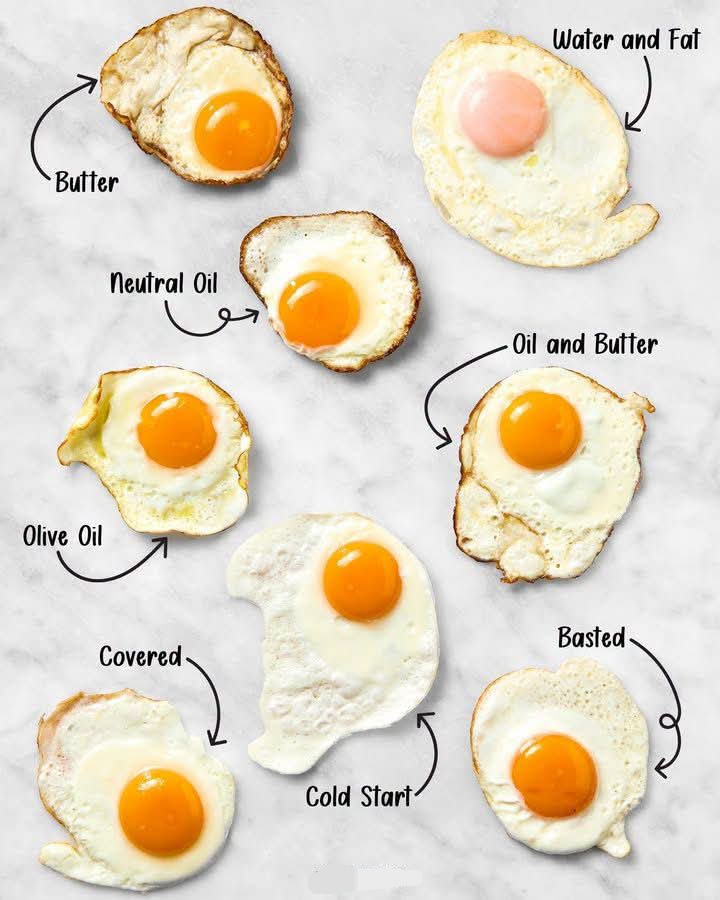
Several common methods were compared:
- Cold start
- Neutral oil
- Oil and butter
- Olive oil
- Butter
- Covered
- Basted
- Water and fat
The goal wasn’t simply to make an edible egg. The goal was to find the method that produced a fried egg with well-cooked whites, a tender yolk, good flavor, minimal unwanted browning, and an easy cooking process. (Kitchn)
And that’s where things get interesting.
🥚 1. Cold-Start Fried Egg
This method is about as simple as it gets.
The egg goes into a cold nonstick pan, without butter or oil, and the heat is turned on afterward.
The good:
The egg cooks gently, and there’s very little browning around the edges. There’s also no hot fat splattering around the stovetop.
The downside:
It takes considerably longer, and without butter or oil, the egg doesn’t have the same richness and flavor.
In the comparison, this method came in near the bottom.
Best for: Anyone who wants a very gentle, low-fat cooking method.
🫗 2. Neutral Oil
Next up was a classic: a little neutral vegetable oil in a preheated pan.
This produced a perfectly respectable fried egg, but it wasn’t particularly exciting.
The egg developed some browning around the edges and needed several minutes for the whites to fully cook. Neutral oil also doesn’t contribute much flavor.
Best for: An everyday fried egg when you want something simple and reliable.
🧈 3. Oil + Butter
Why choose one when you can use both?
Combining oil and butter gives you the richness of butter while adding the cooking characteristics of oil.
The result was flavorful, with a nice runny yolk and properly cooked whites. However, the bottom became somewhat crisp and browned.
It worked—but the extra step didn’t necessarily make the egg better.
Best for: Anyone who wants a little extra richness and doesn’t mind some browning.
🫒 4. Olive Oil
Olive oil is a fantastic choice if you love crispy, golden, lacy edges.
A hot pan and hot olive oil create an especially dramatic sizzle when the egg hits the surface. The edges can become beautifully crisp while the yolk remains soft. (Bon Appétit)
For a different style of fried egg, olive oil can absolutely be the winner.
But in this particular comparison, the goal was a more gently cooked egg rather than a deeply browned, crispy one.
Best for: Crispy edges, bold flavor and a restaurant-style fried egg.
🧈 5. Butter
Butter brings something oil can’t quite replicate: that unmistakable buttery flavor.
The problem is that butter can brown as the egg cooks. If the egg needs additional time for the whites to set, the bottom and edges can become more browned and crispy than intended.
Still, if flavor is your priority, butter is hard to beat.
Best for: Classic, rich, buttery fried eggs.
🥘 6. The Covered Egg
Now things start getting interesting.
Instead of leaving the pan uncovered, put a lid over it after adding the egg.
The trapped heat cooks the egg from above as well as from below, allowing the whites to set more evenly without requiring as much direct frying.
This produced a much more gently cooked egg, with less browning than the uncovered butter method.
And it turned out to be one of the strongest contenders. (Kitchn)
Best for: Tender whites and a softly cooked egg without excessive browning.
🥄 7. The Basted Egg
This is the method that looks like something you’d see in a professional kitchen.
The egg is fried in butter or oil, and once the fat is hot, the pan is tilted slightly. A spoon is then used to scoop the hot fat and pour it over the top of the egg whites.
This allows the top of the egg to cook without flipping it.
The technique gives you a surprising amount of control. You can direct the hot fat toward areas of the white that still look translucent while keeping the yolk from becoming overcooked.
In the original comparison, basting produced an excellent egg and earned a 9/10 rating. (Kitchn)
The downside?
It’s more hands-on, and you’re working with a pan of very hot fat, so it requires extra care.
Best for: A luxurious, carefully controlled fried egg with tender whites.
💧 8. Water + Fat — The Surprise Winner!
And here’s the curveball.
The winning method combined a little butter, a small amount of water and a lid.
It sounds almost too simple, but the combination creates a miniature steaming environment inside the pan.
The butter provides flavor and helps cook the egg from below.
The water creates steam.
The lid traps that steam and heat around the egg.
The result?
Tender, evenly cooked whites, very little unwanted browning and a yolk that stays soft and jammy.
In the comparison, this method received a 10/10 and was declared the overall winner. (Kitchn)
That’s quite a result for something as simple as adding a teaspoon of water!
🏆 So What’s the Best Way to Fry an Egg?
The winner: Water + Fat + a Lid! 🥇🍳
The winning technique works because it combines two different cooking environments.
The fat cooks the bottom and adds flavor, while the steam helps cook the top of the egg gently and evenly.
Instead of waiting for the heat from the pan to slowly travel through the entire egg white, the trapped steam helps cook the surface as well.
The result is a fried egg that’s:
✔️ Tender
✔️ Evenly cooked
✔️ Flavorful
✔️ Soft in the center
✔️ Lightly browned rather than heavily crisped
✔️ Easy to make
🍳 How to Make the Winning Fried Egg
Ingredients
- 1 large egg
- 1 teaspoon butter
- 1 teaspoon water
- Salt, to taste
- Black pepper, to taste
Instructions
- Place a nonstick skillet over medium heat.
- Add the butter and allow it to melt.
- Crack the egg carefully into the pan.
- Immediately add about 1 teaspoon of water to the pan, away from the egg.
- Quickly cover the skillet with a lid.
- Cook for about 1 minute, or until the white is completely set to your liking.
- Remove the lid and check the yolk.
- Season with salt and freshly ground black pepper.
- Carefully slide the egg onto toast, potatoes, rice, vegetables or whatever you’re serving.
The original test found that this method produced a jammy yolk and silky bottom with only slight browning around the edges. (Kitchn)
🔥 Want Crispy Edges Instead?
Then don’t automatically choose the winner of this particular test.
If your dream fried egg has those crispy, golden, lacy edges, olive oil is an excellent choice.
Heat the oil until shimmering, add the egg, and allow the edges to sizzle. For an especially controlled finish, you can baste the whites with hot oil while keeping the yolk intact. (Epicurious)
That’s a completely different style of fried egg—and for some people, it’s the best one of all.
🧂 The Secret Is Knowing What Kind of Egg You Like
There isn’t really one fried egg that will make everyone happy.
Some people want:
❤️ Buttery and rich
Choose butter.
🫒 Crispy and golden
Choose olive oil.
🥄 Tender and luxurious
Try basting.
💧 Soft and evenly cooked
Try water + fat + a lid.
🔥 Minimal browning
Try the covered method.
🥚 Almost no added fat
Try the cold-start method.
The “best” egg ultimately depends on what you’re looking for.
💡 A Few Tips for Better Fried Eggs
Use fresh eggs
Fresh egg whites tend to hold together better in the pan rather than spreading thinly. (BBC Good Food)
Crack the egg into a small bowl first
This makes it easier to remove any shell fragments and lets you gently slide the egg into the pan.
Don’t use excessive heat
Unless you’re specifically trying to create crispy, browned edges, moderate heat gives you more control.
Use a lid when you want evenly cooked whites
The trapped heat helps cook the top of the egg without requiring you to flip it.
Don’t overcook the yolk
If you love a runny or jammy yolk, remember that the egg continues cooking from residual heat after you remove it from the pan.
🍞 What to Serve With Your Perfect Fried Egg
A great fried egg can turn an ordinary meal into something special.
Try it on:
- Buttered toast
- Avocado toast
- Hash browns
- Roasted potatoes
- Rice
- Fried rice
- Burgers
- Breakfast sandwiches
- Sautéed vegetables
- Beans
- Pasta
- Grain bowls
A little salt, freshly cracked pepper and hot sauce may be all it needs.
🥚 Final Verdict
After testing eight different techniques, the unexpected winner was:
🏆 WATER + FAT + A LID
It may sound strange at first, but that tiny amount of water creates steam, while the fat provides flavor and helps cook the bottom.
The result is a beautifully cooked egg with set whites, a soft yolk and minimal unnecessary browning. (Kitchn)
But here’s the real lesson:
There isn’t one perfect fried egg—there’s a perfect fried egg for YOU.
If you love crispy edges, reach for olive oil. If you love buttery richness, use butter. If you want the most evenly cooked, tender egg, try the water-and-fat method.
Sometimes the simplest little trick is the one that changes everything. 🍳❤️
So tell me: how do YOU fry your eggs—A, B, C, D, E, F, G or H? And do you prefer crispy edges or a soft, tender white? 👇
