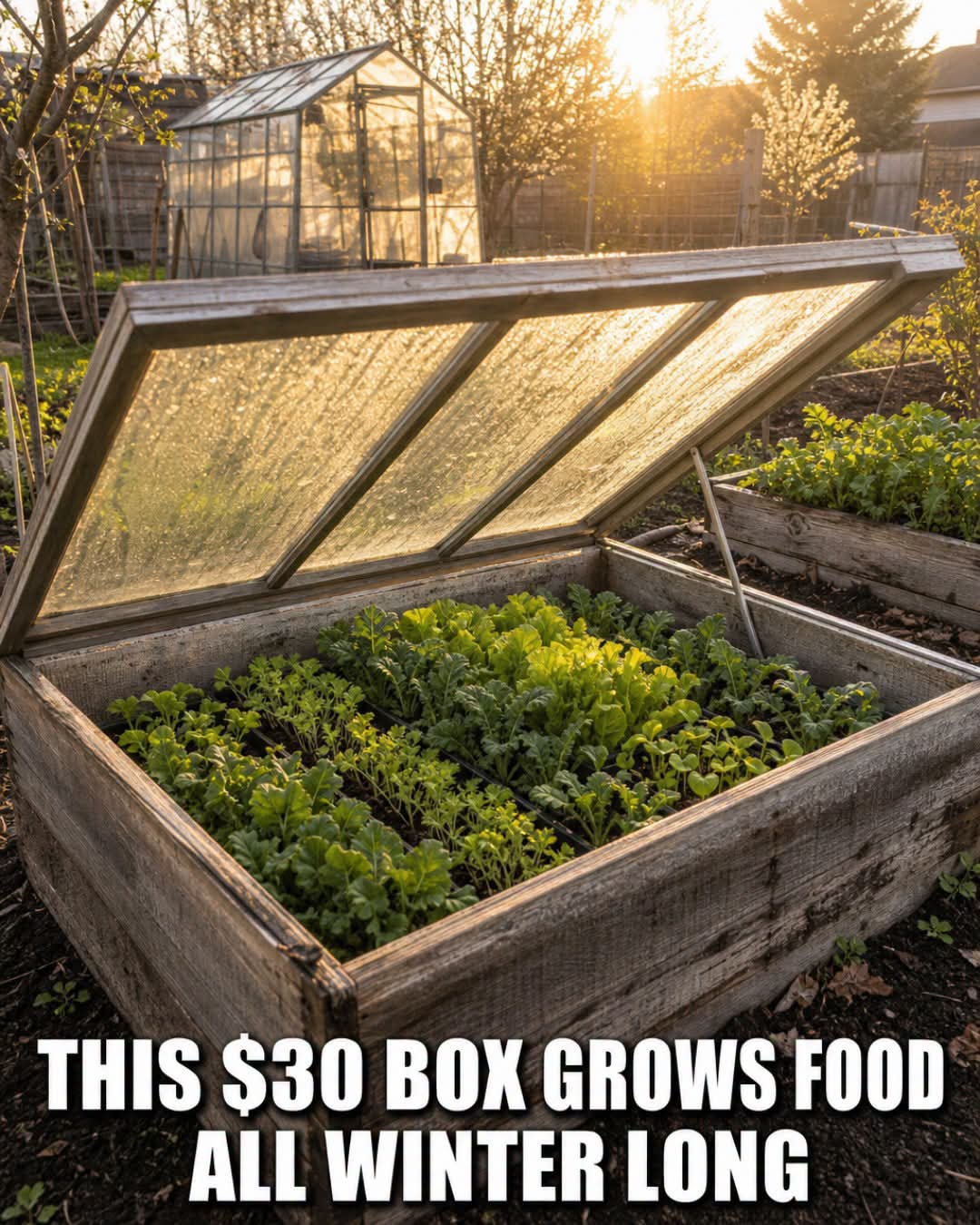
🌱 This Simple Box Can Grow Fresh Food All Winter Long
Imagine stepping outside on a chilly winter morning and harvesting fresh spinach, crisp lettuce, or fragrant herbs—even when frost covers the ground. It may sound surprising, but a simple gardening structure known as a cold frame can make it possible in many climates.
Often called a “mini greenhouse,” a cold frame is one of the easiest and most affordable ways to extend your growing season and enjoy homegrown vegetables well beyond autumn.
🌿 What Is a Cold Frame?
A cold frame is a shallow, bottomless box with a transparent lid made from glass or clear plastic. It sits directly on the soil and uses sunlight to trap warmth during the day, creating a protected environment for plants.
Think of it as a miniature greenhouse that requires no electricity or complicated equipment.
The transparent top allows sunlight to enter while helping retain heat, protecting plants from frost, cold winds, and light snow.
🌞 How Does It Work?
During the day, sunlight warms the soil and the air inside the cold frame.
At night, the insulated structure helps hold onto some of that warmth, creating a more stable growing environment than the open garden.
Although temperatures inside a cold frame still fluctuate with the weather, they are often several degrees warmer than the surrounding air, which can make a big difference for cool-season crops.
🥬 What Can You Grow?
Many vegetables actually thrive in cooler temperatures.
Popular cold-frame crops include:
- Spinach
- Lettuce
- Kale
- Swiss chard
- Arugula
- Mustard greens
- Bok choy
- Radishes
- Green onions
- Parsley
- Cilantro
- Chives
In regions with milder winters, these crops may continue growing slowly throughout the season.
In colder climates, they often remain healthy and can be harvested over an extended period.
🪵 Building a Simple Cold Frame
One of the best things about a cold frame is that it can be made from inexpensive or recycled materials.
Common materials include:
- Wooden boards
- Bricks or concrete blocks
- Reclaimed lumber
- Old windows
- Clear polycarbonate panels
- Transparent greenhouse plastic
The box is usually placed directly over prepared garden soil.
Many gardeners angle the lid slightly so rain runs off easily and sunlight reaches the plants more effectively.
📍 Choosing the Right Location
For the best results, place your cold frame where it receives plenty of winter sunlight.
Look for a location that:
- Gets at least six hours of sunlight each day
- Has well-drained soil
- Is protected from strong winds
- Faces south in the Northern Hemisphere whenever possible
Good placement can significantly improve growing conditions during the colder months.
💧 Watering in Winter
Plants generally need less water during winter because cooler temperatures reduce evaporation.
Check the soil regularly and water only when the top inch begins to feel dry.
Avoid overwatering, as soggy soil can lead to root problems.
🌡️ Ventilation Is Important
Even on cold days, temperatures inside a cold frame can rise quickly when the sun is shining.
Open the lid slightly whenever the interior becomes too warm to prevent overheating and reduce excess humidity.
Close it again before evening to help trap warmth overnight.
🌱 Other Uses for a Cold Frame
Cold frames aren’t just for winter gardening.
They can also be used to:
- Start seeds earlier in spring
- Harden off indoor seedlings before transplanting
- Protect young plants from unexpected frosts
- Extend the harvest into late fall
Many gardeners find themselves using their cold frames during multiple seasons of the year.
🌿 Tips for Success
To get the most from your cold frame:
- Choose vegetables that tolerate cool weather.
- Harvest leaves regularly to encourage continued growth.
- Remove dead or damaged foliage.
- Keep the lid clean so maximum sunlight reaches the plants.
- Monitor temperatures during sunny days.
With just a little attention, a cold frame can provide fresh harvests long after most gardens have gone dormant.
The Bottom Line
A simple cold frame is one of the most practical projects for gardeners who want to enjoy fresh vegetables beyond the traditional growing season. By capturing the sun’s warmth and shielding crops from harsh weather, this humble garden box can help extend harvests, reduce grocery trips, and make home gardening a year-round pleasure in many areas.
Whether you’re growing spinach for salads, kale for soups, or fresh herbs for cooking, a cold frame is an easy and rewarding way to keep your garden productive during the cooler months.
