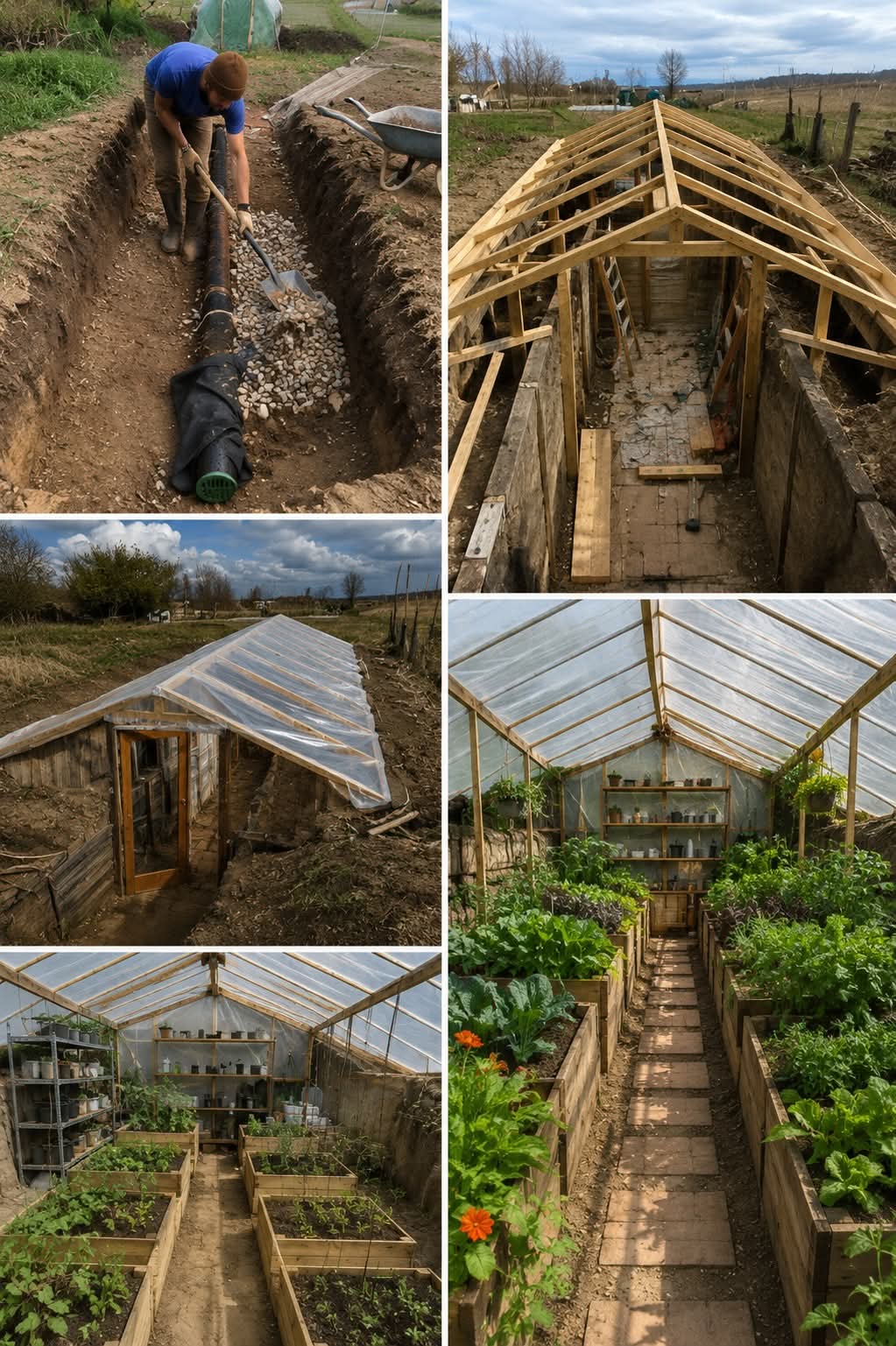
🌱 Build a Walipini Greenhouse and Grow Food All Year Long
Imagine harvesting fresh lettuce in the middle of winter, picking herbs when frost covers the ground, or extending your growing season without spending a fortune on heating.
It may sound impossible, but gardeners around the world are turning to a simple and ingenious solution known as the Walipini greenhouse.
Built partially underground, a Walipini uses the earth’s natural insulation to create a protected growing environment that can help plants thrive throughout much of the year.
For homesteaders, gardeners, and anyone interested in food self-sufficiency, it can be a fascinating and rewarding project.
🌿 What Is a Walipini?
The word “Walipini” comes from an indigenous language of the Andes and roughly translates to “place of warmth.”
Unlike a traditional greenhouse that sits entirely above ground, a Walipini is dug into the earth.
The surrounding soil helps regulate temperature by acting as a natural thermal mass.
This means the greenhouse can stay warmer during cold periods and cooler during hot weather.
🏡 Why Build a Walipini?
Gardeners are drawn to Walipinis for several reasons:
✅ Extended growing season
✅ Natural temperature regulation
✅ Protection from wind
✅ Reduced heating requirements
✅ Potential for year-round production in some climates
✅ Efficient use of resources
The underground design allows the earth itself to work as part of the growing system.
🌎 How It Works
A few feet below the surface, soil temperatures tend to remain much more stable than air temperatures.
While outdoor temperatures may swing dramatically between day and night, underground temperatures change much more slowly.
The Walipini takes advantage of this natural stability.
Sunlight enters through a transparent roof while the surrounding earth helps retain warmth.
The result is a growing environment that is often more moderate than outdoor conditions.
🔨 Choosing the Right Location
Location is critical for success.
Look for:
☀️ Maximum sunlight exposure
🌱 Well-drained soil
💧 Good water management
🚜 Easy access
Avoid low areas that are prone to flooding or poor drainage.
Water management is one of the most important considerations when building any underground structure.
📏 Basic Design
Many Walipinis are rectangular and dug several feet into the ground.
Common features include:
- Excavated growing area
- Sloped transparent roof
- Drainage system
- Access door
- Raised growing beds
The roof is usually positioned to capture as much sunlight as possible during cooler months.
💧 Don’t Forget Drainage
One of the biggest challenges in Walipini construction is water control.
Without proper drainage, heavy rain can create serious problems.
Many builders include:
- Gravel layers
- Drainage trenches
- French drains
- Sloped flooring
Good drainage helps protect both the structure and the plants inside.
🌱 What Can You Grow?
Depending on your climate and greenhouse design, a Walipini may support a wide variety of crops.
Popular choices include:
🥬 Lettuce
🌿 Herbs
🥬 Spinach
🥕 Carrots
🧅 Onions
🥦 Broccoli
🌱 Seedlings
🍓 Strawberries
Some gardeners also use Walipinis to start warm-season crops earlier than they could outdoors.
🌡️ Temperature Advantages
One reason Walipinis attract so much attention is their ability to moderate temperature swings.
Benefits may include:
- Less frost exposure
- More stable growing conditions
- Reduced stress on plants
- Extended harvest periods
However, climate, design, and maintenance all influence results.
🐝 Additional Benefits
Beyond growing food, a Walipini can provide:
🌻 Seed-starting space
🌿 Plant propagation area
🍅 Protection from harsh weather
🐝 Habitat for beneficial insects
🏡 Greater garden productivity
Many gardeners view it as a valuable addition to a self-sufficient backyard.
⚠️ Challenges to Consider
Like any project, Walipinis are not without challenges.
Potential concerns include:
- Excavation work
- Drainage management
- Structural stability
- Ventilation requirements
- Initial construction costs
Careful planning is essential before breaking ground.
🌍 A Step Toward Self-Sufficiency
Growing food year-round has long been a goal for gardeners seeking greater independence and resilience.
A Walipini greenhouse offers an innovative way to work with nature rather than against it.
By using the insulating power of the earth, gardeners can create a productive growing space that helps extend harvests and make better use of every season.
The Bottom Line
A Walipini greenhouse is more than just a gardening project—it’s a creative approach to sustainable food production.
With thoughtful design, proper drainage, and plenty of sunlight, this underground greenhouse can help gardeners grow fresh produce far beyond the traditional growing season.
For anyone dreaming of harvesting homegrown food through more of the year, the Walipini may be one of the most fascinating greenhouse designs ever developed.
🌱🏡 Would you build an underground Walipini greenhouse in your backyard if it meant harvesting fresh vegetables nearly year-round?
