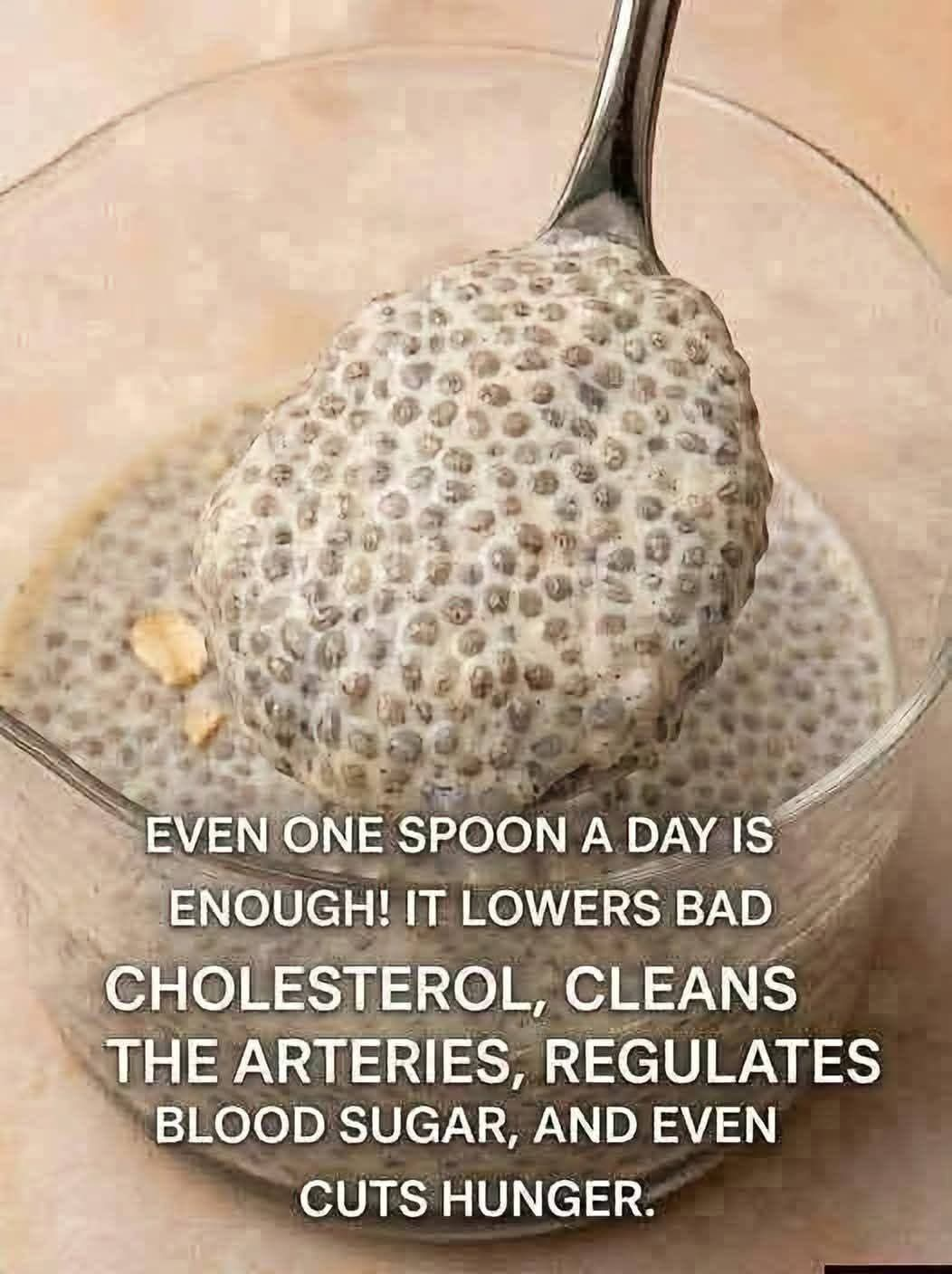
Chia Seeds: The Tiny Seeds That Pack a Powerful Nutritional Punch 🌱
They may be tiny, but chia seeds have earned a big reputation in the world of healthy eating.
Sprinkle them over yogurt, stir them into oatmeal, blend them into a smoothie, or soak them in milk to make creamy chia pudding. However you enjoy them, chia seeds are an easy way to add fiber, plant-based omega-3 fat, protein, and minerals to your diet.
But there is an important distinction between a nutritious food and a miracle food.
You may have seen claims that a spoonful of chia seeds can “clean the arteries,” dramatically lower cholesterol, or regulate blood sugar. The reality is more nuanced: chia seeds have an impressive nutritional profile, but they are not a treatment for high cholesterol, diabetes, or blocked arteries.
What they can do is contribute to an overall healthy eating pattern.
What Makes Chia Seeds So Special?
Chia seeds are particularly rich in dietary fiber.
About 28 grams—roughly two tablespoons—contains around 11 grams of fiber, along with approximately 4 grams of protein and 7 grams of unsaturated fat. They also provide calcium and other minerals and are especially rich in the plant omega-3 fatty acid alpha-linolenic acid, or ALA. The Nutrition Source
That combination makes chia seeds remarkably nutrient-dense for such a small food.
Their high fiber content is especially interesting.
When chia seeds come into contact with liquid, they absorb water and develop a gel-like coating. This is responsible for the familiar texture of chia pudding and also helps explain why chia can be surprisingly filling.
Could Chia Seeds Help With Cholesterol?
This is where the popular claim needs some context.
Certain types of soluble fiber can help lower LDL (“bad”) cholesterol. Soluble fiber forms a gel in the digestive tract and can interfere with the recycling of bile acids, prompting the liver to use cholesterol to make more bile acids. The Nutrition Source
Chia seeds contain soluble, gel-forming fiber, so there is a reasonable nutritional basis for thinking they could contribute to a heart-healthy diet.
But that doesn’t mean a spoonful of chia seeds will “clean your arteries.”
Research specifically examining chia seeds in humans has produced mixed results. A 2024 meta-analysis of randomized trials found some reductions in triglycerides and, at higher doses, LDL cholesterol, while another recent meta-analysis found no significant overall changes in cholesterol measures. PubMed+1
So the most accurate message is:
Chia seeds may support cardiovascular health as part of a healthy diet, but they should not be considered an artery-cleansing treatment.
What About Blood Sugar?
Chia seeds are often promoted as a food that can “regulate blood sugar.”
There is a sensible reason for this idea. Fiber can slow digestion and the absorption of carbohydrates, which can help moderate the rise in blood glucose after a meal. The Nutrition Source
However, clinical research specifically on chia is less convincing.
A 2024 systematic review and meta-analysis of randomized controlled trials found that chia consumption did not significantly improve fasting blood glucose, HbA1c, or insulin levels. PubMed
That doesn’t make chia a bad choice. Quite the opposite.
It simply means we shouldn’t promise that chia seeds will control blood sugar on their own.
For someone managing diabetes or prediabetes, chia can be part of a balanced meal, but it should never replace prescribed treatment or a medically recommended eating plan.
Why Chia Can Help You Feel Full
One of the most appealing qualities of chia is its ability to absorb liquid and form a gel.
Combined with its high fiber content, this can make meals containing chia more satisfying.
That may be useful for people who are trying to build meals that keep them comfortably full between eating occasions.
But again, chia isn’t a magic weight-loss ingredient.
Your overall calorie intake, food choices, physical activity, sleep, and many other factors influence body weight. Adding large amounts of chia to an otherwise unhealthy diet won’t magically cancel out those factors.
A Simple Way to Eat Chia Every Day
You don’t need complicated recipes.
Try making a simple chia pudding.
Combine:
- 1–2 tablespoons chia seeds
- About ½ cup milk or an unsweetened plant-based alternative
- A little vanilla
- Fruit such as berries or banana
- Optional cinnamon
Stir everything together and refrigerate for several hours or overnight.
The chia seeds will absorb the liquid and create a thick, pudding-like consistency.
Top it with fresh fruit, nuts, or a spoonful of plain yogurt.
It’s an easy breakfast or snack that combines fiber, healthy fats, protein, and other nutrients.
Other Easy Ways to Use Chia Seeds
If chia pudding isn’t your thing, there are plenty of alternatives.
Add a spoonful to oatmeal for extra texture and fiber.
Mix chia into a smoothie.
Sprinkle it over yogurt and fruit.
Stir it into overnight oats.
Add it to homemade energy bites.
Use it in some baked goods.
You don’t need to consume huge quantities. Consistency and the overall quality of your diet matter much more than chasing a particular “superfood” dose.
One Spoonful Isn’t a Miracle Cure
The phrase “even one spoon a day is enough” sounds attractive, but nutrition rarely works that simply.
There isn’t a universally established spoonful of chia that will lower someone’s cholesterol, unclog arteries, or normalize blood sugar.
Research is still developing, and studies have used different amounts, populations, and durations.
In fact, Harvard’s Nutrition Source specifically cautions that chia should not be viewed as a magic bullet and notes that controlled human studies have not consistently demonstrated specific improvements in cardiovascular risk factors, blood sugar, or body weight. The Nutrition Source
That’s an important lesson in nutrition:
A healthy food can be genuinely beneficial without being a miracle cure.
The Bigger Picture Matters Most
If your goal is better heart health, don’t focus on one ingredient.
Think about the entire plate.
Eat plenty of vegetables and fruit. Choose whole grains and legumes regularly. Include nuts, seeds, and other sources of unsaturated fats. Favor minimally processed foods and limit excessive saturated fat, added sugar, and highly processed foods.
Regular physical activity, maintaining a healthy weight, avoiding tobacco, getting adequate sleep, and managing conditions such as high blood pressure and high cholesterol are also important.
Chia seeds can fit beautifully into that lifestyle.
They simply shouldn’t be expected to do all the work.
So, Should You Eat Chia Seeds?
For most people, chia seeds are a convenient and nutritious addition to meals.
They’re rich in fiber, contain plant-based omega-3 fat and protein, and can make foods more satisfying. The Nutrition Source
The strongest reason to eat them isn’t that they will magically “clean your arteries.”
It’s that they are an easy, nutrient-dense plant food that can help you build a better overall diet.
And sometimes, that’s the real secret to healthy eating:
Don’t search for one miracle ingredient. Build a pattern of healthy choices that you can actually enjoy and maintain.
A spoonful of chia seeds can certainly be part of that pattern. 🌱
The Bottom Line
Chia seeds are small, versatile, and exceptionally rich in fiber and healthy plant nutrients.
They may contribute to heart-healthy eating and help make meals more filling, but current human evidence does not justify claims that one spoonful will clean arteries, cure high cholesterol, or regulate blood sugar. The Nutrition Source+2
Enjoy them as part of a balanced diet—and let the whole lifestyle, rather than a single “superfood,” do the heavy lifting.
This version is suitable for a health/food blog while avoiding the stronger medical claims in the image that aren’t well supported by current human evidence.
