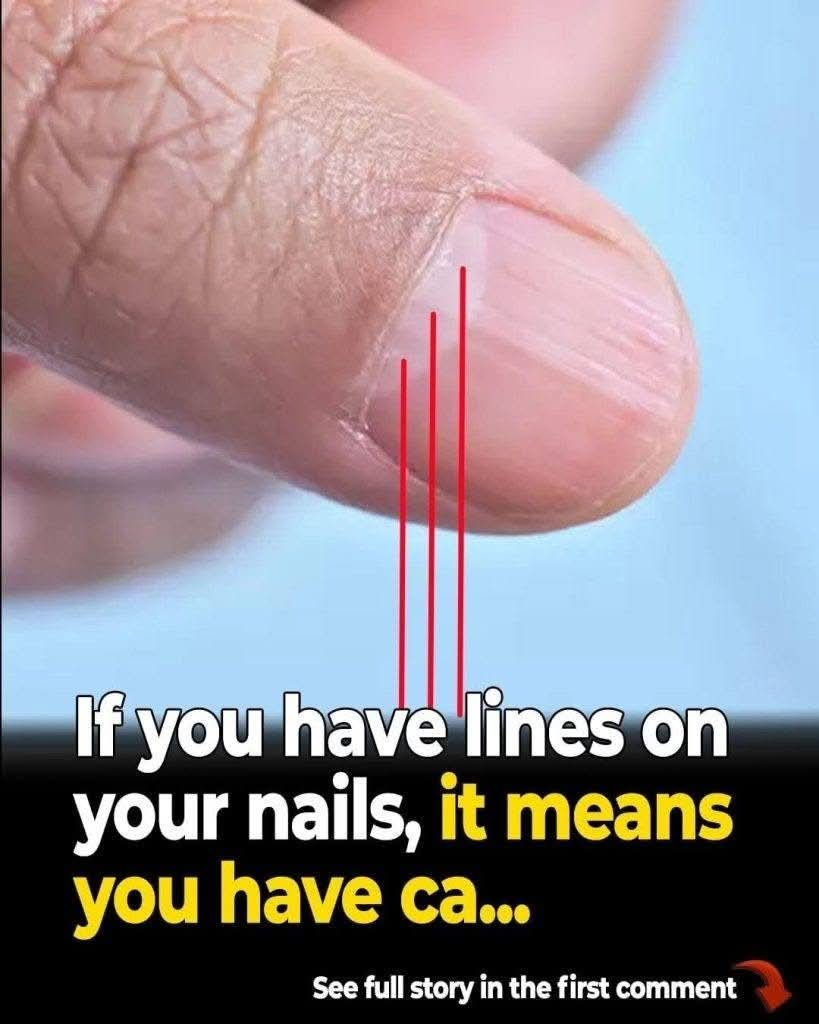
The answer is more complicated than some headlines suggest. Although certain nail characteristics have been associated with health conditions and, in some studies, mortality risk, there is no scientifically validated fingernail test that can reliably predict an individual’s life expectancy.
Understanding what your nails can—and cannot—tell you is far more useful than worrying about a single mark or shape.
Let’s explore the science behind nail health, the changes worth noticing, and when it may be time to speak with a healthcare professional.
1. The Surprising Connection Between Fingernails and Life Expectancy
Your fingernails are made primarily of keratin, a strong protein that also forms part of your hair and the outer layer of your skin. Although nails may seem separate from the rest of your body, their growth and appearance can sometimes reflect changes in your general health.
Doctors examine nails for clues about circulation, nutrition, infections, and certain chronic illnesses. In some cases, unusual nail changes can help direct attention toward a medical condition that needs further investigation. (PubMed Central (PMC))
But where does the connection with life expectancy come from?
A study published in 2021 investigated whether white nails were associated with mortality among older patients admitted to a rural community hospital in Japan.
Researchers examined 711 hospitalized patients. During their hospital stays, 74 patients died. The study found that white nails were associated with higher odds of dying during hospitalization, even after the researchers accounted for several other factors. (PubMed Central (PMC))
This finding attracted interest because it suggested that something as simple as examining a patient’s nails might provide additional information about their overall condition.
However, there is an important distinction.
The study did not show that white fingernails can predict how long a healthy person will live. It examined a specific group of older, already-hospitalized patients and their risk of dying during that hospital admission.
The findings cannot automatically be applied to younger adults, healthy people, or the general population.
Still, the research highlights an important medical principle: small physical changes can sometimes offer clues that help doctors evaluate a person’s health.
2. What Are White Fingernails, and Why Do They Matter?
Normally, healthy nails have a relatively uniform appearance, although their color and shape naturally vary from person to person.
When a nail becomes unusually white or pale, doctors may consider several possible explanations.
One condition associated with this appearance is Terry’s nails.
Terry’s nails typically look mostly white or washed out, sometimes with a narrow pinkish or reddish-brown band near the tip. The appearance may affect several fingernails rather than just one.
This change can occur as part of aging, but it has also been associated with certain medical conditions, including:
- Liver disease, particularly cirrhosis
- Congestive heart failure
- Diabetes
- Kidney failure
- Viral hepatitis
These associations do not mean that everyone with pale nails has one of these conditions. Nail appearance alone cannot establish a diagnosis. (Cleveland Clinic)
A doctor may consider the person’s age, medical history, other symptoms, physical examination, and any necessary laboratory tests before determining whether further investigation is needed.
Does a White Nail Mean Someone Will Die Sooner?
No. White nails are not a reliable way to calculate life expectancy.
The association observed in hospitalized patients may reflect underlying illness, nutritional problems, or other factors that influence overall health.
For example, someone with a serious chronic illness may develop nail changes alongside other symptoms. In that situation, the nail appearance may provide an additional clue about the person’s condition rather than directly predicting their future lifespan.
If your nails have always been pale or their appearance has changed gradually over many years, there is no reason to assume that you have a serious disease.
A new or unexplained change, particularly when it affects several nails or occurs alongside other symptoms, deserves medical attention.
3. Another Important Nail Feature: The Half-Moon Shape
Have you noticed the small, pale crescent near the base of your fingernails?
This area is called the lunula, which means “little moon.”
The lunula is the visible portion of the nail matrix, the area involved in producing new nail tissue.
Its size and visibility vary naturally. Some people have clearly visible half-moons on most fingernails, while others can see them on only their thumbs or barely see them at all.
According to the Cleveland Clinic, these half-moons are generally normal, and their absence alone is not usually a reason for concern. Significant changes in their appearance, especially when accompanied by other symptoms, may warrant a medical evaluation. (Cleveland Clinic)
What Does the Lunula Tell Us About Health?
The lunula is an interesting part of nail anatomy, but it is not a dependable predictor of longevity.
Its appearance can vary with normal anatomy, nail growth, and individual differences.
A person with small or barely visible lunulae is not necessarily unhealthy, and someone with prominent white half-moons is not guaranteed to be in excellent health.
Rather than concentrating on the size of the half-moons alone, pay attention to changes in the overall appearance of your nails.
If you notice a significant change in color or shape, or develop other symptoms, a healthcare professional can help determine whether it needs further investigation.
4. Five Other Fingernail Changes Worth Knowing About
White nails are not the only nail feature that may provide clues about health.
Doctors also pay attention to changes in nail shape, texture, thickness, and color.
Here are five examples worth understanding.
A. Clubbing: When Fingertips Become Rounded
Nail clubbing occurs when the fingertips become enlarged and the nails curve more than usual around the tips of the fingers.
The nails may appear unusually rounded, and the soft tissue beneath them can change.
Clubbing can be associated with certain lung and heart conditions, as well as other illnesses.
Possible underlying causes include chronic lung disease, some heart conditions, and certain cancers. However, the appearance must be assessed in context because not every unusual nail shape has the same cause. (Cleveland Clinic)
When to seek medical advice: If your fingertips or nails have developed a new, unexplained rounded appearance, arrange a medical evaluation.
B. Spoon-Shaped Nails
Healthy nails generally have a gently curved surface.
With a condition known as koilonychia, the nails become thin and concave, creating a shape similar to a spoon.
Spoon-shaped nails have traditionally been associated with iron-deficiency anemia, although they can also result from local trauma and certain skin conditions.
A clinician may recommend blood tests to determine whether an iron deficiency or another underlying problem is present. (PubMed Central (PMC))
When to seek medical advice: Talk with a healthcare professional if your nails become noticeably spoon-shaped, especially if you also experience unusual fatigue, weakness, or shortness of breath.
Do not begin taking iron supplements solely because of a nail change. Excess iron can be harmful, and treatment should depend on the cause.
C. Deep Horizontal Lines Across the Nails
Have you ever noticed a deep groove running horizontally across a fingernail?
These grooves are known as Beau’s lines.
They can develop when nail growth temporarily slows or stops following a period of significant physical stress, injury, or illness.
Because nails grow gradually, the lines may become visible only after the original event has passed.
If several nails develop similar grooves around the same time, a doctor may ask about recent illnesses, injuries, medications, or other significant events. (PubMed Central (PMC))
When to seek medical advice: Consider an evaluation if deep grooves appear without an obvious explanation, repeatedly occur, or accompany other concerning changes.
D. Persistent White or Washed-Out Nails
As discussed earlier, nails that become unusually white can sometimes be associated with systemic illness.
The appearance may affect much of the nail bed, leaving only a narrow band of color near the tip.
However, white marks on an individual nail are often caused by minor injuries and may gradually grow out.
The distinction between a few white spots and a widespread change in nail color is important.
When to seek medical advice: If several nails become persistently white or pale, especially if the change is new, speak with a healthcare professional.
E. A New Dark Streak Beneath a Nail
Most nail color changes are not cancer, but a new or changing dark streak deserves special attention.
A brown or black line running along a fingernail or toenail can have several causes, including injury, pigmentation, or certain medications.
In some cases, however, a dark streak can be a sign of melanoma, a type of skin cancer that can develop beneath a nail.
The American Academy of Dermatology recommends having a dermatologist examine a new or changing dark streak rather than assuming it is harmless. (American Academy of Dermatology)
When to seek medical advice: Arrange a prompt dermatology appointment if you notice a new or changing dark streak, particularly if it widens, changes appearance, or affects the skin around the nail.
Do not wait for pain to develop before having a suspicious streak assessed.
5. Can Nail Growth Reveal How Quickly Your Body Is Aging?
Another reason fingernails have attracted attention is that they grow at a measurable rate.
Fingernails grow continuously, although the speed varies between individuals. Growth can be influenced by age, genetics, nutrition, health, medications, and injury.
Research and medical commentary have explored whether changes in nail growth might provide information about biological aging.
However, the speed at which you need to trim your fingernails is not a validated measure of your biological age or life expectancy.
A person whose nails grow slowly should not automatically assume that their body is aging too quickly. Similarly, fast-growing nails do not guarantee good health or a long life.
Nail growth is only one small aspect of a complex biological process.
Doctors assess health and longevity using a much broader picture, including medical history, physical examinations, established risk factors, and appropriate diagnostic tests.
6. What Healthy Fingernails Usually Look Like
Although nail appearance varies naturally, healthy nails generally have a relatively smooth surface and consistent color.
You may notice faint vertical ridges, particularly as you get older. These are often harmless.
Small white spots can also occur after minor nail injuries and typically grow out as the nail grows.
Other changes, such as brittle nails or peeling edges, can be associated with frequent handwashing, exposure to cleaning products, repeated manicures, or physical damage. (Mayo Clinic)
Here are a few simple ways to care for your nails:
- Keep your nails clean and dry.
- Moisturize your hands, nails, and cuticles regularly.
- Wear protective gloves when working with cleaning products.
- Avoid biting your nails or picking at the skin around them.
- Do not use sharp objects to clean beneath your nails.
- Avoid cutting or aggressively pushing back your cuticles.
- Use clean nail tools and avoid sharing personal grooming equipment.
- Eat a varied, balanced diet that provides sufficient protein and essential nutrients.
These habits can help protect nail health, although they cannot prevent every nail condition.
7. When Should You See a Doctor About Your Nails?
It is usually unnecessary to worry about every small variation in nail appearance.
However, a new, persistent, or unexplained change deserves attention, particularly if several nails are affected.
Consider arranging a medical evaluation if you notice:
- A sudden or persistent change in nail color
- Nails becoming unusually white or pale
- New clubbing or significant changes in nail shape
- Deep horizontal grooves without an obvious explanation
- Nails that repeatedly split, lift, or become damaged
- Persistent redness, swelling, or pain around the nails
- A new or changing dark streak beneath a nail
Seek urgent medical care if a nail change occurs alongside severe symptoms such as significant difficulty breathing, chest pain, or sudden confusion.
Remember that the same nail appearance can have different causes in different people. A healthcare professional can determine whether the change is harmless or whether further examination is necessary.
8. Can You Improve Your Health and Life Expectancy Through Nail Care?
Taking care of your nails is worthwhile, but nail care itself is not a proven method of extending your life.
The more important goal is to recognize that changes in your body sometimes deserve attention.
If your nails appear different from their usual appearance, consider whether there has been an obvious explanation, such as an injury, a recent manicure, or exposure to chemicals.
If the change persists or appears alongside other symptoms, seek professional advice instead of relying on online pictures or self-diagnosis.
For long-term health, focus on habits supported by established medical evidence:
Eat a balanced diet. Include a variety of vegetables, fruits, whole grains, protein sources, and healthy fats.
Stay physically active. Choose activities appropriate for your health and fitness level.
Avoid smoking. Smoking increases the risk of several serious diseases.
Prioritize sleep. Consistent, adequate sleep supports general well-being.
Manage chronic conditions. Follow your healthcare professional’s advice about conditions such as high blood pressure, diabetes, and heart disease.
Attend recommended health screenings. Appropriate screening can help detect certain conditions before symptoms develop.
These measures have a much stronger foundation in preventive health than attempting to predict longevity from the appearance of a fingernail.
Frequently Asked Questions
Can a doctor predict my life expectancy by looking at my nails?
No. Nail examination can sometimes reveal clues about underlying illness, but no single nail feature can reliably predict how long an individual will live.
Some studies have found associations between nail changes and health outcomes in specific patient groups. These findings do not establish a reliable lifespan prediction tool.
Do white fingernails mean I have a serious disease?
Not necessarily. White nails can have several explanations, including normal aging and certain medical conditions.
If most of your nails have become unusually white or pale, particularly if the change is new, arrange a medical evaluation.
Is it bad if I cannot see the half-moons on my fingernails?
Not usually. Lunulae vary naturally in size and visibility. Their absence alone does not establish that you have a health problem.
Can nail changes indicate vitamin deficiencies?
Some nail changes can occur alongside nutritional deficiencies, but they are not specific enough to identify a particular deficiency on their own.
A healthcare professional can assess your symptoms, diet, and medical history and recommend testing if appropriate.
Should I take supplements to make my nails healthier?
Not automatically. Supplements are useful in certain circumstances, particularly when a deficiency has been identified, but they are not necessary for everyone.
Taking high doses of certain vitamins or minerals can cause harm. Seek medical advice before starting supplements to treat an unexplained nail change.
Can healthy-looking nails guarantee good health?
No. Some medical conditions cause visible changes in the nails, but many do not.
Healthy-looking nails are encouraging, but they cannot replace regular medical care, appropriate screening, or attention to symptoms.
Final Thoughts: Your Fingernails May Offer Clues, but They Cannot Tell Your Future
It is fascinating to think that something as small as a fingernail could offer information about what is happening inside the body.
Medical research supports the idea that certain nail changes can accompany underlying illnesses. One study even found an association between white nails and mortality during hospitalization among older patients.
But the findings need to be understood in context.
Your fingernails cannot tell you exactly how long you will live, and a particular nail color or shape is not a prediction of your future.
What they can do is provide a reason to pay attention. If you notice a significant change, especially one that persists or appears alongside other symptoms, a healthcare professional can help determine whether it needs further investigation.
Rather than worrying about every mark or ridge, learn what is normal for your nails and seek advice when something changes unexpectedly.
Sometimes, the most useful health information comes not from trying to predict the future, but from recognizing when your body may need attention.
A Question for Our Readers
Have you ever noticed a change in your fingernails that prompted you to ask a doctor about your health?
Perhaps you noticed a new ridge, a change in color, or a difference in the shape of your nails.
Share your experience in the comments if you’re comfortable doing so. Your story may encourage someone else to seek appropriate medical advice.
Medical disclaimer: This article is for general educational purposes only and is not a substitute for professional medical advice, diagnosis, or treatment. Nail changes alone cannot diagnose a disease or predict life expectancy.
