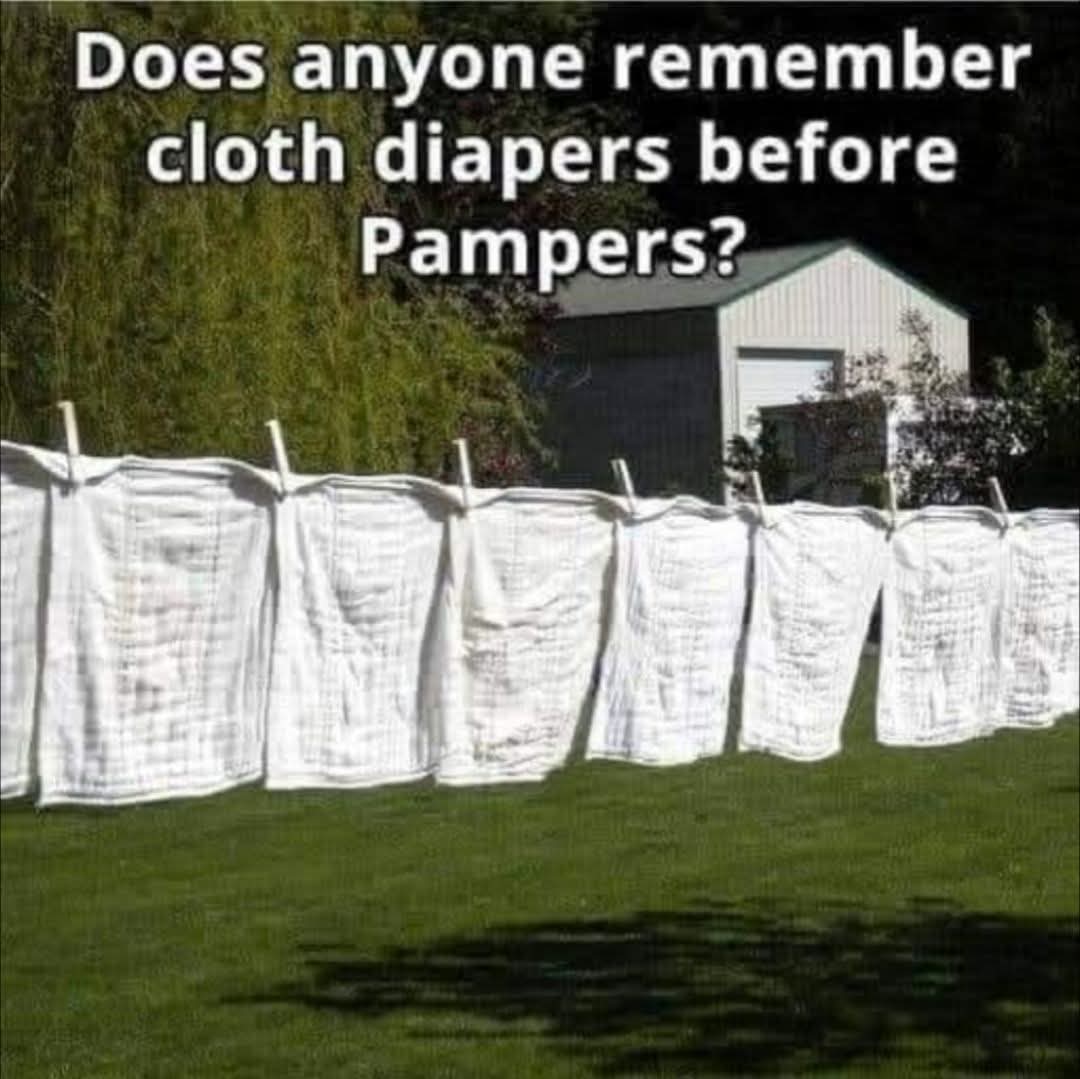
Before Pampers: Life With Cloth Diapers
Ask anyone who raised a baby before the 1960s about diapers, and you’ll get a very different story than what parents know today. Disposable diapers as we know them didn’t really take over until Pampers launched in 1961 — and even then, it took another decade or two before they became the default. Before that, cloth was simply the way.
The Basic Kit
A cloth diaper wasn’t the shaped, Velcro-tabbed thing some parents use today for eco-reasons. It was a plain square or rectangle of birdseye cotton or flannel, folded by hand into a triangle or rectangle around the baby, and secured with a safety pin — specifically, a diaper pin with a little plastic or metal safety head so it wouldn’t stick a wriggling infant (though it happened anyway). Over that went a waterproof outer cover, often rubber pants, later plastic.
The Daily Grind
This is the part younger generations find almost unbelievable: there was no throwing away. Every soiled diaper got:
- Rinsed — often by literally holding it in the toilet and flushing, or dunking in a pail of water
- Soaked — in a diaper pail with water and sometimes borax, vinegar, or a bit of bleach, waiting for laundry day
- Washed — by hand, or later in a washing machine, usually a hot wash followed by a second rinse
- Boiled, in earlier decades, to properly sanitize them
- Hung to dry — on a clothesline, since dryers weren’t universal yet
- Refolded and re-pinned, ready to go again
A baby could go through 8–12 diaper changes a day, which meant this cycle was constant. Many households used diaper services by the mid-20th century — a company would drop off clean cloth diapers and pick up the soiled ones weekly, which was a small luxury for busy parents.
Life Around the Diaper
- No leak protection like today. Blowouts and leaks onto clothing, furniture, and laps were just part of parenting.
- Diaper rash was extremely common, partly because cloth held moisture against the skin longer than modern absorbent materials do.
- Cloth diapers doubled as burp cloths, rags, and even bandages once they’d been “retired” from diaper duty — nothing went to waste.
- The diaper pail smell is a specific, unpleasant memory a lot of older parents still talk about.
Then Came Pampers
When Procter & Gamble rolled out Pampers nationally, the appeal was obvious: no pins, no pails, no laundry — just fold and toss. Early versions were bulky and not great at absorption, so a lot of parents stuck with cloth well into the 1970s and 80s out of both habit and cost (disposables were initially expensive). But convenience eventually won out, and by the 1990s disposables dominated.
The Full-Circle Moment
Interestingly, cloth diapers have made a comeback in recent years — not out of necessity, but by choice, driven by environmental concerns and modern designs that are far easier to use than the old pin-and-fold method. So in a strange way, today’s “eco-conscious” parents are reviving a system their grandparents were relieved to escape.
