Before you touch anything, here’s what you actually need to know 🐦
Found a Nest in Your Yard This Week? Before You Touch Anything, Here’s What You Actually Need to Know 🐦
Discovering a bird’s nest in your yard can be an exciting surprise. Whether it’s tucked into a shrub, resting in a flower pot, or hidden in the branches of a tree, your first instinct may be to get a closer look—or even move it to a safer spot.
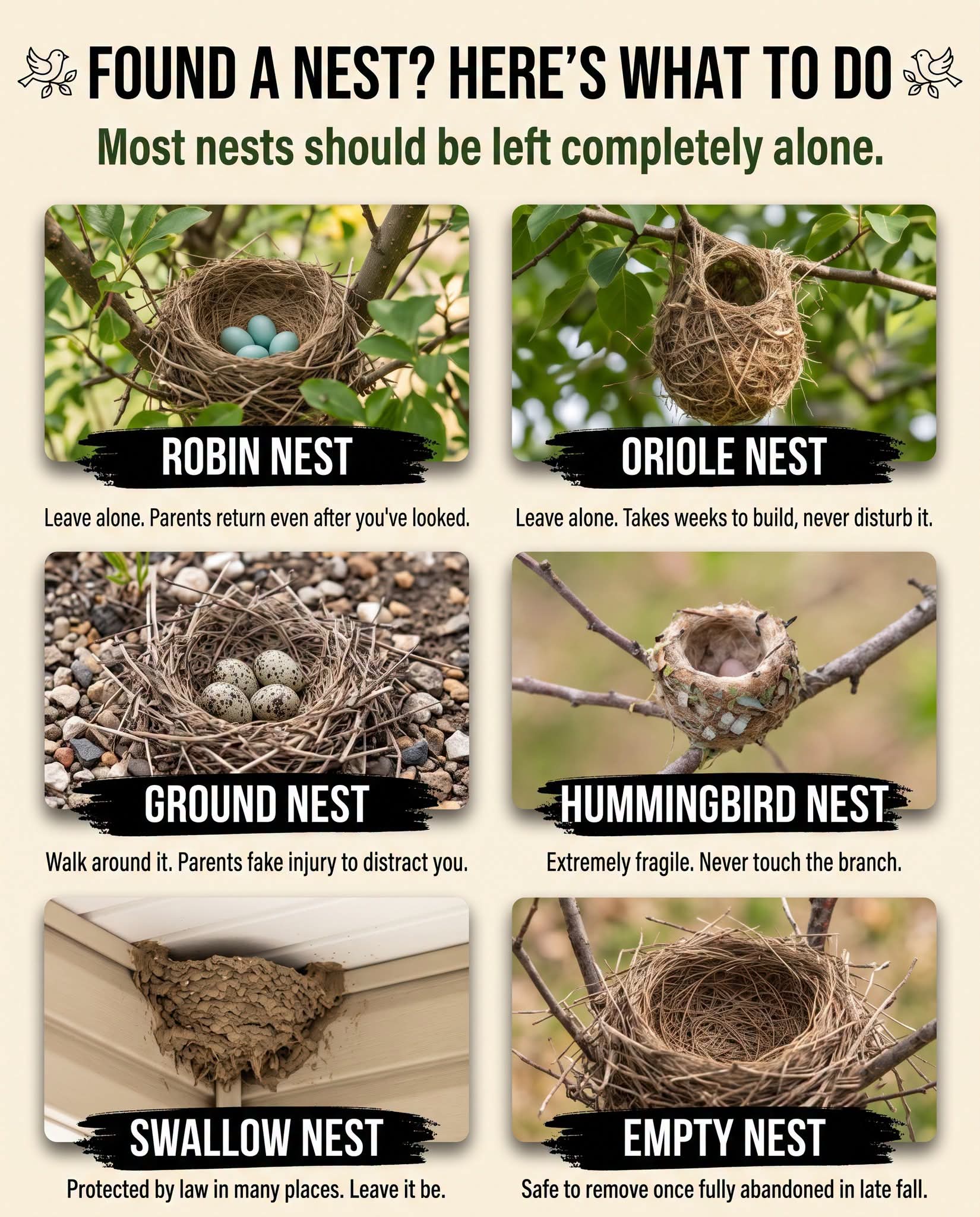
But before you touch anything, it’s important to know that the best way to help is often to leave the nest exactly where it is.
Why You Shouldn’t Move a Nest
Birds carefully choose nesting sites based on shelter, protection, and access to food. Even if a nest seems exposed or inconvenient, moving it can cause the parents to abandon it or make it difficult for them to find their chicks again.
In many countries, active nests containing eggs or young birds are protected by wildlife laws, making it illegal to disturb or remove them without authorization.
Will the Parents Abandon the Nest If You Get Too Close?
One of the most common myths is that birds will reject their babies if a person touches the nest because of human scent.
For most bird species, this isn’t true. Birds generally have a limited sense of smell compared with mammals. However, frequent disturbance can stress the parents and may cause them to stay away from the nest longer than they normally would.
The best approach is to observe from a respectful distance.
What If You Find a Baby Bird on the Ground?
Not every baby bird needs rescuing.
If It’s a Fledgling
A fledgling is a young bird that has feathers and has recently left the nest. It may spend several days on the ground while learning to fly.
Its parents are often nearby, feeding and protecting it.
If the bird appears healthy and isn’t in immediate danger, it’s usually best to leave it alone.
If It’s a Nestling
A nestling is younger, with few feathers or none at all.
If you can safely locate the nest and it’s within reach, you can gently return the nestling to it. Contrary to popular belief, the parents are unlikely to reject it simply because it has been handled by a person.
If the nest has been destroyed or the bird is injured, contact a licensed wildlife rehabilitator or your local wildlife authority for guidance.
How to Protect a Nest in Your Yard
If you’ve found an active nest, here are a few ways to help:
- Keep children and pets away from the area.
- Avoid trimming trees, shrubs, or hedges until nesting is finished.
- Delay heavy yard work nearby if possible.
- Watch from a distance rather than handling the nest.
- Avoid feeding wild birds unless it’s appropriate for your local area and follows local guidance.
What If the Nest Is Empty?
Once the nesting season is over and you’re certain the nest is no longer in use, you may remove it if needed, depending on your local wildlife regulations.
Many birds build a new nest each breeding season, while others may reuse or renovate old nests.
Enjoy the Experience
Watching birds raise their young can be one of the most rewarding parts of spending time outdoors. From gathering twigs to feeding hungry chicks and cheering on their first flights, it’s a fascinating glimpse into nature.
By giving nesting birds a little space and avoiding unnecessary disturbance, you’re helping give them the best chance to raise the next generation successfully.
The Bottom Line
Finding a bird’s nest in your yard is usually a sign that your outdoor space provides a safe habitat for wildlife. In most cases, the kindest thing you can do is observe from a distance and let nature take its course.
If you ever find an injured bird or an orphaned chick, seek advice from a licensed wildlife rehabilitator rather than trying to care for it yourself.
Have you ever found a bird’s nest in your yard? What kind of bird was it? Share your story in the comments! 🐦🌿
