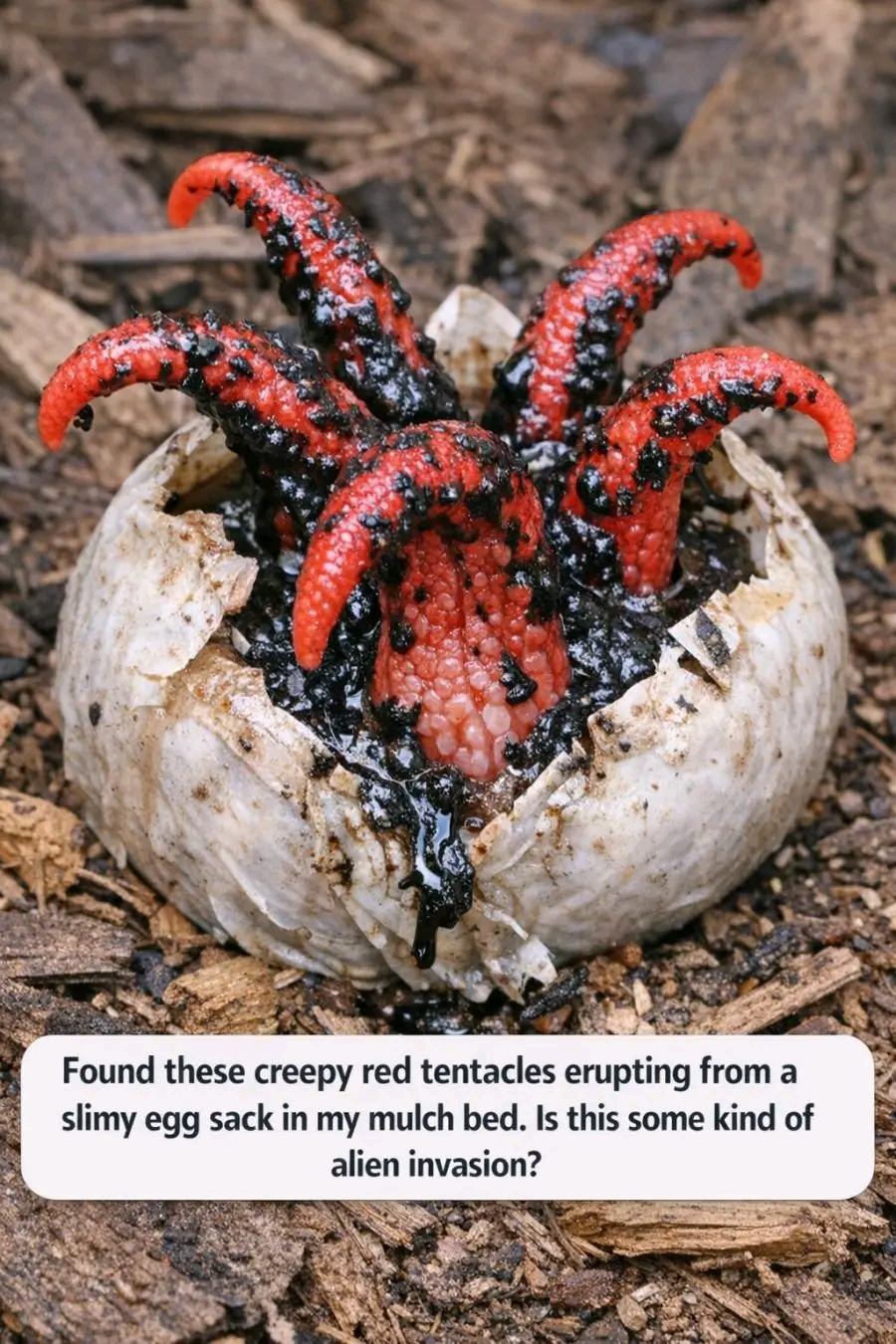
4. Why Devil’s Fingers Look (And Smell) So Disturbingly AlienThe startling appearance of Devil’s Fingers is due in part to its unique color and structure. The vivid red hue of the tentacles is a result of pigments that help attract insects, which are crucial for the fungus’s reproductive process. The tentacles’ irregular, finger-like shape further enhances the fungus’s alien look.Beyond its appearance, Devil’s Fingers is notorious for its foul stench, often compared to rotting meat. This odor is a deliberate evolutionary strategy to attract flies and other insects, which inadvertently aid in spore distribution by carrying them to new environments.
5. Is It Dangerous? Health Risks To People, Pets, And PlantsDespite its unsettling appearance and odor, Devil’s Fingers is not considered dangerous to humans, pets, or plants. The fungus is not toxic, although its pungent smell may deter any attempts to taste or touch it. In most cases, the presence of Devil’s Fingers is harmless and poses no threat to the garden ecosystem.For pets, the primary concern would be the odor, which might attract curious dogs or cats. However, ingestion of the fungus is unlikely to cause harm, though it may lead to mild gastrointestinal upset in some animals.
6. How This Weird Fungus Ended Up In Your YardDevil’s Fingers can appear in gardens where conditions are favorable for its growth. This includes environments with ample organic material, such as mulch beds or compost heaps, which provide the decaying matter the fungus feeds on. Moisture is another critical factor, as the fungus thrives in damp conditions.The spores of Devil’s Fingers are often spread by insects or transported via wind, allowing the fungus to colonize new areas. Human activities, such as the movement of contaminated soil or mulch, can also inadvertently introduce the fungus to new locations.
